The Pantheonization of Josephine baker: an indigenous point of view(Amended/corrected with comments by Paris tribune editor Paul Ben-Itzak)

In the public interest, The Paris Tribune is sharing the following transcript from Democracy Now’s December 2 segment on the November 30 induction of Franco-American dancer, singer, civil rights activist, mother of the Rainbow Tribe, and hero of the French resistance Josephine Baker in the revered French Pantheon high atop the Latin Quarter of Paris, the first artist, the first American, and the first Black (and part American Indian) woman to be accorded this recognition, selected by French President Emmanuel Macron. For more on Josephine Baker in France and the subject addressed below on our sister magazine The Dance Insider, click here. To hear the original DN segment, click here.

(Democracy Now introduction.) On the same day France celebrated the induction of American-born singer and civil rights activist Josephine Baker into the Pantheon, far-right xenophobic writer and pundit Éric Zemmour announced he will run for president of France in the upcoming April 2022 election. Many have pointed out the contradiction in these opposing events, even in President Emmanuel Macron’s speech that painted Baker as a model of colorblind unity, when in reality she was outspoken about racial justice. “Celebrating Josephine Baker who was an immigrant … while making things difficult for immigrants of today to access to France is a contradiction,” says French journalist Rokhaya Diallo. “France attempts to use the fact that it has been very welcoming to African Americans throughout the 20th century to picture itself as an open and welcoming country.”

Transcript
This is a rush transcript. Copy may not be in its final form.

AMY GOODMAN: “J’ai deux amours”—I Have Two Loves—by Josephine Baker. The song was played at the Panthéon in Paris during her induction ceremony on Tuesday. This is Democracy Now! I’m Amy Goodman with Nermeen Shaikh. French President Emmanuel Macron has inducted the American-born pioneering performer and civil rights icon Josephine Baker into the Panthéon, considered France’s highest tribute. She is the first Black woman, first American to receive the honor.

Josephine Baker was born in St. Louis in 1906. As an 11-year-old, she witnessed racial violence firsthand when white mobs attacked East St. Louis, Illinois, killing as many as 150 Black residents. At the age of 19 she moved to France to escape racism at home. Soon she became a superstar on stage and on screen. In 1951, she returned to the U.S. on tour but refused to play for segregated audiences. She was later banned from reentering the United States for a decade after being accused of having ties to the Communist Party. In 1963, she flew in from Paris to speak at the March on Washington, the only woman. Josephine Baker died in 1975 but her legacy lives on.

The induction ceremony for Josephine Baker comes at a time when racism is on the rise in France. Earlier this week, the far-right xenophobic writer and pundit Éric Zemmour announced he would run for president in April’s election. He has been described as “the most extreme voice of French racism today.” Zemmour had repeatedly attacked Islam, immigrants and the left. He has been charged numerous times with inciting racial hatred including after he called unaccompanied child migrants “thieves, killers, and rapists.” Some analysts have described him as the French Donald Trump.

We go now to France where we are joined by French journalist and filmmaker Rokhaya Diallo. Her latest op-ed for the Washington Post is headlined Josephine Baker enters the Panthéon. Don’t let it distract from this larger story. Thank you so much for joining us, Rokhaya. Why don’t you start off by telling us that larger story and then go into the significance of Josephine Baker being recognized?

ROKHAYA DIALLO: Thank you so much for inviting me. I am very happy—to me, it’s very good news to finally have a woman of color in the Panthéon, which is, as you said, one of the most prestigious places to welcome the most revered French figures. It is something that is very meaningful, because as well as being an entertainer, she was also a hero of the Resistance during the Second World War but also took part to the March on Washington. As you said, she was the only woman.

But there are two things that left me with mixed feelings. First, the fact that France tends to use the fact that it has been very welcoming to African Americans throughout the 20th century to picture itself as a very open and welcoming country. But the thing that we tend to forget is that while Josephine Baker was celebrated and dancing on Parisian stages, France was a very violent colonial power, so it was also colonizing Africa and Asia and also the Caribbean, and perpetrating very much violence to people who were colonized and also displaying them in what was called at that time the Colonial Exhibitions, which were basically human zoos where you could see people coming from the colony to be seen by visitors from Paris and from other regions of France. (Paris Tribune editor’s note: Having recently recuperated a copy of the official guide to the 1931 Colonial Exhibition in Paris — which attracted by one estimate 30 million visitors — I need to dispute Madame Diallo’s characterization of this event as a “human zoo,” etc. In fact, what was on display and promoted in the pavilions arrayed over 110 hectares of the Bois de Vincennes was, rather, the cultures and commerce of French colonies, protectorates, and countries under the French mandate; the exterior territories of Belgium, Denmark, the United States ((whose pavilion was a reconstruction of Mount Vernon)), Italy, the Netherlands, and Portugal; and even, in an auxiliary exhibition of 200 Pavilions at the Palace of Industry, the regions of Metropolitan France.)

So there was a double standard with African Americans being welcomed because they were American and didn’t have any historical agreement to settle with France. At the same time, other people of color were actually submitted to the French state.

NERMEEN SHAIKH: If you could elaborate on that a bit? I would just like to read a short quotation from the acclaimed writer James Baldwin, who was of course one of the most prominent African Americans to seek refuge in France. He wrote about precisely this issue. In an interview, he said, in 1983, “In France, I am a Black American posing no conceivable threat to French identity. In effect, I do not exist in France. I might have a very different tale to tell were I from Senegal and a very bitter song to sing were I from Algeria.” Rokhaya Diallo, your comments?

ROKHAYA DIALLO: It is very interesting because it is still the same today. If you are a Black person from the U.S., you’re mostly seen as American. The American identity is very prestigious and has nothing to do with the French colonialism so you don’t really take part to that sense of guilt or to that confrontational relationship that you may have had with France because your ancestors were not the victims of the French racism. You are seen as someone who doesn’t have to do with the national context. You even benefit from the fact that you have now today many African Americans who are very famous, so you have that very positive image.

Actually, I feel the same way when I go to the U.S. because I am French and I am seen as a French person. When people understand that I am not African American, I’m suddenly seen as someone that is connected to a country that is very prestigious, that has to do with fashion, with the joie de vie, and such and so. I no longer have to deal with all the racial issues that are really connected to the African American identity.

James Baldwin is always used in the French public discourse as an example of France not being as racist as the U.S. which is to me not true but that tells a lot about how that myth that is very vivid also in the U.S. context of the French being open-minded is still alive, which is not the case. Because I was born and raised in France but my parents were born in Senegal. They were born with Indigenous status which was a status that was less than the status of citizens. When Josephine Baker was celebrated, my own ancestors, my grandparents, my great grandparents, did not have the same opportunities. So if she was a Black woman from Africa or from Guadeloupe or from Martinique, she would not have had the same opportunities.

I think it is important to say that. I think we need to celebrate the fact that she is finally recognized, but that should not erase the fact that at the same time, France was not open to minorities and it was very violent and it really took back to wars [sp] prevent those people from gaining their freedom and from standing for their own humanity.

NERMEEN SHAIKH: You said that these issues persist today. How does this kind of racism manifest itself broadly within French society but also specifically with respect to its immigration policies?

ROKHAYA DIALLO: You just mentioned the fact that Éric Zemmour, the former pundit who is now running for presidency, made his fame on racist statements and also sexist statements. His obsessions are mostly directly toward immigration and Islam. When he said publicly officially that he would run for presidency, he was invited to a TV show and he said that it doesn’t make any difference between Islam and Islamism, so extremism, and he said that according to him, Muslims from France should just—how do you say that in English—they should not be Muslim anymore. They should drop their religion, actually. That means that you can say that publicly and run for presidency and having many people decided to vote for you. At the same time, his stance is very aggressive toward immigration.

There is also, in the government of Emmanuel Macron, there is I can say a very open anti-immigrant discourse. The voted a law against immigration three years ago which was one of the worst laws since the Second World War. (Note from Paris Tribune editor: This is the first I’ve heard of the law Madame Diallo refers to.) So celebrating Josephine Baker who was an immigrant, who decided to leave her country because she wanted to live a better life elsewhere while making things difficult for immigrants of today to access to France is a contradiction to me, because maybe today Emmanuel Macron is preventing the future Josephine Bakers from coming to France because the barriers to come here are higher and higher.

There is a kind of ambivalence because while celebrating Josephine Baker, who was a celebrity during the last century, today racism is still alive. It is still expressing itself against immigrants but also against all people of color. For example, in police brutality, we have statistics that say that if you are seen as a Black man or an Arab man, you are 20 times more likely to be checked randomly in the streets by the police than if you belong to any other category. (Note from Paris Tribune editor: I would contest Madame Diallo’s representation of Police ‘controls,’ which is not supported here by a specific reference, and should have been challenged by the interviewer absent such reference.) That means that you have that experience of a person of color in France facing systemic racism, facing institutional racism and at the same time, a president that celebrates a woman of color who stood against racism but she stood against racism in the U.S. She never actually said anything against colonization or against racism in France because the life that she had an France made her be grateful. I understand why she was grateful but it is very convenient to celebrate someone that has nothing to say against France.

AMY GOODMAN: Rokhaya Diallo, in talking about Éric Zemmour and what kind of threat he represents, can you talk about the role of the media? Hasn’t he been tried and convicted for hate speech several times? And what does that mean?

ROKHAYA DIALLO: It’s funny that you ask the question because the first time he was convicted for hate speech, it was because of a debate we had. He was facing me. To me, Éric Zemmour has been created by the media. Not his first book, but the first book that made him mainstream was a very violent book against women, against feminism, against the fact that women are gaining more and more space, more and more rights. Then he became a pundit on public television. It was not even a private television. Even after being convicted, he remained public. He remained on the public television and then on other private media.

So to me there is much complicity from the media because they knew who he was. They were more interested by the buzz, by the noise around his statements, than by the fact of being fair and not perpetrating, not echoing hate speeches. So actually, to me, there’s much complicity to all the people that gave him a mic, who amplified his voice because they gave him the platform to make him able to run for presidency and just polluting the atmosphere with hate speech, with racist statements, with sexist statements and harassing basically people of color by constantly having aggressive words against them.

NERMEEN SHAIKH: Could you explain what you think his actual prospects are as a presidential candidate? And just to give very quickly some of the statements that you say have been amplified, he has approved of people comparing Islam with Nazism, said that parents should only give their children traditional French names, advanced the Great Replacement theory and said that political power should be with men and not women, whose role it is to have and raise children.

ROKHAYA DIALLO: Yes, he said that actually women are unable to be geniuses and to be politicians because to him, they don’t have that ability. He said that without consequence. Also just lately, he was facing a Muslim woman with a hijab, with a head scarf, in the street and he asked her to remove her headscarf in order to be truly French.

I remember he told me during the same debate that my first name, Rokhaya, wasn’t truly French and that my parents should have named me differently to make me French-er. That was so offensive. That was so aggressive. I don’t understand why people didn’t challenge him more directly. Now he is just saying whatever he wants without facing real criticize and deep criticize. That will be difficult because he is more provocative than Marine Le Pen who is the head of the current far right, the National Rally.

AMY GOODMAN: We want to thank you so much for joining us, Rokhaya Diallo, French journalist, writer, and filmmaker. contributing writer for the Washington Post. We will link to her piece Josephine Baker enters the Panthéon. Don’t let it distract from this larger story. I’m Amy Goodman with Nermeen Shaikh. Stay safe.

The original content of this program is licensed under a Creative Commons Attribution-Noncommercial-No Derivative Works 3.0 United States License. Please attribute legal copies of this work to democracynow.org. Some of the work(s) that this program incorporates, however, may be separately licensed. For further information or additional permissions, contact Democracy Now.
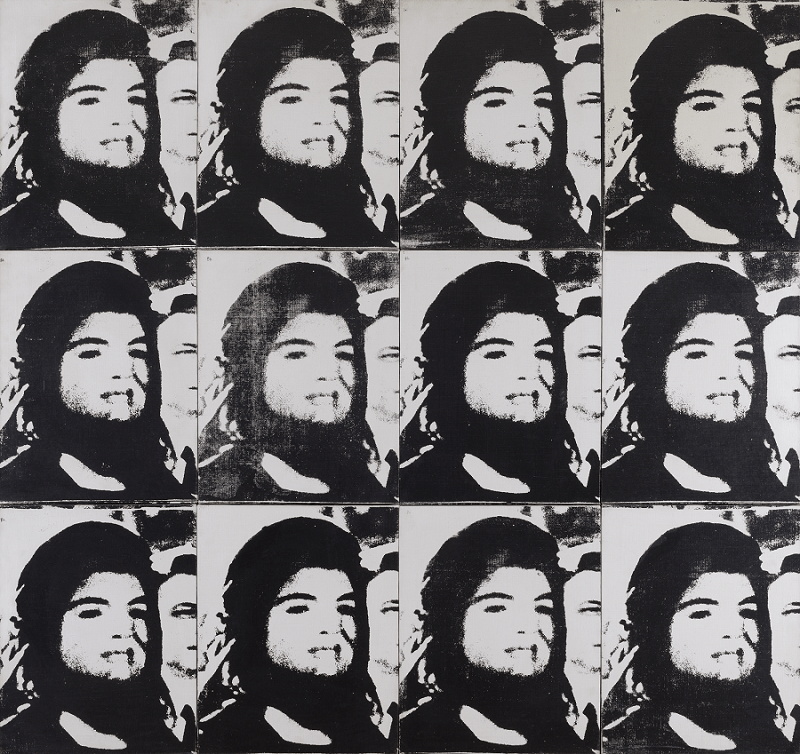
November 26, 1963, seen by Warhol, Shahn, and Berry: ‘We know ourselves, the bearers of the light of the earth he is given to, and of the light of all his lost days’

Ongoing in the New Contemporary Galleries at the Art Institute of Chicago: Andy Warhol. “Twelve Jackies,” 1964. The Art Institute of Chicago, Gift of Edlis/Neeson Collection. © 2015 The Andy Warhol Foundation for the Visual Arts, Inc./Artists Rights Society (ARS), New York.

by Wendell Berry
Copyright 1963 Wendell Berry

First published on November 26, 1963, by the Nation. Published in book form shortly afterwards by George Braziller, New York, with lettering and illustrations by Ben Shahn, who also penned the introduction, which said in part: “In so sharply scrutinizing his own feelings, the poet has discovered with an uncanny exactness all our feelings. His words have created a certain monument, not pretentious, but real, and shared.” Today’s republication dedicated to Bill Wedemeyer…. and to Breathless.  To see art by Ben Shahn, read Paul Ben-Itzak‘s memoir associated with this event — and learn who Breathless is — click here.

We know
the winter earth
upon the body
of the young
president,
and the early dark
falling;

We know
the veins
grown quiet
in his temples and
wrists, and his hands
and eyes
grown quiet;

We know
his name written
in the black capitals
of his death,
and the mourners
standing in the rain,
and the leaves falling;

We know
his death’s horses
and drums;
the roses, bells,
candles, crosses;
the faces
hidden in veils;

We know
the children
who begin
the youth of loss
greater than
they can dream
now;

We know
the nightlong coming
of faces
into the candle-
light
before his coffin,
and their passing;

We know
the mouth of the grave
waiting,
the bugle and rifles,
the mourners
turning
away;

We know
the young dead body
carried
in the earth
into the first
deep night
of its absence;

We know
our streets and days
slowly opening
into the time
he is not alive,
filling with
our footsteps
and voices;

We know
ourselves,
the bearers
of the light
of the earth
he is given to,
and of the light of
all his lost days;

We know
the long approach
of summers toward the
healed ground
where he will be
waiting,
no longer the keeper
of what he was.

Thank you, Centre Pompidou, for making my job impossible

Here we were all set to share some of the rare images from a rare exhibition of an American and a female (American or non) artist, Gerogia O’Keefe, at the Centre Pompidou, when, being a responsible publisher, I took a look at the Paris museum’s usage conditions. (This was after realizing that were I even to try opening half the images, they’d crash my computer, these images being in the pre-historic ‘TIF’ format, which any arts publicist worth their salt should realize by now, 25 years into Web publishing, are too big for Web usage.) And discovered that among the numerous prohibitions was displaying the images on the ‘social’ networks. Which effectively means that I would be unable to promote our free publication of the images on The Paris Tribune and the Dance Insider & Arts Voyager in the usual places, and by consequence prohibited from giving the museum and its exhibition and this amazing legendary artist free advertising. This reminds me of the time I was working as an editor at Dance Magazine in New York and I and my fellow editor, the erstwhile Caitlin Sims, shocked to find that there were no copies of the current issue, featuring a major profile on New York City Ballet ballerina Maria Kowroski (by moi), in the kiosk of the company’s Lincoln Center lobby (where thousands of fans of the dancer would be able to buy it during performance intermissions). After we took the initiative to grab a few copies from the office and simply give them to the kiosk manager to sell, only to be chastised by the magazine’s office manager (or maybe it was the owner-publisher), all that was left to us was to utter the employees’ oft-repeated refrain: “Dance magazine: The best-kept secret in dance publishing.” Which I am now obliged to remix as “Georgia O’Keefe: The best-kept secret in Paris museum curating.” — Paul Ben-Itzak

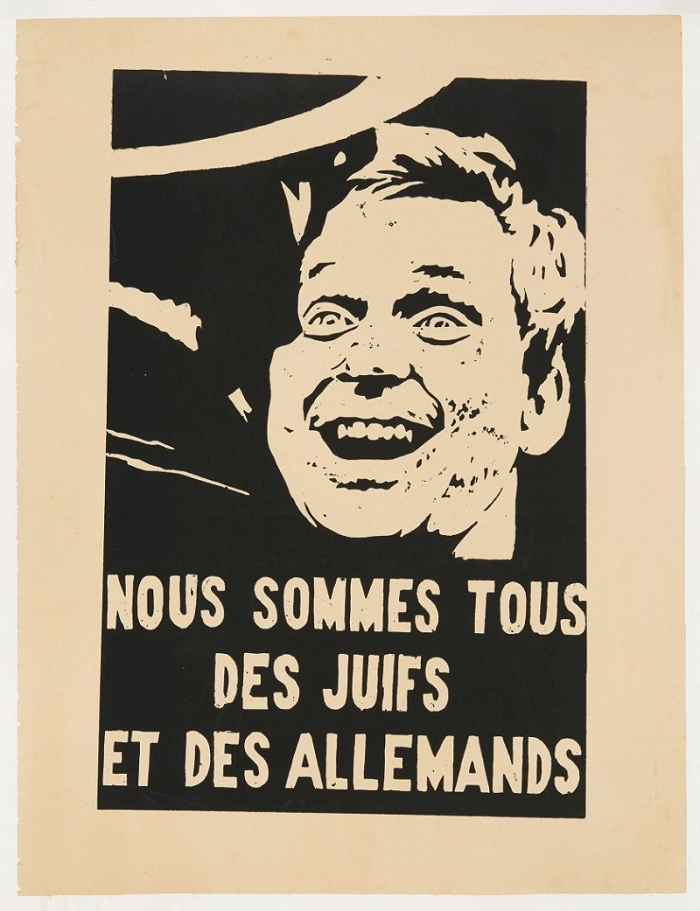
They, too, were Jews / Ils étaient aussi les juifs  – et universalistes. And the artists qui ont fait Paris

En souvenir de mon grand-pere / In memory of my grandfather Morris Hertzon. Pour plus des souvenirs / For more stories / de Montparnasse pendant son age d’or / of Montparnasse during its golden age, click here/cliquez ici. — Paul Ben-Itzak .

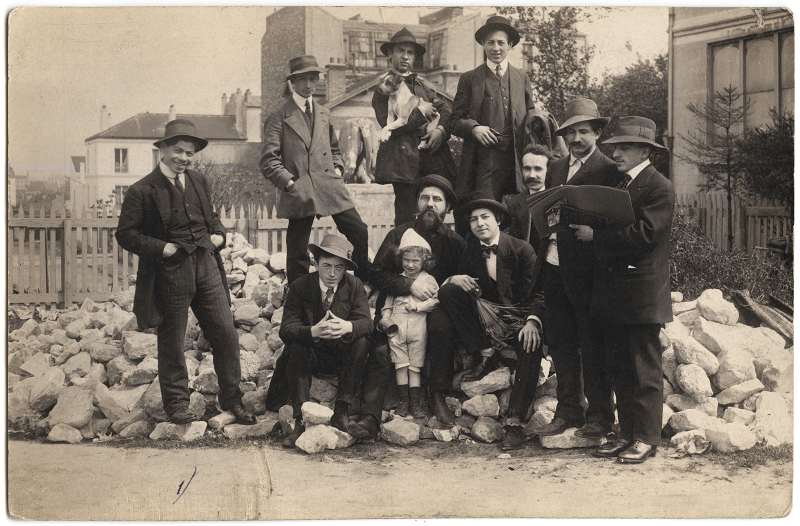
PARIS – Catch it while you can: The exhibition Paris pour école, 1905-1940, focusing on the (mostly, but not exclusively) Jewish artists of La Ruche (a magnet not just for Jewish but many foreign-born artists), closes October 31 at the Musée d’art et d’histoire du Judaisme in Paris.

Artistes de la Ruche, 1914, mahJ © mahJ.

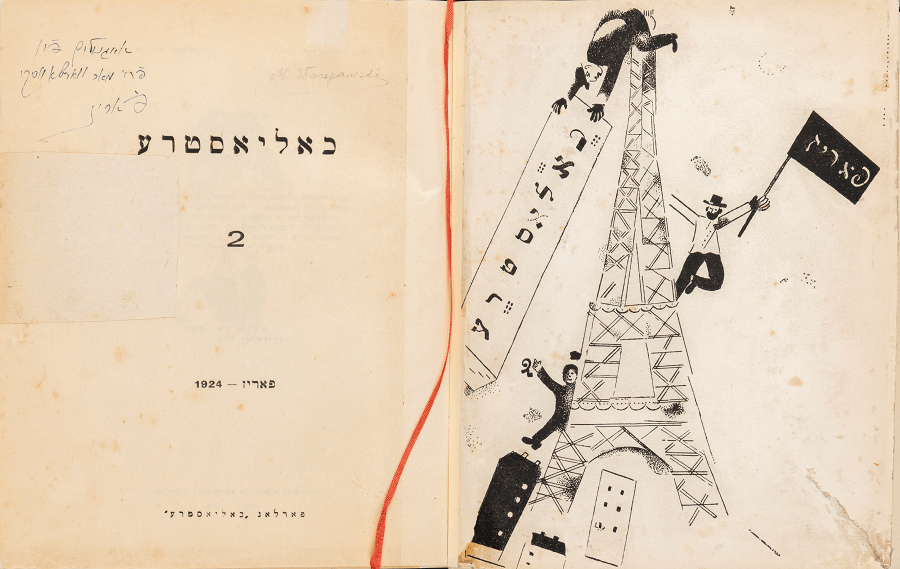
Marc Chagall, Revue Khaliasta n°2, 1924. © mahJ / Christophe Fouin © Adagp, Paris 2020. The journal was published in Paris by Chagall and other immigrant Jewish artists.

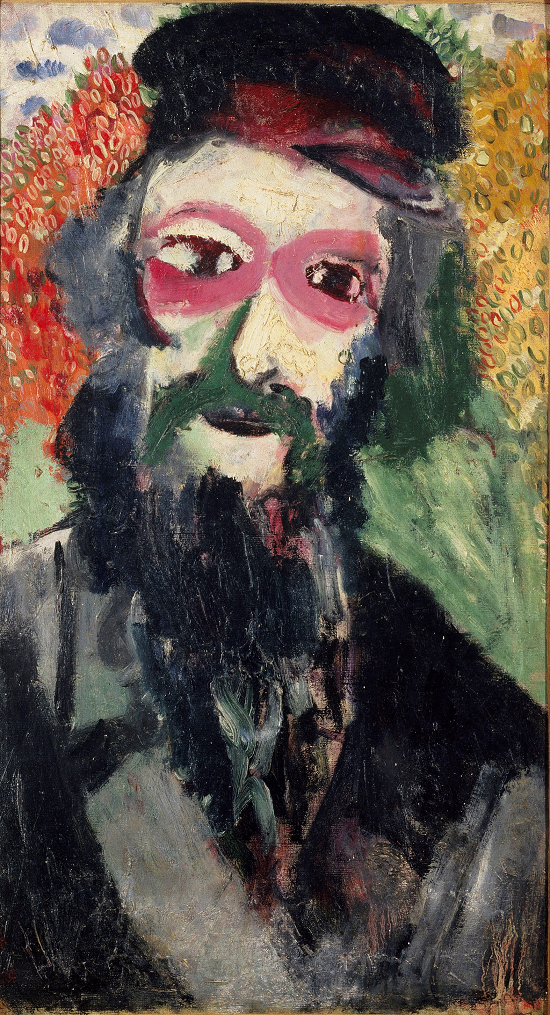
Marc Chagall, “Le Père,” 1911. mahJ, dépôt du Centre Pompidou, MNAM-CCI © Centre Pompidou, MNAM-CCI, Dist. RMN Grand. Palais / Philippe Migeat © Adagp, Paris 2020.

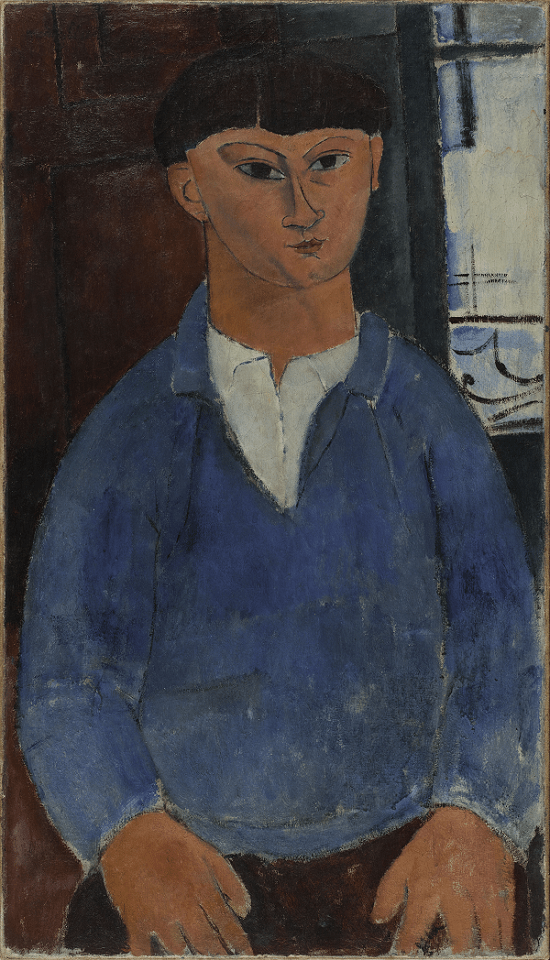
Amedeo Modigliani, “Portrait de Kisling,” 1916. Centre Pompidou, MNAM-CCI © Centre Pompidou, MNAM-CCI, Dist. RMN-Grand Palais / Bertrand Prévost.

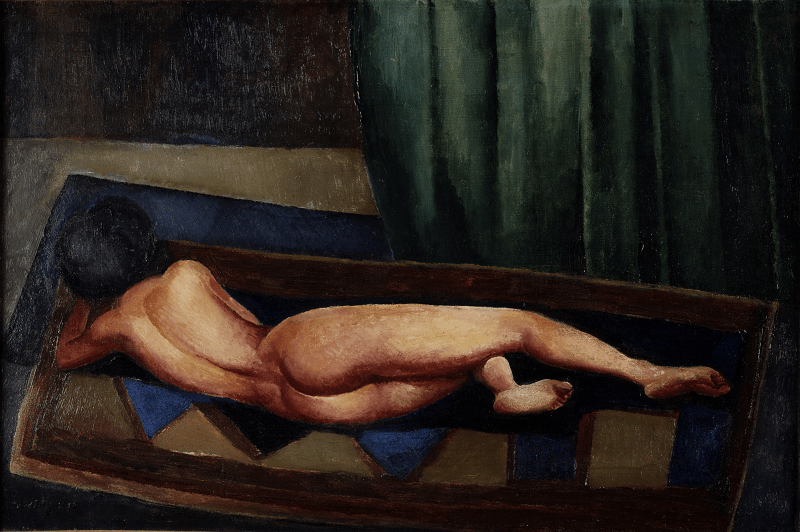
Moïse Kisling, “Nu cubiste,” 1918. mahJ © mahJ / Mario Goldman.

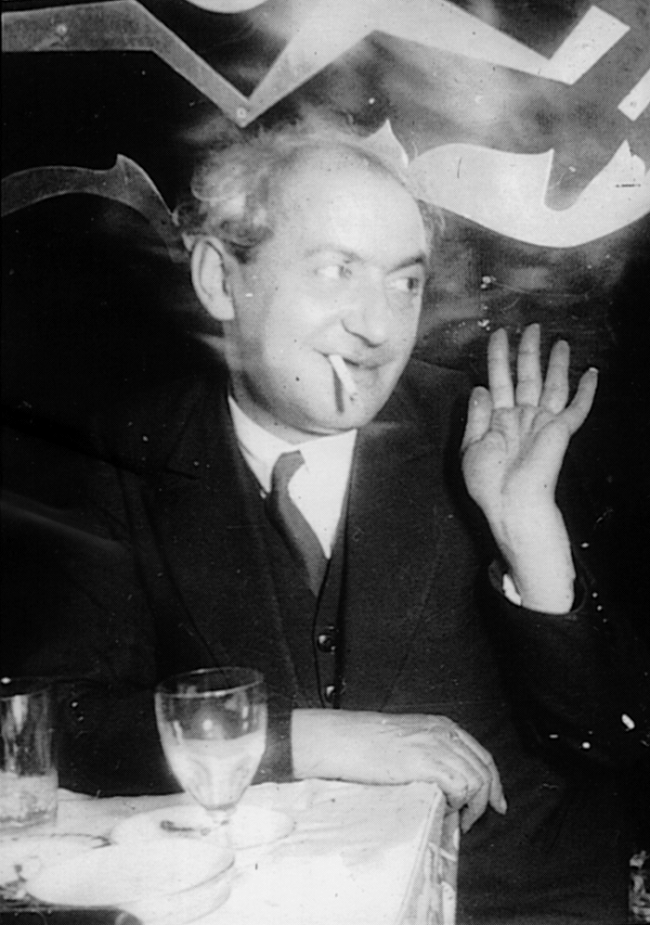
Jules Pascin attablé, 1930. mahJ, don de Jeanine Warnod © mahJ.

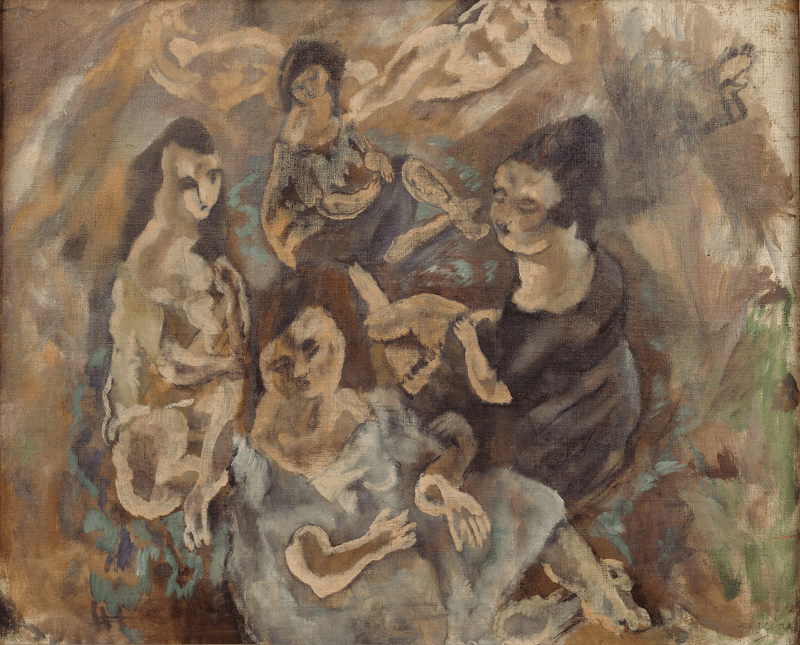
Jules Pascin, Les Petites Américaines, 1916. mahJ © mahJ / Mario Goldman.

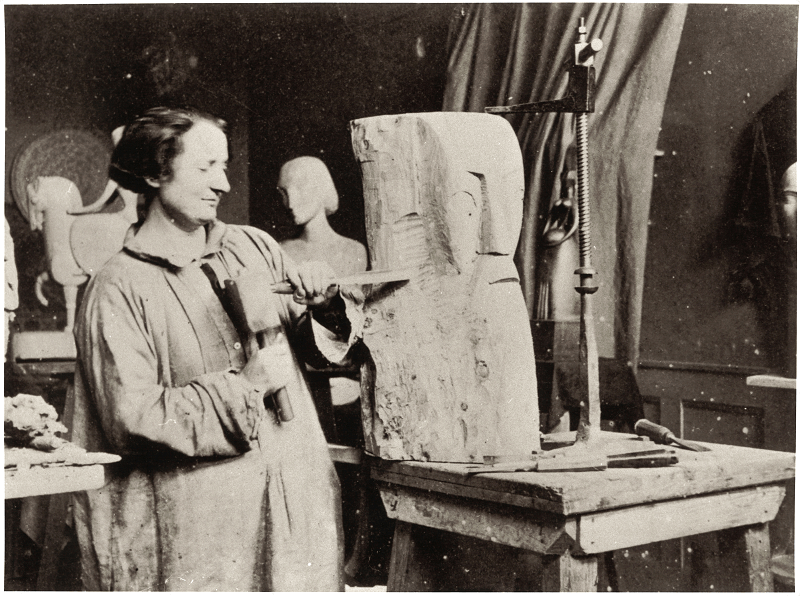
Chana Orloff, 1916. © Archives Chana Orloff.

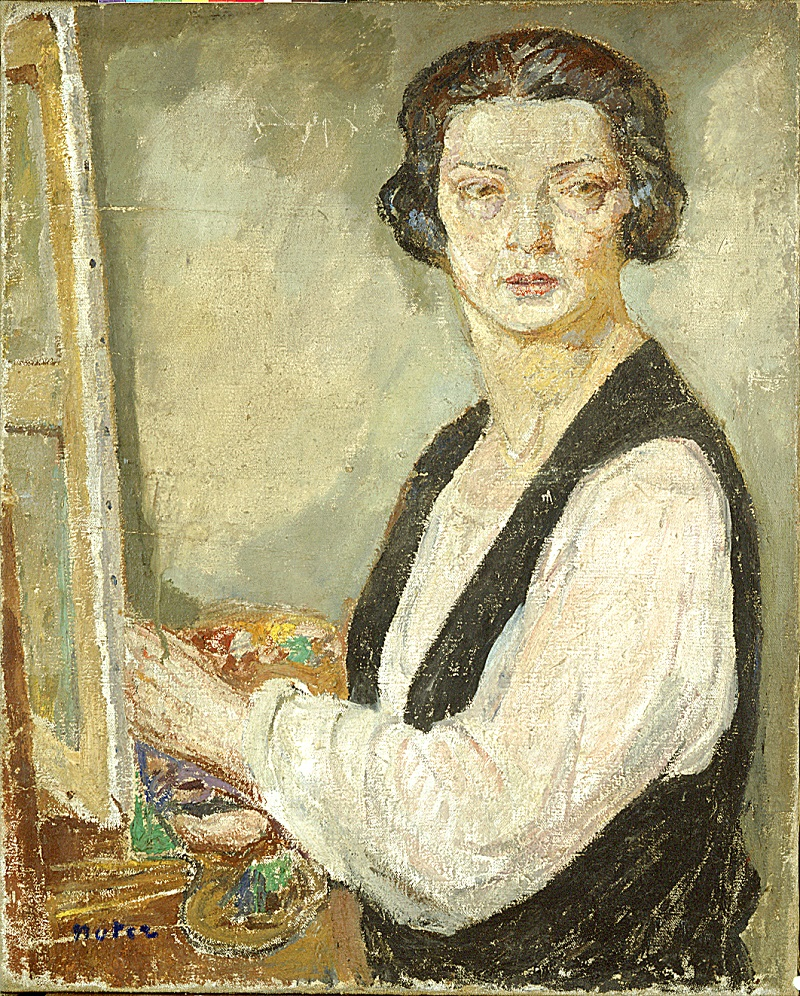
Mela Muter, “Autoportrait,” 1915. Genève, musée du Petit Palais © Studio Monique Bernaz, Genève.

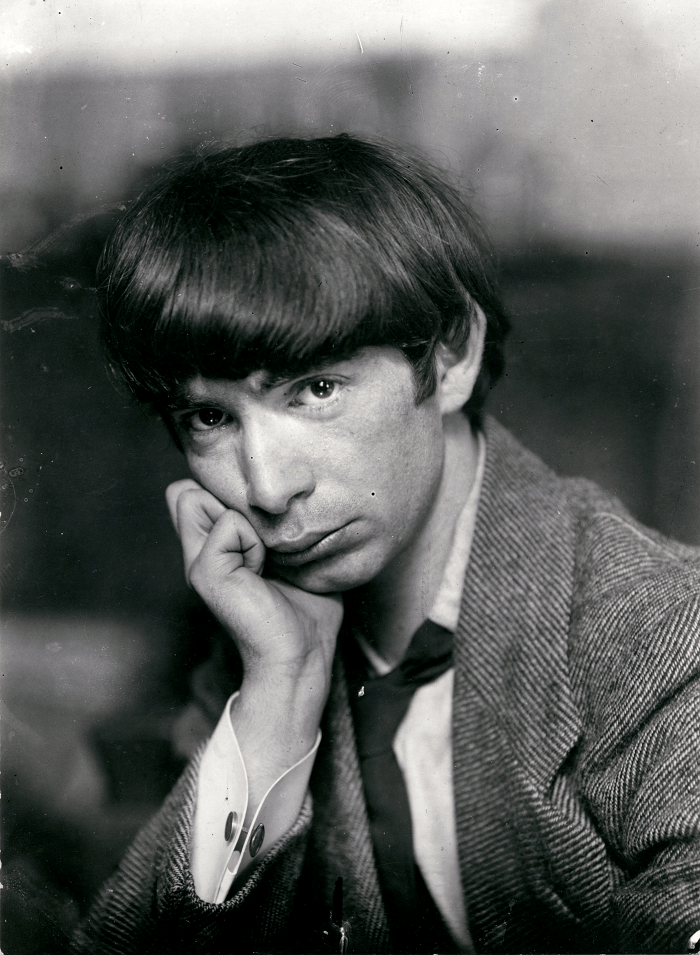
Marc Vaux, Ossip Zadkine, 1909. mahJ, don de Jeanine Warnod © mahJ.

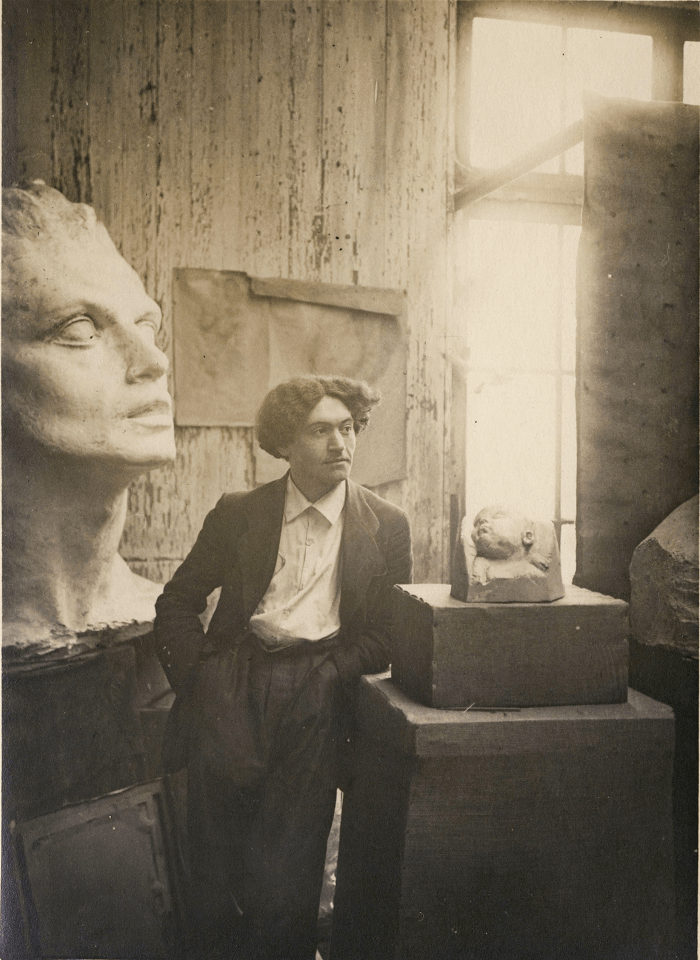
Morice Lipsi dans son atelier à la Ruche, vers 1918. mahJ, don de Jeanine Warnod © mahJ.

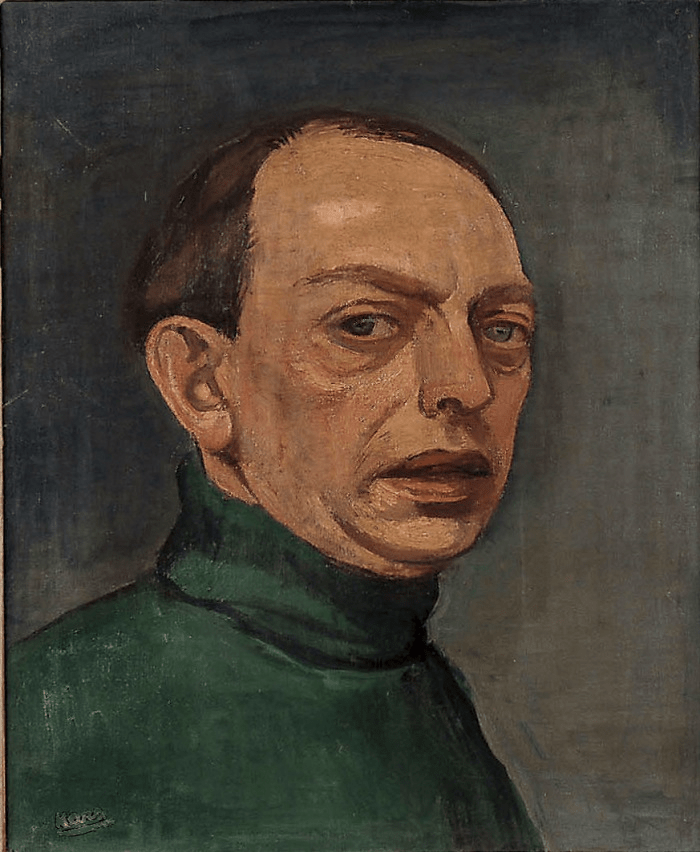
Georges Kars, “Autoportrait,” 1920 ou 1929. Strasbourg, musée d’Art moderne et contemporain © Musées de Strasbourg.

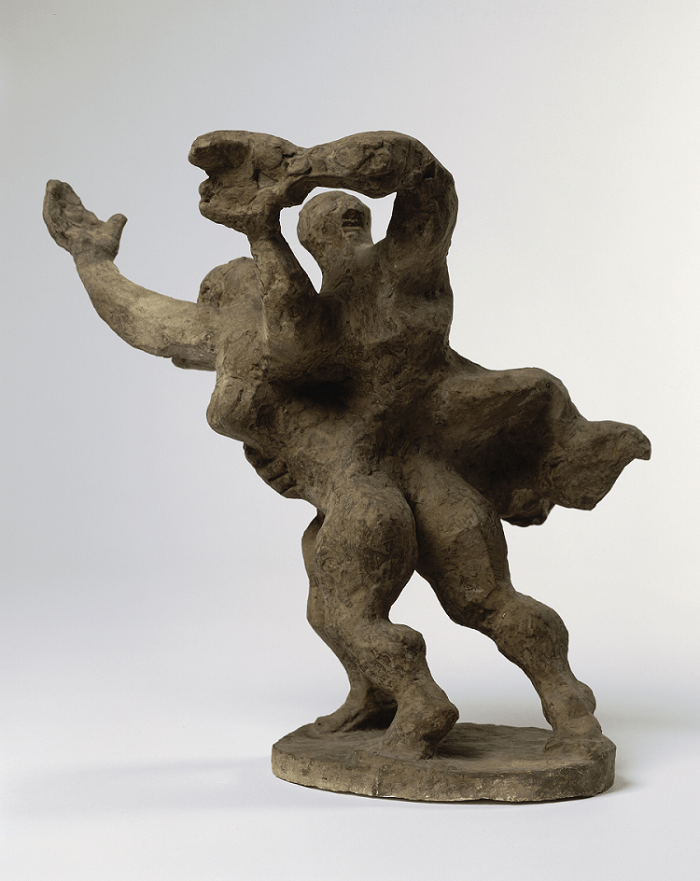
Jacques Lipchitz, “La Fuite,” 1940. Centre Pompidou, MNAM-CCI © Centre Pompidou, MNAM-CCI, Dist. RMN-Grand Palais / Philippe Migeat.

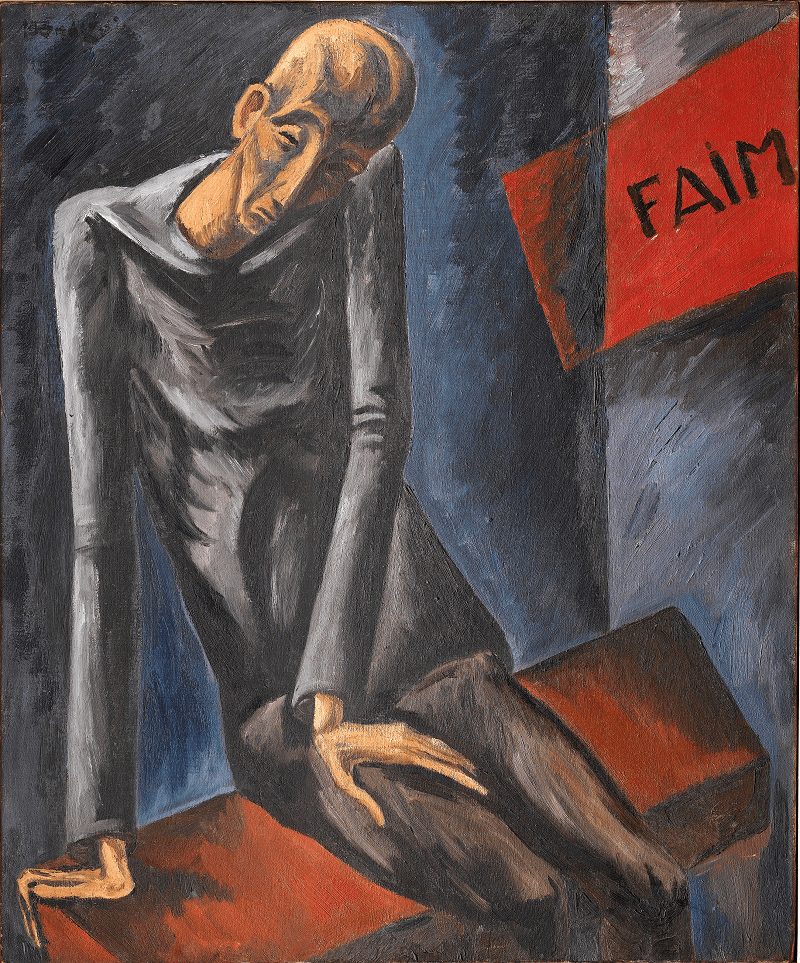
Simon Mondzain, “La Faim”, 1914. Collection particulière © Christophe Fouin.

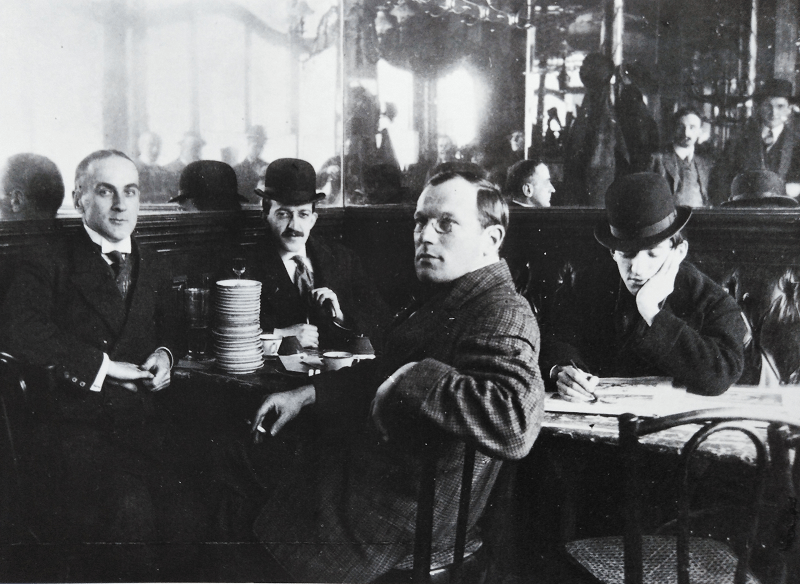
Artistes de la Ruche au Dôme, 1914. mahJ © mahJ. De gauche à droite: Wilhelm Uhde, Walter Bondy, Rudolf Levy et Jules Pascin. Collection Catherine Cozzano.

The Chevalier de la Barre, 10-26: Anti-Semitism hits home

by Paul Ben-Itzak
Copyright 2021 Paul Ben-Itzak

Pour un version française – for an earlier French version of this article, expanded and edited here – cliquez ici.

Friday October 15, the twilight hour.

I am chatting on the terrace with Ferdinand (not his real name), my 87-year-old neighbor, whom I’ve just asked to recount his experience in the war with Algeria. Serving between 1955 and 1958 – “Mitterand sent me!” (when the latter was minister in charge of Algeria) – he saw his comrades shot down beside him, and also had to shoot the indigenous Independence fighters of the FLN (National Liberation Front). “When you’re ambushed, you don’t have a choice.”

“Macron shouldn’t have asked for [Algeria] to pardon [France]!” Ferdinand declared.

“But Ferdinand, the president did  not ask for Algeria’s pardon.” (In fact, in his nearly five years of concerted efforts to heal the wounds between France and its former colony, independent since 1962, the French president has emphasized the need to move beyond questions of pardon.)

“Macron, he’s a Jew! Like Sarkozy.”

And voila, the truth is out, I thought, shocked all the same. (Ferdinand and I have known each other for seven years, and always enjoyed a friendly rapport.) Because of course, it’s the Jews who are to blame for and at the origin of all the wrongs in the world – because make no mistake about it: this “pardon” (never mind that it’s fictional!) is, in Ferdinand’s eyes, a very bad idea, ergo an idea whose malfeasance is obviously explained by its alleged originator being (according to Ferdinand) a Jew.

“Ferdinand, I’m a Jew.”

“You’re a Jew?! An American Jew!”

As if my nationality somehow gave me cover,  a French Jew presumably being worse. (Or, as a friend decoded Ferdinand’s qualification for me later – ironically – “Because of course American Jews, they’re great businessmen.”)

Afterwards, of course, Ferdinand tried to backtrack, in the expected manner: I have nothing against Jews, it takes all kinds to make a world, there are even Algerian policemen in Marseille.

But this back-peddling didn’t stop me from reflecting: It’s exactly this optic, this way of thinking – this latent resentment of the Jews, this tendency to blame us for everything that’s wrong with society, which is as old as the crucifixion of Christ, our Original Sin – it’s precisely this attitude which often makes more virulent forms of anti-Semitism, historically and ongoing, possible.

(In France, 74,000 Jews, including 11,000 children, only 3,000 of whom returned from the death camps, were deported by the collaborationist Vichy government, whose leaders, like other Collaborationists, were later tried by the restored French justice department under de Gaulle’s post-war government and received severe sentences including death. In 1995, president Jacques Chirac decried that Vichy had carried the Deportation out “in the name of France” and said the country must share its part of responsibility. Of course there were also the many Justes, those who hid and saved Jews, often at their own peril; my Bergerac wine-maker’s grandfather was recently recognized as such, for hiding out for three years a Jewish 12-year-old boy he didn’t know until the child bicycled to his farm from Paris. If Chirac’s discourse was pronounced at the Vel d’Hiv – site of the most infamous ‘raffle’ of French and foreign-born Jews – it’s important to state that there might have been many more Jews rounded up and deported that day had they not been alerted and saved by French police and gendarmes ahead of the round-up.)

And Ferdinand, to your “Macron, he’s a Jew!” I want to respond:

And Max Jacob,  Surrealist poet, “compagnon de route” of Cocteau, of Picasso, of Apollinaire, already converted to Christianity for three decades before he was turned in by a neighbor and arrested by the Gestapo, dead at Drancy before he could be deported (or, to his chagrin, given Last Rites by a priest; in his last, hurriedly scribbled note from the train to Drancy, delivered thanks to a complacent gendarme, Jacob told his own priest he had several conversions in progress), he was (seen by those who condemned him as) a Jew.

And Irène Nemirovsky, the great chronicler of the exile of 1940, as civilians fled Paris ahead of the approaching Axis invasion, already a celebrated novelist published by Albin Michel, arrested in 1942, deported, and later executed in the camps, was seen (despite her conversion) and executed as a Jew, despite the pathetic (if understandable) efforts by her (Jewish) husband to convince her captors that she’d always been critical of Jews in her writings, until he, too, was arrested, deported, and assassinated.

And Robert Desnos, another pioneering Surrealist poet, troubadour of the poetry with which every morning is fraught, also arrested, deported, and dead in the camps, was a Jew.

And Anne Frank was a Jew.

And Captain Dreyfus (whose niece Julie would be arrested, deported, and killed in the camps), unjustly accused of betraying the country he’d fought for and imprisoned on Devil’s Island until Zola, Clemenceau, Anatole France and others won his freedom, was  Jewish. (The new Dreyfus museum opened Monday… in Zola’s old home in Medun.)

And Léon Blum, companion of Jaures, imprisoned by the Nazis despite that he was a former president of France, was a Jew.

And John Franklin, my civics teacher at Mission High School, a survivor of Auschwitz who told us he believed in the statute of limitations, even for the Nazis who had killed his relatives, and who went on to teach German, was a Jew.

And Paul Cenac, who worked so hard to repair the German language from the harm the Nazis had done it in his poetry until he killed himself in 1970 at the age of 49, was a Jew.

And Romain Gary, the real author of “All of life before you,” that paene to coming of age and the Cosmopolitainism of Belleville, and a Companion of the Liberation, was a Jew.

Et Chantal Akerman,  another suicide (chez the children of Holocaust survivors, the phenomenon is common), the pioneering filmmaker, was a Jew.

And my dentist, who lost his cousin – who, after a good Frenchman or woman revealed her Paris hiding place, was deported to her death, and whose mother, my dentist’s aunt, tried to kill herself by jumping from the window of the apartment since become his office, where he healed my teeth and, in the process, did so much good for my soul – is a Jew.

And Ofra Haza, was a Jew.

And Joe Mazo, one of my journalistic mentors.

And Sammy Davis Jr. .

And Serge Gainsbourg (who had flirted with Sammy Davis Jr.’s girlfriend), born Ginsburg (and hidden out during the war by a Juste or Righteous, French family, because there were legions of those too).

And my great uncle Sammy, who entered in the family lore after pulling out his whip to strike a fellow motorist in Miami who had yelled out “Dirty Jew!”


And Morris Hertzon, my grandfather, so proud when I had my belated bar-mitzvah and bris (the non-medical part) at the age of 16 in Miami Beach, a sort of Cliff Notes version, arranged by him.

And Allan Sherman, the composer of “Hello Muddah, Hello Faddah,” the unofficial theme song of all Jewish summer camps.

And Edward G. Robinson.

And Leonard Cohen.

And Bob Dylan.

And Camille Pissarro.

And Edward Winer, my late father.

And Eva Wise, my mother.

And Shirley Hertzon, her mother.

And Max Winer and Shirley Winer (a Jew, it seems, of Iranian or Turkish origin), my grandparents on my father’s side.

And Donna Berman, my rabbi, mode Joni Mitchell, at Princeton.

And Art Spiegelman.

And Rebecca Stenn, the dancer-writer-choreographer who inspired the Dance Insider.

And Annette Clark, my godmother.


And Annette’s cousin Gloria Lyon, who held me spellbound on her Diamond Heights terrace in San Francisco when I interviewed her for the New York Times, recounting how, en route for the death camps, she’d saved herself by jumping naked from a speeding train, and who took it on herself for decades to talk about her experience to school-children so that we would never forget.

And Esther Begin, a Belgian woman I flirted with on a Brussels-bound Paris train, who recounted to me how her grandmother had saved herself in a similar fashion.

And all the child poets and artists of Terezin, the “model” camp set up by the Nazis, authors of the post-humous illustrated book “I never saw another butterfly.”

And Humphrey Bogart.

And Sarah Bernhardt.

And Benjamin Stora,  the great French historian and child of Constantine, the great cosmopolitan Algerian city, who has done so much work to enlighten the relationship between France and Algeria for decades.

And my friend KM, a major artist-activist in Belleville. (I’m giving just her initials here because, guess what, Ferdinand, even if I have no idea whether this is her sentiment, some Jews in France, even in 2021, still have the tendency to hide, or at least not discuss openly, that they are Jewish, even 75 years after World War II. Because of people like you who are still ready to blame them for all the troubles of the world, to judge them by their ethnic identity and not their acts or who they are.)

And then there was Kolya, who was also Jewish, and who he, too, was assassinated by cowards.

Kolya, gifted and gentle adolescent, like Nemirovsky and my own ancestors of Ukrainian origin. Kolya, who used to cavort with his comrades around the blue mosaic fountain in the Square Albin Cachot in Paris’s 13th arrondissement, also my first demeure in Paris. Kolya who, after he was arrested and deported, was kept alive by his comrades in their diaries. (“I saw Kolya this afternoon on the boulevard Arago.” “Kolya had the funniest expression this morning when I caught up with him on the rue Glacière.”)

And finally, Ferdinand, there was the King of Denmark, who demonstrated his solidarity with his Jewish citizens after his country was occupied by sewing and brandishing a Star of David on his coat-sleeve, a deed I heard about from another mentor, Lewis Campbell, when he directed our conservatory troupe in a production of “The Diary of Anne Frank” (I played Anne’s boyfriend Peter).

And there’s yours truly, Paul Ivan Winer Ben-Itzak, your neighbor, who is a Jew (even if I prefer to identify myself as a citizen of the world or, if pressed, a San Franciscan… and a Perigourdin like you).

And as far as Emmanuel Macron goes, I have no idea whether he is Jewish or not, and I couldn’t care less. But I love him. I love him for his courage in making sure his country, your country, my country, lives up to its promise of universalism and its heritage of “les Lumieres.”

And you, Ferdinand, who are you?

The Chevalier de la barre, 19 octobre, 2021: l’Intolerance

Affiche, mai ’68.

by Paul Ben-Itzak
Copyright 2021 Paul Ben-Itzak

On était vendredi. C’était l’heure du crépuscule. J’étais en train a causer avec mon voisin Ferdinand (pas son vrais nom), a qui je viens de demander de me raconter son expérience pendant la guerre à Algérie. Conscrit entre 1955 et 1958 — “C’est Mitterrand qui m’avais envoyé !” — il a vu des copains mourir à ses cotes et il a du tué. “Quand vous tombe dans un embuscade,” vous ne pouvez pas faire autrement.

— Macron n’avais pas du demandé pardon de l’Algérie !, Ferdinand a déclaré.

— Mais Ferdinand, le présidente n’a pas demandé pardon. (Du fait, à mon connaissance il a fait presque le contraire, en effet expliquant qu’en ce concerne l’histoire entre nos deux payes, on devrait aller au-delà des questions de pardon.)

— Macron, c’est un juif ! Comme Sarkozy.

Et voila, nous y sommes, j’avais pensé, frappé tout de la même. (Ca fait sept ans qu’on se connait, le Ferdinand et moi, et nos rapports ont toujours était des plus amicales.) Parce que bien évidement, c’est les juifs qui sont à blâmer pour et qui sont a l’origine de tout les maux du monde – car cette ‘pardon’ (pardon fictif !), s’était aux yeux de Ferdinand une mauvaise idée.

— Ferdinand, je suis juif.

— T’es juif? Juif américaine !

Comme si ce n’était pas pareil. (Ou, comme un ami m’avais dechiffré âpres — avec ironie — “Parce que bien sur les juifs américaines, ils sont forte dans les affaires.”)

En suite, bien sur que Ferdinand a essayé de revenir sur ses mots, de faire marche arriere, dans la façon d’usage, genre: Je n’ai rien contre les juifs, le monde est fait de tout, il y a même des policiers algériens a Marseille….

Mais ce rétréci ne m’a pas empêché de réfléchi: C’est de cette optique la, cette état d’esprit – cette ressentiment ‘latent’ envers les juifs, ce tendance de les blâmer pour tout les maux dans le société — qui était née la complaisance des certains françaises (et pas que des françaises, on a vu le même chose dans l’Italie, par exemple) face à la déportation, face a la collaboration de Vichy dans (comme Jacques Chirac a reconnu a le Vel d’Hiv en 1995) le nom de la France. C’est-à-dire que s’ils n’ont pas collaboré activement avec Vichy et les Occupants, ils n’ont rien dit ou fait pour les contre.

Et Ferdinand, a ton “Macron, c’est un juif !” j’ai envie de répondre:

Et Max Jacob, compagnon de route de Cocteau, Picasso, et Apollinaire, chrétienne converti depuis plus de 30  ans, morte à Drancy avant qu’on aurait pu le déporté, était (vu comme) juif.

Et Irène Nemirovsky, grande conteuse de l’exile de 1940, déjà romancier connu et edité par Albin Michel, arrête en ’42, deporté, et en suite morte dans les camps, était juif.

Et Robert Desnos, grand poète, arrêté et en suite morte dans les camps, était juif.

Et  Anne Frank était juif.

Et le Capitaine Dreyfus (dont la nièce Julie a était arrêté et qui était morte dans les camps), était juif.

Et Léon Blum, emprisonné malgré le fait que c’était un ancien président du conseil, était juif.

Et John Franklin, mon prof de civisme au lycée, survivant d’Auschwitz et qui nous a dit qu’il croit dans le statue des limitations (le proscription), même pour les allemands qui lui ont fait ca a lui et ses parents, et qui en suite est devenu prof d’Allemande, était juif.


Et Paul Cenac, qui a tant travaillé pour restorer la langue allemande du mal que les Nazis l’a fait dans sa poésie avant de se suicidé en 1970, était juif.


Et Romain Gary, vrais auteur de “La vie devant soi” et Compagnon de la Liberation, était juif.

Et Chantal Akerman, elle aussi suicidé (chez les enfants des survivants de la Shoah, c’est connu comme phénomène), était juif.

Et mon dentiste, qui a perdu sa cousine — donné par un bon français a Paris et dont la mère a essayé de se suicider en sautant de la fenêtre de sa chambre, depuis devenu le cabinet de mon dentiste, ou il a si bien soigné mes dents et, en passant, mon âme — est juif.

Et Ofra Haza, était juif.

Et Joe Mazo, un de mes mentors journalistique.

Et Sammy Davis Jr.

Et Serge Gainsbourg (qui a essayé de draguer la petite-amie de Sammy Davis Jr.).


Et mon grand oncle Sammy, qui a entre dans le légende familiaque âpres avoir fouetté un chauffeur a Miami qui l’a salué comme “sale Juif.”

Et Morris Hertzon, mon grand-père, si fière quand j’ai eu mon bar-mitzvah tardif a 16 ans a Miami Beach, grâce a lui.

Et Allan Sherman, l’auteur de “Hello Muddah, Hello Faddah,” chanson comique mythique des camps des loisirs juifs américains.


Et Edward G. Robinson.

Et Leonard Cohen.

Et Bob Dylan.

Et Camille Pissarro.

Et Edward Winer, mon père.

Et Eva Wise, ma mère.

Et Shirley Hertzon, sa mère a elle.

Et Max Winer et Shirley Winer (juif, il semble, d’origine Iranien ou Turque), mes grand-parentes cote père.

Et Donna Berman, ma rabbin mode Joni Mitchell a Princeton.

Et Art Spiegelman.

Et Rebecca Stenn.

Et Annette Clark, ma parraine.


Et sa cousine Gloria Lyon, qui m’a raconté, quand je lui a interviewé pour le New York Times, comment, en route pour un campe de la morte, elle s’était sauvé en sautant d’un chemin a fer tout nu, et qui a prise comme devoir de partage ses expériences avec les écoliers.

Et tout ces enfants poètes – artistes au Campe « modèle » de Terezin – auteurs du livre illustre post-hume « J’ai jamais vu une autre papillion. »

Et Humphrey Bogart.

Et Benjamin Stora, grand chercheur français – et enfant de Constantine, grande ville cosmopolite algerien —  qui a fait tant des travaux pour éclairir les rapports entre la France et l’Algerie depuis des années.

Et mon amie, grande artiste-militant a Belleville, KM. (Je don que ses initiales car, figurez-vous, Ferdinand, même si j’ignore si c’est son cas, les juifs et juives françaises ont tendance de se cache, même trois-quarts d’un siècle âpres le Shoah. Au cause des gens comme vous qui sont prête a les faire porter tout les maux du monde, de les juger envers leur identitie ethnique et pas leurs actes.)

Et il  y avait Kolya, lui aussi était juif, avant que on l’a lâchement assassiné.

Kolya, ado doué et douce, d’origine (comme mes ancêtres et comme La Nemirovsky) Ukrainien qui avais l’habitude de jouer avec ses camarades autour de la fontaine bleue mosaïque au milieu de le Square Albin Cachot en 13eme, ou j’ai eu ma première ‘crèche’ a Paname. Apres qu’on — j’ignore si c’était le Gestapo ou les gendarmes françaises – l’a arrêté, le Kolya, ses camarades l’a maintenu en vie dans leur façon dans leurs journaux a carnet. (Mode: “J’ai vu Kolya aujourd’hui blvd Arago.” “Kolya avais un drôle d’expression cette aprèm quand je l’ai rattrapé rue Glacière.”)

Et finalement, Ferdinand, il y avait le roi de Danemark, qui a manifesté son solidarité avec les citoyens juifs de son paye pendant l’occupation (et j’en suis certain qu’il y en a beaucoup qui ont fait pareil en France) en portant un étoile jaune sur son épaule.

Et il y a mezig, Paul Ivan Winer Ben-Itzak, ton voisin, qui suis juif (même si je préfère m’identifier comme citoyen du monde ou, si on insiste a me donner un etiquette, San Franciscan… et Périgourdin comme toi.)

Et pour Emmanuel Macron, j’ignore s’il est juif ou non, et je m’en fou. Mais je l’aime. Je l’aime car il a du courage.

Et toi, Ferdinand, qui êtes vous?

Strange Fruit or, October 17, 1961, When brown bodies floated up in the Seine

The Conquest of Algiers, Theodore Gudin, circa 1830, small

From the Arts Voyager Archives: Theodore Gudin (1802-1880), “The Conquest of Algiers,” circa 1830. Oil on canvas, 46 x 60.5 cm. Inscribed on the back: “On June 29, 1830, at 3 in the morning, the army advanced against Algiers: The Third Division, of the Duke of Escars, forming the left wing, was the sole engaged and… the enemy from position to position all the way up to the heights of Boud Jerah (in the middle of the painting), which it occupied by 6 a.m….the fleet only recommenced its attacks July 1.” Image copyright Artcurial.

Extract from “Our Wealth,” by Kaouther Adimi, copyright Editions du Seuil, 2017
Translated by Paul Ben-Itzak. French president Emmanuel Macron will commemorate the 60th anniversary of October 17, 1961, this weekend.

“The day will come when the stones themselves cry out at the great injustice which has been leveled on the men of this country….”

Jean Sénac, “Letter from a young Algerian poet to all his brothers,” cited by Kaouther Adimi on the frontispiece of “Nos Richesses” (Our Wealth)

“However well disposed one may be toward the Arab demands, one has to admit that, as far as Algeria is concerned, national independence is a conception springing wholly from emotion. There has never yet been an Algerian nation. The Jews, the Turks, the Greeks, the Italians, the Berbers would have just as much right to claim the direction of that virtual nation.”

Albert Camus, “Algeria 1958,” collected in “Actuelles III,” copyright 1958 Librairie Gallimard, as translated by Justin O’Brien in “Resistance, Rebellion, and Death,” Albert Camus, copyright 1960, Alfred A. Knopf, Inc..

Paris, 1961

The rain is falling. The sky is gray. The wind is blowing briskly near the Seine. There are children’s hats, well-dressed young women, leather purses, clothing which is second-hand but clean. Amongst family or with friends, laughing or with grave expressions, together, we march to protest against the curfew imposed on the Algerians of France.

These Arabs. These melon-heads. These crouilles. These rats. These little rats. These little shits. These scrapings. Beat them up. Massacre them. Reduce them to nothing. Use them as projectiles. Utilize batons. Utilize our police specials. Utilize bricks. And kill as many as possible. Kill tens of them. Massacre these people who have no business being in Paris, in front of the Seine, in front of our statues, in front of our trees, in front of our women. Massacre them. Beat them up. Toss them into the river. See the bodies of Algerians sink into the muddy waters. Brown bodies, far away. That they disappear. Quickly. Violent charges. Rat raids in Paris. Paris! Paris kills with the police of [Prefect of Police Maurice] Papon [successfully tried three decades later for war crimes committed during the Occupation]. Savage. Pursuit in the streets of Paris. Nothing to be embarassed about; throw them over the walls, into the Seine. Broken bodies. Bat and club blows. Bodies hung in the Vincennes woods. Seine filled up with cadavers. Hate liberated. Noise. Chaos. Police batons on tensed-up bodies, on bloody craniums, on defenseless people. The silence of Parisians. New charge. People flattened out on the street. Blood everywhere. Ambulance sirens. More blows and bodies in the Seine. A raid in 1961. [Lit. ‘raid,’ here the term ‘rafle’ might also refer to the Rafle of the Vel d’hiver of 1943, when thousands of Jews were rounded up in Paris to be deported to the German death camps.] Disinfect France of its Arabs. Purify the avenues. Massacre the assassins. Repression. Tragic. Paris kills since this morning. To the police, the national guard, and the highway patrol, add the Forces of the Auxiliary Police, brigades made up of Harkis [indigenous Algerians who fought with French forces]. Zero tolerance. Initial arrests even before the demonstrations start. Insults, blows, bullying. Cigarettes forced down the throat. Water mixed with bleach. Brutal raids. Blood on Arab visages. Legs broken. Beatings. Sicking of dogs. The sun-burnt are lined up against the walls. Driven off in police cars. Their curly hair is seized in the middle of the street…. Stones are thrown. They’re drowned. For the rest of the month, bodies are fished out of the Seine. It doesn’t stop for days. Cadavers in the Seine. Hands tied behind the backs. Bodies strangled by their own belts. Bodies tied up and precipitated into the water. Informed in Algeria, their families don’t understand what’s transpired. We bury them as we’re able. Paris!

Bars searched. Beatings. Revolver bullets in the head. Bodies interred in mass graves. Bullets in the stomach. Bodies on the ground curled up in the fetal position to protect themselves. Iron bars and lead canes. Paris! Systematic interpellations. Faces against the walls. Pallid visages. Puddles of blood. Trembling hands. Fearful eyes. Noise of clubs, of bats, of feet kicking. Arabs knocked out and tossed. Executed. Hundreds of men. In interminable lines. Hands in the air. They’re arrested. They’re struck.

Night has fallen. Windows open. Our heads full of anger, our bodies exhausted, we scream out piercing “Youyous.” A final salutation to our dead.

Chevalier de la Barre, 9-30: Serendipity: Things that go Boom + Sic the Head-shrinkers on the Crack-heads

by Paul Ben-Itzak
Copyright 2021 Paul Ben-Itzak

Sometimes news events conspire to feed the shameless columnist ready fodder for showing off his uncanny ability to reconnoiter connections. But before the neo-libs roll their eyes and declare, “Another Wocky ((I still don’t know what this means)) American trying to artificially import another radical Yankee college campus construct to a country, France, where it doesn’t apply because we don’t have the same history etc.,” I’m not using my pundity prescience to point to Intersectionality but rather, serendipity.

Sometimes the actuality serendipity doesn’t go beyond enabling the erstwhile ranter-raver to show how clever he is in daring to see connections where his confreres can’t rise above the ruckus of the daily headlines. This was the case a few weeks ago, when several developments in France seemed to fall under the category of Things that go Boom:

1) The lache whose explosive belt either couldn’t or wouldn’t go off — et tant mieux — preventing him from killing even more innocents than the 130 he and his fellow terrorist nihilist brethren massacred on the cafe terraces, outside the stadiums, and in the music halls of Paris on November 13, 2015 getting up in the trial of he and 14 accused accomplices in the old Palais de Justice made famous by Simenon’s Maigret on the Ile de Cité in Paris, not too far from Notre Dame, and answering a question about his occupation by describing himself as a “combattant” for the so-called “Islamic State.” Non monsieur, vous n’etes pas un combattant, vous etes un lache; un combattant se livre dans un combat contre les autres soldats (du coupe, vous n’etes meme pas un soldat, vous etes qu’on petit voyou homicidal) egalement armé, tandis que vous, vous vous avais ‘battu’ contre les civilians sans arme et qui vous n’ont jamais fait aucun mal. (American readers, push the Google translation button on the right.)

2) The death of a grand actor, Jean-Paul Belmondo, two of whose most memorable, fin de film performances involved combustions: His (petit mais au moins drole) voyou in Jean-Luc Godard’s 1959 “Breathless” exhaling his final cigarette smoke after he’s already been gunned down (in apparent self-defense) by policemen and accused Jean Seberg of being “dégueulasse,” prompting Seberg to utter one of the most memorable lines ever pronounced by an American ingénue in a French film: “C’est quoi ‘dégueulasse’?; and his frantic and ultimately futile attempts to snuff out the fuse of a dynamite bonnet he’s wrapped around his head — ” Mais qu’est-ce que je suis en train a faire?” — after killing the girlfriend who betrayed him, Anna Karina’s mome, in the climax of Godard’s 1965 “Pierrot le Fou.” In contrast with the murderous acts of the terrorists of November 13, in this case the only victim was himself. The triumph was Godard’s: In Belmondo, he found an interpreter who, with his Bogart-like ‘gueule’ (‘pan’ to you, bub), was a marker with whom the common man could identify, infusing these art films with a vital verisimilitude. Que Belmondo vas retrouve Karina — who died in 2019 — dans le soleil.

3) While it was, unfortunately more predictable than ‘deguelasse’ (I’ve given up on trying to spell this word right) the circling around the wagons by her fellow functionaries on France Culture, France’s middle-brow radio chain, provoked by the indictment of the previous health minister on a charge related to her handling of the early stages of the Covid pandemic was nonetheless disappointing. Patrick Cohen, the new host of the chain’s Sunday talking-heads show “Esprit Public,” ‘busculated’ the regular International segment so that his four panelists, rather than examining the merit of the charge itself, could attack the judiciary system (which they all did, no matter their supposed political proclivities), making a good case for the show’s being re-named “Esprit Public Service,” civil servant solidarity proving more important that serving the public.

… There are also, fortunately — for the ranter who wants to be seen as part of the solution — news cycles in which apparently disparate events can compliment each other when analyzed by a perspicacious pundit, in this case your (non-public) servant. This has been the case over the last week. First the events:

  1. The doctors of S.O.S. Medicines held a 24-hour strike to demand an increase from the 10 Euro sur-charge they currently get for house calls. (Total cost: 35 Euros, in-house doctor visits here costing only 25 Euros, 40 if the treatment is more involved.)
  2. President Emmanuel Macron proposed making restaurant tips received by credit card tax-free for both the wait-staff and the employer.
  3. (Here I might get some of my details wrong, mais c’est pas grave.) After several months of neighbors complaining about a group of about 150 Crack addicts who had taken over a public park straddling the 18th (right below Montmartre) and 19th arrondissements of Paris, harassing them and their children, the Prefect of Paris, under the instructions of the Interior minister, finally took action… by moving between 50 and 100 of the Crack addicts to the border suburb of Pantin…. More specifically, a tunnel (or a park on the other side of a tunnel) at the Porte la Villette… on either side of which employees of the Prefect, or the City Hall promptly constructed walls… whose purpose, the Prefect reasonably argued, was to seal off the tunnel and protect the zone (presumably the crack addicts from being run over)… Which reasonable argument didn’t stop neighbors from both sides, i.e. the 19th arr. of Paris and Pantin, from labeling the barrier “the wall of shame,” One wag on a Facebook group I belong to, Collectif 19, pointing out the irony of France criticizing ex-president Trump’s border wall… The Socialist mayor of Pantin, meanwhile, complained that this would only add to the Crack problem in his city and nearby Aubervilliers.
  4. President Macron announced that psychology consultations would now be re-imbursed by health insurance, or at least up to 40 Euros for the first consultation and 30 for subsequent meetings… which some psychologists pointed out would only pay for a 30-mintue consultations.

How to connect these four news events to the edification of all involved?

  1. Make the doctors eligible for non-taxable credit-card tipping.
  2. Send the head-shrinkers out to the Porte de la Villette to treat the Crack addicts.

5 centimes please.