The Chevalier de la barre, 19 octobre, 2021: l’Intolerance

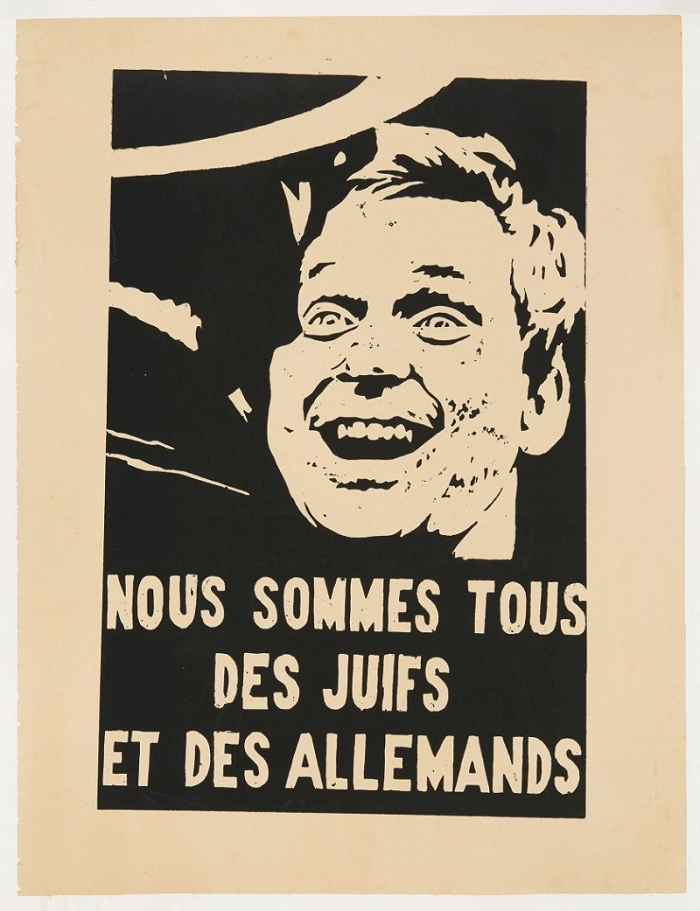
Affiche, mai ’68.

by Paul Ben-Itzak
Copyright 2021 Paul Ben-Itzak

On était vendredi. C’était l’heure du crépuscule. J’étais en train a causer avec mon voisin Ferdinand (pas son vrais nom), a qui je viens de demander de me raconter son expérience pendant la guerre à Algérie. Conscrit entre 1955 et 1958 — “C’est Mitterrand qui m’avais envoyé !” — il a vu des copains mourir à ses cotes et il a du tué. “Quand vous tombe dans un embuscade,” vous ne pouvez pas faire autrement.

— Macron n’avais pas du demandé pardon de l’Algérie !, Ferdinand a déclaré.

— Mais Ferdinand, le présidente n’a pas demandé pardon. (Du fait, à mon connaissance il a fait presque le contraire, en effet expliquant qu’en ce concerne l’histoire entre nos deux payes, on devrait aller au-delà des questions de pardon.)

— Macron, c’est un juif ! Comme Sarkozy.

Et voila, nous y sommes, j’avais pensé, frappé tout de la même. (Ca fait sept ans qu’on se connait, le Ferdinand et moi, et nos rapports ont toujours était des plus amicales.) Parce que bien évidement, c’est les juifs qui sont à blâmer pour et qui sont a l’origine de tout les maux du monde – car cette ‘pardon’ (pardon fictif !), s’était aux yeux de Ferdinand une mauvaise idée.

— Ferdinand, je suis juif.

— T’es juif? Juif américaine !

Comme si ce n’était pas pareil. (Ou, comme un ami m’avais dechiffré âpres — avec ironie — “Parce que bien sur les juifs américaines, ils sont forte dans les affaires.”)

En suite, bien sur que Ferdinand a essayé de revenir sur ses mots, de faire marche arriere, dans la façon d’usage, genre: Je n’ai rien contre les juifs, le monde est fait de tout, il y a même des policiers algériens a Marseille….

Mais ce rétréci ne m’a pas empêché de réfléchi: C’est de cette optique la, cette état d’esprit – cette ressentiment ‘latent’ envers les juifs, ce tendance de les blâmer pour tout les maux dans le société — qui était née la complaisance des certains françaises (et pas que des françaises, on a vu le même chose dans l’Italie, par exemple) face à la déportation, face a la collaboration de Vichy dans (comme Jacques Chirac a reconnu a le Vel d’Hiv en 1995) le nom de la France. C’est-à-dire que s’ils n’ont pas collaboré activement avec Vichy et les Occupants, ils n’ont rien dit ou fait pour les contre.

Et Ferdinand, a ton “Macron, c’est un juif !” j’ai envie de répondre:

Et Max Jacob, compagnon de route de Cocteau, Picasso, et Apollinaire, chrétienne converti depuis plus de 30  ans, morte à Drancy avant qu’on aurait pu le déporté, était (vu comme) juif.

Et Irène Nemirovsky, grande conteuse de l’exile de 1940, déjà romancier connu et edité par Albin Michel, arrête en ’42, deporté, et en suite morte dans les camps, était juif.

Et Robert Desnos, grand poète, arrêté et en suite morte dans les camps, était juif.

Et  Anne Frank était juif.

Et le Capitaine Dreyfus (dont la nièce Julie a était arrêté et qui était morte dans les camps), était juif.

Et Léon Blum, emprisonné malgré le fait que c’était un ancien président du conseil, était juif.

Et John Franklin, mon prof de civisme au lycée, survivant d’Auschwitz et qui nous a dit qu’il croit dans le statue des limitations (le proscription), même pour les allemands qui lui ont fait ca a lui et ses parents, et qui en suite est devenu prof d’Allemande, était juif.


Et Paul Cenac, qui a tant travaillé pour restorer la langue allemande du mal que les Nazis l’a fait dans sa poésie avant de se suicidé en 1970, était juif.


Et Romain Gary, vrais auteur de “La vie devant soi” et Compagnon de la Liberation, était juif.

Et Chantal Akerman, elle aussi suicidé (chez les enfants des survivants de la Shoah, c’est connu comme phénomène), était juif.

Et mon dentiste, qui a perdu sa cousine — donné par un bon français a Paris et dont la mère a essayé de se suicider en sautant de la fenêtre de sa chambre, depuis devenu le cabinet de mon dentiste, ou il a si bien soigné mes dents et, en passant, mon âme — est juif.

Et Ofra Haza, était juif.

Et Joe Mazo, un de mes mentors journalistique.

Et Sammy Davis Jr.

Et Serge Gainsbourg (qui a essayé de draguer la petite-amie de Sammy Davis Jr.).


Et mon grand oncle Sammy, qui a entre dans le légende familiaque âpres avoir fouetté un chauffeur a Miami qui l’a salué comme “sale Juif.”

Et Morris Hertzon, mon grand-père, si fière quand j’ai eu mon bar-mitzvah tardif a 16 ans a Miami Beach, grâce a lui.

Et Allan Sherman, l’auteur de “Hello Muddah, Hello Faddah,” chanson comique mythique des camps des loisirs juifs américains.


Et Edward G. Robinson.

Et Leonard Cohen.

Et Bob Dylan.

Et Camille Pissarro.

Et Edward Winer, mon père.

Et Eva Wise, ma mère.

Et Shirley Hertzon, sa mère a elle.

Et Max Winer et Shirley Winer (juif, il semble, d’origine Iranien ou Turque), mes grand-parentes cote père.

Et Donna Berman, ma rabbin mode Joni Mitchell a Princeton.

Et Art Spiegelman.

Et Rebecca Stenn.

Et Annette Clark, ma parraine.


Et sa cousine Gloria Lyon, qui m’a raconté, quand je lui a interviewé pour le New York Times, comment, en route pour un campe de la morte, elle s’était sauvé en sautant d’un chemin a fer tout nu, et qui a prise comme devoir de partage ses expériences avec les écoliers.

Et tout ces enfants poètes – artistes au Campe « modèle » de Terezin – auteurs du livre illustre post-hume « J’ai jamais vu une autre papillion. »

Et Humphrey Bogart.

Et Benjamin Stora, grand chercheur français – et enfant de Constantine, grande ville cosmopolite algerien —  qui a fait tant des travaux pour éclairir les rapports entre la France et l’Algerie depuis des années.

Et mon amie, grande artiste-militant a Belleville, KM. (Je don que ses initiales car, figurez-vous, Ferdinand, même si j’ignore si c’est son cas, les juifs et juives françaises ont tendance de se cache, même trois-quarts d’un siècle âpres le Shoah. Au cause des gens comme vous qui sont prête a les faire porter tout les maux du monde, de les juger envers leur identitie ethnique et pas leurs actes.)

Et il  y avait Kolya, lui aussi était juif, avant que on l’a lâchement assassiné.

Kolya, ado doué et douce, d’origine (comme mes ancêtres et comme La Nemirovsky) Ukrainien qui avais l’habitude de jouer avec ses camarades autour de la fontaine bleue mosaïque au milieu de le Square Albin Cachot en 13eme, ou j’ai eu ma première ‘crèche’ a Paname. Apres qu’on — j’ignore si c’était le Gestapo ou les gendarmes françaises – l’a arrêté, le Kolya, ses camarades l’a maintenu en vie dans leur façon dans leurs journaux a carnet. (Mode: “J’ai vu Kolya aujourd’hui blvd Arago.” “Kolya avais un drôle d’expression cette aprèm quand je l’ai rattrapé rue Glacière.”)

Et finalement, Ferdinand, il y avait le roi de Danemark, qui a manifesté son solidarité avec les citoyens juifs de son paye pendant l’occupation (et j’en suis certain qu’il y en a beaucoup qui ont fait pareil en France) en portant un étoile jaune sur son épaule.

Et il y a mezig, Paul Ivan Winer Ben-Itzak, ton voisin, qui suis juif (même si je préfère m’identifier comme citoyen du monde ou, si on insiste a me donner un etiquette, San Franciscan… et Périgourdin comme toi.)

Et pour Emmanuel Macron, j’ignore s’il est juif ou non, et je m’en fou. Mais je l’aime. Je l’aime car il a du courage.

Et toi, Ferdinand, qui êtes vous?
Lutèce Diary, 39: August 31, 1944 –Critique of the New Press / Critique de la nouvelle presse (French original follows English translation)

by Albert Camus
Translated by Paul Ben-Itzak

First published in the August 31, 1944 edition of Combat, the heretofore underground newspaper edited by Albert Camus. To read our English translation of Jean-Paul Sartre’s dispatch from the same issue of Combat, click here. To read our review with extracts of the recently published correspondence of Albert Camus’s correspondence with Maria Casarès, click here. After returning to Paris with false identity papers furnished by the Resistance, Albert Camus was the underground newspaper Combat’s final editor under the Occupation, on one occasion (as documented by Olivier Todd in his 1996 biography for Gallimard) being saved from being busted with proofs of the newspaper in his pocket at a Gestapo checkpoint when he was able to deftly pass the proofs to Casarès, correctly guessing that she would not be searched.

PARIS — Because between the insurrection and the war, a respite has today been granted us, I’d like to talk about a subject that I know well and which is dear to my heart: the Press. And because it’s a question of this new Press which has emerged from the battle of Paris, I’d like to speak with, at the same time, the fraternity and the clairvoyance one owes to comrades in combat. To read the entire article, in the original French and in its English translation, on our sister site the Maison de Traduction, click here.

The Lutèce Diaries, 19: “L’amour en fuite” or, As Romeo’s teeth bleed, love leaks out

by Paul Ben-Itzak
Copyright 20019 Paul Ben-Itzak

Written Monday, February 18. Re-written February 25 and dedicated to Pamela and Sabine in memory des belles moments passé autour de la rue des Martyrs. And to Emmanuelle Pretot, camarade en tout choses Truffaut. Like what you’re reading? Please let us know by making a donation so that we can continue this work. Please designate your PayPal donation in dollars or Euros to paulenitzak@gmail.com , or write us at that address to learn how to donate by check. If we bring in $120 we can continue to mend our bleeding heart with a boxed set of the complete works of François Truffaut. To read this article entirely in French or any other language, just click the translation button at the right.

PARIS — So there I was at dusk, heart broken and sentiments seeping out, teeth throbbing and gums bleeding profusely into a bandage I was trying in vain to grit (hard to grit when half your teeth are gone), staggering up the rue des Martyrs towards the Montmartre cemetery and the grave of the man I blamed it all on: François Truffaut.

In the late French director’s five-film, 20-year saga that began with the 1959 “The 400 Blows” and climaxed with “L’amour en fuite” (often mistranslated as “Love on the Run”; “Love Escapes” or “Love is leaking” are more exact) Antoine Doinel, played throughout by Jean-Pierre Leaud, is constantly running away: from school, from the army, from his teachers, from jobs ranging from pushing miniature boats in corporate ponds to spray-painting daisies to night-clerking to agency detective to t.v. repairman, and most often from the women in his life: His mother, his wife (the effervescent Claude Jade, whom Antoine, in the 1968 “Stolen Kisses,” rightly calls “Peggy Proper” for her prim manner), his girlfriend (the eponymous Dorothée, who made her debut in the 1979 “L’amour en fuite” and would go on to haunt the dreams of generations of French children as the country’s equivalent to Romper Room’s Miss Nancy), his older mistress (the wife of his boss at a shoe-store — Delphine Seyrig at her glamorous apex), and various intermittent mistresses. The only one he chases, apart from Dorothée’s “Sabine,” whom he loves but whose love seems to frighten him (he finds her after patching up and tracing a photo of her an assumed lover tears up in a phone booth during an angry break-up call), is Marie-France Pisier’s “Colette,” whom we first meet in Truffaut’s 30-minute contribution to the 1963 multi-director film “Love at 20.”  (They meet at a classical music concert; Antoine is working at the time in a Phillips record factory, the director letting us see the hot wax being spun into vinyl. In “L’amour en fuite,” Antoine finally tracks Dorothée’s Sabine to her work-place: a record shop where couples make out to Gilbert Becaud in the listening rooms, Truffaut’s homage to the listening stations in Jean Vigo’s 1934 “L’Atalante” where the – fleeing – newlywed bride takes refuge.)

In “L’amour en fuite,” after Colette hails him from the window of a Lyon-bound train at the Gare de Lyon where Antoine has just dropped off his son by Jade for camp, Antoine jumps on the moving train without a ticket, surprises Colette in her sleeper car right after a fat middle-aged businessman, assuming she’s a prostitute, rubs up against her in the aisle (a lawyer, she’d spotted Antoine earlier in the day at the court-house, where with Jade he’d just completed France’s first no-fault divorce, echoing my own parents split-up in California a few years earlier). After they catch up, she upbraids him for the revisionist way he recounted their courtship as 20-year-olds in a barely fictionalized memoir he’s recently published: “My family didn’t move in across the street from you, you followed us!” (At the time of “L’amour en fuite,” Antoine is working as a proofreader on a book detailing the 18 minutes that De Gaulle disappeared during the 1968 student-worker uprising. Because the project is top secret, he’s working – literally – underground.  The netherworld also figures in the 1968 “Stolen Kisses,” in pneumatic messages from Seyrig requesting love assignations. It’s as if Antoine can’t get out of the lower depths; in “L’amour en fuite,” his mother’s lover from “The 400 Blows” surfaces to show Antoine, who was in the brig when she died, where she’s buried – which happens to be right next to the tomb of Marie du Plessis, the real-life model for Dumas fils’s “Camille.” It’s one of three of the five Antoine films in which the Montmartre cemetery features, and it’s the last; shortly afterwards he’ll reconcile with Dorothée’s Sabine, returning to the land of the living.) He tries to kiss Colette – we’re back on the train in “L’amour en fuite” —  and she light-heartedly repels the attempt, scolding him, “Antoine, you haven’t changed.” The conductor comes around for tickets and Antoine flees again,  pulling the emergency chord and jumping off the still-moving train. We see the now 34-year-old Antoine running across a field, an echo of the final, poignant, liberating moment in “The 400 Blows,” when a 14-year-old Antoine, having escaped from a youth home/prison, is frozen on screen in flight and in our memories, a broad smile on his face as he runs along a beach, discovering the ocean for the first time (the emotional antithesis of the destiny of the hero in Chris Marker’s 1962 “La jetée,” forever doomed to helplessly watch a woman being killed over and over again on the edge of a dock).

In my own Bizarro universe re-make of the Antoine-Colette train scene from “L’amour en fuite,” it was Colette who, after having chased me and captured my heart, had jumped off the train and was running out of my life.

So it was that last Monday found me staggering up the rue des Martyrs as the Sun set over the Sacre Coeur church (which the 1871 Communard rebels had been forced to build as penance by the ruling Versailles government) which slowly emerged above Martyrs, gums bleeding from the just-extracted tooth, heart raw and as hyper-exposed to its glare as the hero of Albert Camus’s “The Stranger” walking on yet another unshaded beach and with —  au contraire to Camus’s hero — no one to take it out on … except Truffaut and the illusions with which his Doinel cycle (all five seen one week-end at New York’s Anthology Film Archives just before moving to Paris) had filled me. Once at the grave, after filling my plastic cup at a nearby fountain and popping a dissolvable 1000 gram Paracetamol into the water, posing it on Truffaut’s tomb (decorated with an unraveling 35 MM film spool and a worn set photo of Truffaut, Leaud, and a woman who might have been Claude Jade) and watching it fizz away like my love affair, I lifted my Green as Gatsby’s Light cup and, echoing the Charles Trenet song which provides the theme for the 1968  “Stolen Kisses” – in which Leaud’s Antoine and Jade’s Christine fall in love – toasted François Truffaut with “A nos amours,” to our loves.  Looking over my shoulder at Zola’s first tomb, I realized that I might have added: “Je t’accuse! This is all your fault.”

Post-Script, 2/25: Having – like Antoine at the end of “L’amour en fuite” – just taken back the key from under the pillow, I now see myself less like Marker’s hero, doomed to replay the same fate with the same woman over and over again, and more like Antoine in the final frozen frame of the final film in the Antoine cycle, which resurrects the end of the first, of a 14-year-old Antoine frozen in time joyously jumping into the air on a beach, his virgin visit to la plage. And looking for my own Dorothée to patch me up. Interested? Check me out here.

Est-ce que l’antisionisme = l’antisémitisme? Is anti-Zionism the same as anti-semitism? (in French / en française)

Sur l’emission Là-bas si j’y suis: “Antisionisme = antisémitisme ? Un amalgame hypocrite et dangereux.” Entretien de Daniel Mermet avec Dominique Vidal, journaliste et historien. Cliquez-ici /click here pour y ecouter / to listen. (Kicked off public radio in 2014, Là-bas si j’y suis is the French equivalent of Democracy Now.)

Protected: The Lutèce Diaries, 18: How I rescued 2000 years of Eastern & Western Philosophy from a toilet at the Luxembourg Gardens, learned that my shit doesn’t stink as bad as all that, and didn’t resolve the latest Jewish and Muslim questions dogging France

This content is password-protected. To view it, please enter the password below.

Protected: Lutèce Diaries, 15: (In French & English) And if three out of five Parisiennes were addicted to crack? / Et si 3 sur 6 Parisiennes etait accro au crack?; “On ne parle que de liberté et on se confectionne des chaines de plus en plus”

This content is password-protected. To view it, please enter the password below.

Protected: The Lutèce Diaries, 14: Juliette of the Spirits

This content is password-protected. To view it, please enter the password below.

The Lutèce Diaries, 12: Child is the Father of the Man

By Paul Ben-Itzak
Copyright 2019 Paul Ben-Itzak

“You are the light of the world
But if that light’s under a bushel
It’s lost something kind of crucial.”

— “Godspell”

(Like what you’re reading? Please let us know by making a donation so that we can continue this work. Please designate your PayPal donation to paulenitzak@gmail.com , or write us at that address to learn how to donate by check. To read this article in French or any other language, just click the translation button at the right.)

PARIS — For personal reasons, I’ve resolved this week to get out more and circulate: to try to connect with people, with the esperance that the ame-soeur, the soul-mate, is waiting for me somewhere among them. (If you’re also looking, click here to find out more about me — and the us I’m looking for.) So after a moderately successful noon-time Russian Earl Grey thermos tea on the banks of the mighty Ourcq canal here in Pantin / le pre Saint-Gervais — there was the water but there was also the bruit of the garbage truck which seemed to be following me around, and the blight of the gray Centre National de la Danse behemoth which looks more like a prison than bunhead central — last night I was determined to have at least one coffee at Le Danube, a brightly-lit, recoup-furnished pastel colored bar on the place of the same name dominated by a buxom lime-stone babe that I’ve had my eyes on (the bar, not the babe) since attending a vide-grenier (community-wide garage sale; vide = empty, grenier = attic) and activities fair in the ‘hood nearly five years ago. Before that, I planned to watch the sunset and the people jogging and returning from work from a bench high atop the Buttes Chaumont park, my ears caressed by its water-falls and my chest warmed by more Russian tea, moderated with Algerian mint left over from Saturday’s Palestinian and Jamaican chicken twins feast with my Bellevilloise artiste friends K & R. I’d never liked this man-made park, designed by Colonel Hausmann and just as antiseptic as his apartment buildings, with the clumps of cypress trees divided by a concrete periphery path whose connecting trails never seem to lead to the lake at the bottom… until I started translating Michel Ragon’s “La Mémoire des vaincus” (The Book of the Vanquished), in which the young street urchin heroes, who’ve just been taken in by two almost as young publishers of an anarchist journal at the same time they’re hosting members of the violent Bonnot Gang, regal in cavorting amongst the caves and falls before running down to the La Villette Basin. Ragon and his wife Françoise have become my model couple since I met them Saturday afternoon, her nudging her older husband on observations they’ve shared and developed together for 51 years, since getting married in a building constructed by Le Corbusier, a Ragon chou-chou. (Ragon told me he switched to architecture after art magazines, pressured by advertisers, started trying to clamp down on what he could and couldn’t write. When the same thing started happening at the architecture magazines, he turned to books.)

Besides the thermos, the chick — er, soulmate — attracting tools I brought with me were the copy of Ragon’s “Dictionary of Anarchism” M/M gave me (they also gave me, as I was hoping for, a copy of his “Courbet, Painter of Liberty”) and my two vintage ping-pong paddles. (They’re not vintage because I bought them in a vintage store, they’re vintage because I’ve had them since 1973, when I came in second in the city-wide San Francisco championships for the 9-12 age group, having won my ‘hood and my region before getting slaughtered by a nine-year-old Chinese kid half my size whose spin-balls I couldn’t touch. I’ve had the paddles as long as I’ve had this adult carcass, and they’re in a lot better shape.)

paul photo paris apartment

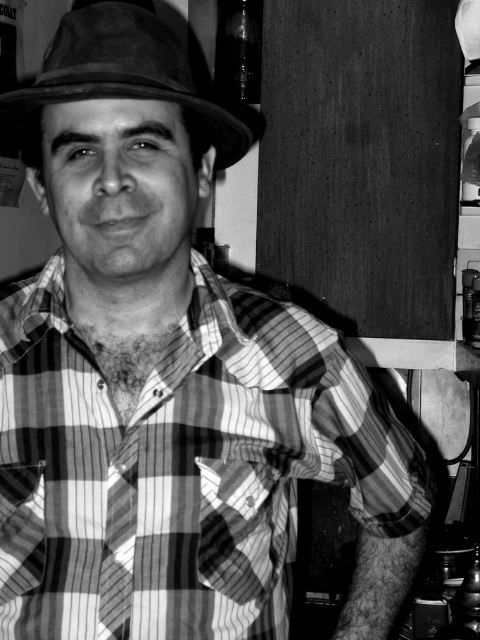
Would you play ping-pong with this man? (Photo: Julie Lemberger.)

I’d decided to pack the paddles for this Paris trip after seeing Forest Gump for the first time; stacked on top of the tiny valise he brings with him when he goes to retrieve his childhood sweetheart is a paddle. And after a twilight spotting from a bridge off the Ile St-Louis of a pair of kids playing in the Tino Rossi sculpture park on the Left Bank, I’ve got it into my head that maybe the first step to finding my soul-mate is finding a playmate. At first the idea was to sit on a bench near a table with the rackets until she showed up. But lately I’ve been thinking that instead of going where the ping-pong players are — which might just lead to another shellacking by a tiny Chinese kid — I might have better luck, soul/playmate-wise, taking my paddles to where the chicks hang out, brandishing my most innocent Tom Hanks smile (being careful not to open my mouth too widely, at least not until the denture arrives), and attracting the French nana with the innocent abroad thing, hoping I’ll do better than Lambert Strether in Henry James’s “The Ambassadors,” whose innocence is ultimately quashed by European cynicism and hundreds of years of European history. (I’ve been hearing the rebuff Strether’s French lass handed him since an Italian boy told me just after high school, “To understand my sister, you first need to understand our history,” an imposing wall for someone who keeps trying to act like he was born yesterday.)

The tea proved edifying, but — initially anyway — not in the way I’d hoped for.

The last time I took a twilight tea in this spot, I’d been moved by the sight of a young couple who paused at the bench next to me so the man could take the baby-pack from the woman. This time I was devastated by the arrival of a boy in a light blue cap tossing a squeaky ball to a beagle, accompanied by a big man in an olive jacket and darker blue cap who, instead of marveling at this precious moment which will never happen again, remained riveted to his cell-phone screen. I got the impression that if the beagle weren’t there, I could kidnap the kid — perhaps by using the ping-pong paddles as a lure — and the father would keep right on staring at his screen. “Go play with the other dog,” the kid said, as he finally wrenched the squeaky-toy from the beagle’s jaws while his father remained oblivious. “We’ll play with the ball more at home.” I followed them with my eyes another 100 yards until they passed through the iron gate, the distance between the father and son growing.

Things perked up for my own family prospects when a tall and lithesome young woman, perhaps in her thirties, her short curly hair ensconced in a dark brown cap, took a look at me surrounded by all this regalia, hot steaming chrome cup of tea at my lips, paddles by my side, anarchists in hand, and, albeit without slowing down much, spread out her arms and, looking at me in the eyes, smiled as if to proclaim, ‘On est bien la, n’est pas?!,’ to which implicit benediction I responded out loud, “Tranquille.” (Not a worry in the world.)

When it finally got too dark to tell the Christian anarchists from the anarcho-syndicalists from the Action Française anarchists (Ragon lays out five distinct categories in an introduction that’s the most concise sweeping history of anarchism I’ve ever come across), after beholding the layered cushions of the Sun setting over Northeastern Paris I left the park and headed down the street to the Danube, telling myself, “Your sole goal tonight is to buy one coffee. If you do that, the evening will be a success.” But when I looked in at the bar and saw there were just two guys with the requisite five-o’clock shadows seated on leather stools chatting with two crew-cut male bartenders, I decided that there wasn’t any point if there were no women in sight. On the off-chance that She might simply be running late, I decided to walk around the block, hoping that no one would wonder what a swarthy unshaven guy in a dark trenchcoat and “I Heart Golf” beret was doing loitering in the area with a pair of Chinese ping-pong paddles and an anarchist dictionary, and call the “I just saw something suspicious” hotline.

When I returned to the bar, the counter-composition hadn’t changed, and it looked like the chercher la femme playmate crusade would come up empty for the night. But all was not for naught, as I did find a good closer for this column: Looking through the glass at the bright interior of the restaurant to give it a final scoping out before leaving, I spotted, sitting alone at a table — whose neighbor table was free — a woman who resembled either Camille Puglia, Gloria Emerson (the Vietnam war correspondent who’d once chided me in an airport jitney from Princeton to JFK, after I’d bragged that I was already writing for the NY Times at 23, “When David Halberstam was 23 he already had his first Pulitzer”), or my high school advanced composition professor Anne-Lou Klein, looking up towards the heavens as if exasperated by the book in front of her:

“L’Homme Nu.” (The Naked Man.)

C’est moi — comme tu le savez bien, dear reader.

PS: As for my ping-pong paddle as chick magnet theorem: Usually when I smile at a woman on the street here in Paris she just ignores me or grimaces. But as I was crossing the street from the Danube to the avenue General Brunet, paddles clearly in evidence, a young woman who registered Amelie on the light in the eyes scale looked at me and coyly smiled with a glint in her eye, a smile inviting enough to make me want to live to love another day.

Protected: Lutèce Diaries, 11: Resurrections — About letting your chickens go when they’ve already flown the coop and feeding your brain and stomach in Paris on less than 10 Euros a day while resolving your troubled academic past

This content is password-protected. To view it, please enter the password below.

Protected: Lutèce Diaries, 10: Les sujets qui fâche: The Scarf thing, the Jewish thing, the It’s all about me thing

This content is password-protected. To view it, please enter the password below.