Le chevalier de la Barre: Ce 18 mars 1871: Un si bel espoir (March 18, 1871: Such a great hope) (English translation follows original French version)

Extrait du “Un si bel espoir” (Extract from “Un si bel espoir)
par Michel Ragon
Copyright Éditions Albin Michel S.A., 1998
Presenté et traduit par Paul Ben-Itzak

Remercierements à Françoise Ragon.

(English translation follows.)

Ce roman historique de Michel Ragon raconte l’histoire de Hector, architecte visionnaire et utopiste, disciple de Proudhon qui a aussi côtoyé un certain Gustave Courbet, et dont la jeunesse a été enivré en 1848 par les espoirs de Paris soulevé ; histoire qui se termine peu après la Commune de Paris, ce soulèvement, révolte, et insurrection utopiste du 18 mars 1871. Face au Black-out presque total dans les medias radiophoniques classiques sur cette 150ème anniversaire, nous avons voulu partager avec vous quelques extraits du roman. Car c’est ça Michel Ragon : la Mémoire des vaincus — ces ‘beautiful losers’ (beaux perdants) — dont les luttes ne sont jamais complètement perdues tant qu’on ne les oublie pas. (Pour en savoir plus sur la Saison de la Commune, cliquez ici.)

L’année 1871 commença par la capitulation du nouveau gouvernement de la République. Les drapeaux allemands flottaient sur les forts de Paris. L’Alsace et la Lorraine étaient livrées aux Prussiens. Aussitôt le peuple de Paris drapa de voiles noirs la statue de la ville de Strasbourg, place de la Concorde. Dans la nuit du 5 au 6 mars les murs de la capitale se couvrirent d’affiches rouges qui proclamaient: « Place au peuple. Place à la Commune. » Des gardes nationaux, qui n’avaient pas encore revêtu leurs uniformes, s’en allaient en bataillons plus ou moins désordonnés, escortés par leurs femmes et leurs enfants, vers les remparts qu’ils entendaient bien tenir. La Commune, ce fut d’abord cela : des ouvriers, des artisans, des bourgeois, refusant l’armistice signé par le chef de l’État, s’opposant à l’entrée des troupes allemandes dans la capitale, s’improvisant soldats, face au gouvernment soi-disant légal qui, abandonnant Paris, s’installait peureusement à Versailles.

Tout cette foule qui avait reflué de la banlieu*, chassée de ses masures, ces ouvriers sans travail, ces paysans sans terre, s’acharnera à défendre une capitale qui n’était pas la leur, la capitale des riches et que les riches avaient désertée. De ce Paris réinvesti, ils voulaient faire leur Commune.

Hector rencontrait souvent [Eugène] Varlin qui, nommé au conseil chargé d’administrer Paris, se livrait à une activité intense. Il raconta à Hector comment, le 18 mars, Adolphe Thiers, devenu le chef du gouvernement versaillais, avait envoyé des troupes pour récupérer les deux cent cinquante canons abandonnés dans Paris et comment la foule, arrêtant les chevaux, coupa les harnais ; comment, sur la butte Montmartre, les femmes se couchèrent sur les canons ; comment le général Lecompte ordonna à ses soldats de tirer ; comment un sous-officier, sorti du rang, cria « Crosse en l’air » ; comment les lignards fraternisèrent avec le peuple et fussillèrent leur propre général.

— Maintenant c’est la guerre entre Versailles et Paris, dit Varlin. Nous avons dressé une centaine de barricades. Le tout est de tenir pendant une mois, le temps que la province s’insurge à son tour. À la Commune de Paris vont répondre les Communes de Lyon, de Bordeaux, de Marseille, de Nantes. La France va devenir une fédération de communes. Ah ! si Proudhon nous voyait !

*Prolos chassé des pauvres quartiers de Paris effacés par les aménagements de Baron Haussmann — aménagements qui ont aussi préordonné le défait militaire de la Commune.

English translation by Paul Ben-Itzak of excerpt from Michel Ragon’s novel:

Michel Ragon’s historic novel “Un si bel espoir” (Such great hope) recounts the story of Hector, visionary architect and Utopian, a disciple of the anarchist writer Pierre-Joseph Proudhon (1809-1865) and friend of Gustave Courbet, and whose youth was inebriated in 1848 by the hopes of Paris in revolt; a story which ends shortly after the Paris Commune, the uprising, revolt, and insurgency of March 1871. In the face of the almost complete mainstream media news black-out on this the 150th anniversary of the Commune, we wanted to share some excerpts from the novel. Because this is the essence of Michel Ragon: the memory of the vanquished, the beautiful losers whose fights are never entirely lost as long as we don’t forget them. (To check out the many commemorative activities throughout Paris through June, click here.)

The year 1871 started out with the new government of the Republic’s surrender. German flags flew over the forts of Paris. No sooner had the region of Alsace and Lorraine been delivered to the Prussians than the people of Paris had draped black flags over the statue of the city of Strasbourg on the place de la Concorde. On the night of March 5/6, the walls of the capital were covered with red posters proclaiming: “Power to the people. Power to the Commune.” The national guard, which barely had time to don its uniforms, marched in more or less disorganized battalions, accompanied by their wives and their children, towards the ramparts which they meant to maintain. The Commune was first and foremost this: workers, craftsmen, bourgeoisie, all refusing the armistice signed by the head of state, opposed to the entry of German troops in the capital, playing at soldier, in the face of the so-called legal government which, abandoning Paris, fearfully set up shop in Versailles.

All this crowd who had flocked to Paris from the poor suburbs*, driven from their hovels by the war, these workers without work, these paysans without land, were determined to defend a capital that was not theirs, this capital of the rich and that the rich had deserted. From this re-invested Paris they would make their Commune.

Hector often ran into [Eugene] Varlin who, nominated to the counsel charged with administering Paris, gave himself over to an intense flurry of activity. He recounted to Hector how, on March 18, Adolphe Thiers, named head of the Versailles government, had sent the troops in to recuperate the 250 canons abandoned in Paris and how the crowd, stopping the horses, had cut the harnesses; how, on the top of Montmartre, women had slept on the canons to protect them; how General Lecompte had ordered his troops to fire on the crowd and how a junior officer, emerging from the ranks, had cried, “Muskets in the air!”; how the soldiers on the line had fraternized with the people and turned their guns on their own general.

“From here on in it’s war between Versailles and Paris,” exalted Varlin. “We’ve erected a hundred barricades. The most important thing is to hold out for one month, to allow time for the provinces to rebel in their turn. The Commune of Paris will be followed by Communes of Lyon, of Bordeaux, of Marseille, of Nantes. France will become a federation of communes. Ah! If only Proudhon could see us now!

**Workers driven from the poorer neighborhoods of Paris erased by the renovations of Baron Haussman — renovations which, by eliminating the sidestreets in favor of grand boulevards had also paved the way for the military defeat of the Commune.

The unbearable fadaise d’Anne Hidalgo

by Paul Ben-Itzak
Copyright 2021 Paul Ben-Itzak

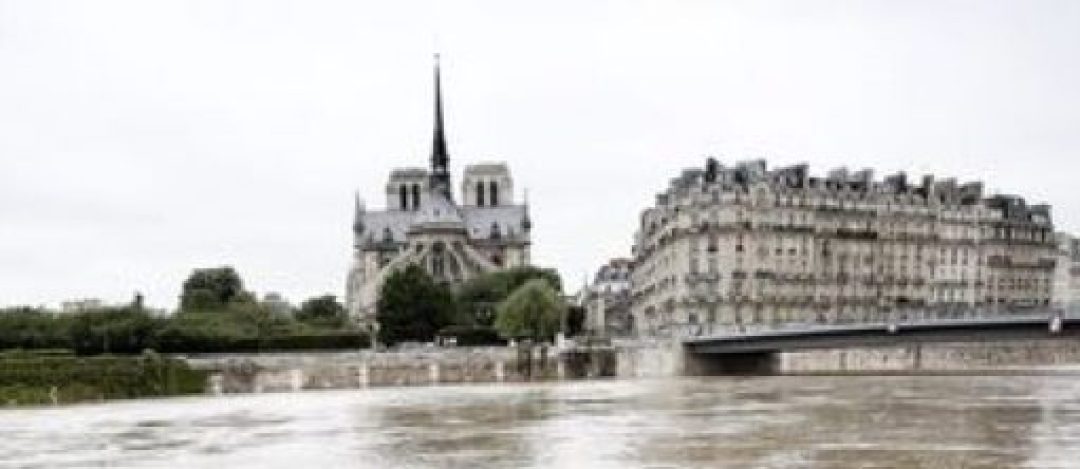
After instituting week-end confinements in two French departments experiencing exponentially exploding Covid outbreaks last week, the Alpes-Maritime county around Nice and the county around Dunkerque, the national French government announced consultations with leaders in 18 other counties also experiencing elevated levels of cases. The mayor of Paris’s initial response (albeit floated by a deputy mayor) was to suggest a three-week confinement, with the goal of being able to re-open bars, restaurants, and cultural establishments. In other words, so that the mayor could repeat the same conneries of last summer and early fall, when she declined to cancel three typically crowd-intensive events: an outdoor summer film festival, the month-long “Paris Plage” festival which pretends that the Seine is a beach, and the “Nuit Blanche” all-night art event night in early October, when France was already riding the crest of a second wave. Giving the mayor the benefit of the doubt, I ignore what crowd limitations may have been imposed on any of these events. What I do know is that masks were not required for Paris Plage. (I was shocked at the time to see a photo of young people with “Paris health department” tee-shirts passing out information, presumably on safety measures, while standing shoulder to shoulder and not wearing masks.)

After the idea of a three-week new confinement fell flat, the mayor back-peddled and

** Called the idea of a week-end confinement “inhuman,” in and of itself not inaccurate to objectively qualify such an imposition, but given the mayor’s presidential ambitions and previous denigrations of, for example, the pace of the government’s vaccine roll-out, implicitly impugning this quality to president Emmanuel Macron’s government, lead by prime minister Jean Castex.

**Proposed opening classroom windows and holding class outside — as if no one else had already thought of this.

** And, most solipsistically in my view, said the vaccine allotment for the Ile de France region which includes Paris should be quadrupled — when she well knows that vaccine supply in France as in Europe is still limited. (As of last weekend, according to the European Centers for Disease Control, 40 million doses had been distributed to the 27 member states, and 32 million administered.) The implication here being that Parisians are more important than the rest of us.

The frank-talking Castex promptly and properly characterized Madame Hidalgo’s pronouncements as “des fadaises.” (Oxford: “Fiddle-faddle, trifle, nonsense, insipid, silly speech.”)

Meanwhile, while the mayor of Paris was fiddle-faddling, her counterpart in the Southwestern city of Toulouse was taking concrete, practical measures. After residents flooded the banks of the Garonne last week-end, many ignoring social distancing measures and leaving local police to hand out fines, he announced that henceforth the quays would be closed on week-ends. He evidently realizes that it would be … inhuman… to expect the police to act as hall monitors.

Why am I making more of a federal case out of Mayor Hidalgo’s actions and statements than the federal government is?

I think we need to examine the Paris mayor’s recent words in the context of both her reported presidential ambitions and an overall administration of the city frequently characterized by more concern with opportunistic ‘show’ than actual effects, particularly as concerns pollution, the ecology (in a large sense that includes ombrage — tree protection — and water flowing), and privatization.

Let’s look first at that characterization of a possible week-end confinement — and by association the strategy, or at least part of the strategy, of Mr. Macron and Mr. Castex’s government — as “inhuman,” with the concomitant assumption that Madame Hidalgo has a monopoly on that quality. Where exactly does a mayor whose approach to resolving the city’s ongoing homeless population dilemma has included replacing benches in public parks and on the boulevards with single-unit monstrosities (so the homeless can’t sleep on them; out of sight, out of mind) get off applying the epithet ‘inhuman’ to a proposed measure by a government whose president, Mr. Macron, began his tenure by earnestly announcing that he wanted to see 0 people sleeping on the street? On my very first visit to Paris in the fall of 2000, I remember reclining on a bench in a tiny square off the Butte aux Cailles across from the place Paul Verlaine, which still boasts an accessible water source and where the first manned balloons first landed (or took off) in the late 18th century, my arms stretched out along the bench-back as I basked in the gentle fall afternoon sunlight and thinking, “This is the life, and this is where I want to live.” When I returned to that square in 2019, the long benches had been replaced by a row of one-person units, the pigeon-shit that covered all of them leaving me with no desire to rest my fanny at that particular moment. (Benches aren’t just places for homeless people who can’t find correct shelter to sleep; they are also incredible aubaines for the type of ‘vivre-ensemble’ Anne Hidalgo claims to champion. And settings for intrigues; if Georges Simenon were alive today, he would not be able to write “Maigret and the man on the bench” in Anne Hidalgo’s Paris.)

Next let’s consider the sanitary environment — or at least one aspect of it on which I have some expertise — in Paris that preceded the Covid outbreak. (Madame Hidalgo has been in power since 2014.) On my last extended stay in the capitol, from early January through late May of 2019, I observed that the sinks in about three quarters of the public sanitaires (at least the ones I visited, and when it comes to the sanitaires of Paris, I’m the guy Leonard Cohen was talking about when he said “I’m your man”) or outdoor toilet huts weren’t working. That’s an awful lot of people running around the streets of Paris with unwashed hands. Public toilets in general haven’t fared well on Madame Hidalgo’s watch. (Which is relevant because, in a city where people have a propensity to piss on the street, it’s a question of propriety. “Everybody pees on Paris; watch me now.” — Malcolm McLaren) The free public toilets in the Metro stations were sold off by the mayor to a private concession which charged as much to relieve oneself — 1.50 — as a Metro ticket. And soon shuttered most of them. The pissoir off an alley midway up the parc Butte Chaumont was blocked off by debris for years. And the most luxurious toilet in the world, an Art Deco model below the Place Madeleine between the storied church which took 100 years to build as the country alternated between church-friendly and church-hostile regimes, the Maille Mustard Boutique, and the Ladurée Macaron bakery, where each client had his own mahogany stall with private sink and could get his shoes shined as the attendants played Piaf on the radio, was closed by the mayor with the excuse that it was too expensive to maintain. The last time I saw my favorite toilets in Paris — I used to take visitors there before we went across the street to sample the latest mustard concoction — garbage was piled up before the locked door at the bottom of the entry stairs. Never mind that the city spends, under Madame Hidalgo’s instruction, the same amount, 100,000 Euros, on a 30-minute New Year’s Eve light show, as if Paris needs the extra publicity.

Speaking of running water, one of the most elegant — and egalitarian — features of this most elegant and proletarian city used to be the fountains that dotted neighborhood gardens. The last time I saw Paris, most of those fountains had stopped flowing… except for those in the busiest tourist zones. This is one of the egalitarian qualities that first impressed me about Paris: You didn’t need to live in the city center, or a tourist zone, to have access to well-kept garden — and green space — with a fountain, pond, or even creek. (The Japanese-style one that borders a summit at the parc Georges Brassens in the 15th arrondisement, famous for its weekend old book market, has been dry for at least a decade, so that can’t be put on Madame Hidalgo.) Fountains now gone dry include, as I’ve previously noted in the Lutèce Diaries, a limestone naked lady reclining in a recessed basin just behind the 2000-year-old Arenes de Lutèce whose spout no longer spouts, and a metal sculpture-fountain nestled in a little park on the boulevard Arago in the 13eme arrondissement designed by Cesar Domela, who used to live in the Villa Fleuri next door. Even the cascading fountain that intersects the parc Belleville high above Paris sometimes runs dry. (And I’m not counting fountains like the ring of spouting tortoises under the four breasty beauties from around the world holding up the globe in the Carpeaux fountain at the entrance to the Explorers or Marco Polo garden which abuts the Luxembourg, which seem to be turned on in April and off in October, as there may be a good reason for that seasonality.)

And then there’s the trees.

As part of what I consider the mayor’s ecology de facade campaign — because apart from promises to eventually ban diesel engines from the city, as with her predecessor Hidalgo’s ecology program, cautioned by her Green party collaborators, is more about show than substance — City Hall has been lining certain streets, like the rue des Envierges which leads to the esplanade above the parc Belleville (offering the best view of the Eiffel Tower on the Right Bank) with cumbersome square wooden planter boxes hosting unidentifiable shrubs, presumably meant to indicate that the city is getting more green. (Meanwhile, the Arab-French bakery at the end of the street across from the esplanade has been replaced by another BoBo soup shop.)

I never thought the day would come when I’d favorably compare anything in Texas with anything in France, but contrast this superficial greening with the ‘shading’ policy of the city of Fort Worth, where I lived for nearly four years, and whose official policy dictates that a certain percentage of the municipality’s streets must offer tree coverage, or protection from the Sun.

In Paris, on the other hand, in 2015 I watched with horror from the window of my apartment on the rue Tourtille in lower Belleville as city-funded construction workers chopped down two hundred-year-old cherry trees (no doubt relics of the time when Belleville was a semi-rural suburb of Paris) in the back courtyard as they replaced an existing apartment building with a new one which would extend farther into the courtyard. (Residents had fought City Hall for years to try to stop that project, as the Bellevilloises have had to fight Madame Hidalgo on other projects aimed at privatizing different aspects of this oasis of a neighborhood, be it an apartment conversion project — allocated to a private builder by the city — on the rue Ramponeau, named after the sector’s most famous cabaret owner, which would have torn down one of the neighborhood’s last artisan ateliers, or her attempts to convert the space that once housed the “Museum of Air” above the park’s lower esplanade and amphitheater to a restaurant or private meeting hall.)

And what about the pollution? When I moved out of Paris in 2007, in large part because I couldn’t breathe, pollution was killing on average 40,000 people per year in France. In the most recent year studied, it was killing 48,000, with about 2000 of those in Paris, also the fifth most polluted city in Europe. The point isn’t that this is Madame Hidalgo’s fault; it’s not. But at the least the steady progression of the numbers confirms that for all the bally-hoo around measures like banning cars from the periphery of the Right Bank of the Seine (which only displace the cars, and the pollution they promote, to other sectors), her much-publicized actions have (apparently) had very little real effect on the pollution she’s supposed to be targeting. (I also remember, during my Spring 2019 stay, gasping for breath in front of a sign off the Butte aux Cailles assuring me, “Paris respire,” “Paris is breathing,” as if closing small sectors of the city on Sundays for six months of the year was sufficient.

I guess what I’m saying — and the link to Hidalgo’s ‘inhuman’ comment with its implicit criticism of Mr. Macron’s government — is that if the mayor of Paris is concerned with humanity, perhaps she should be taking more steps to humanize — and civilize — the city of which she has the honor to be the steward and whose propriety has only diminished under her reign. (Turning those fountains back on and gettiing that water running in the bathrooms would be a good start.) And to bring back some of the elegance which since the epochs of Benjamin Franklin and Henry James has drawn Americans to Lutèce, making us feel that we too have some investment in its future.

An important note about accessing new content on the Dance Insider & Arts Voyager, the Paris Tribune, and the Maison de Traduction

As of January 2021, new content on the Dance Insider & Arts Voyager, Paris Tribune, and Maison de Traduction, edited by veteran journalist, foreign correspondent, cultural critic, and translator Paul Ben-Itzak, will be available exclusively by e-mail subscription in printable e-magazine format. Subscriptions are $99 or Euros per year or less than $10/Euros per month. To subscribe, just designate your payment through PayPal to paulbenitzak@gmail.com , or e-mail us at artsvoyager@gmail.com to learn how to subscribe by check (U.S.) or or postal money order (France). Thank you / Merci.

Le Feuilleton (the Serial), 6: Exclusive! “Trompe-l’Oeil,” Michel Ragon’s saga of art, artists, dealers, anti-Semitism, and critics in Post-war Paris, Part 6

by and copyright Michel Ragon
Translation copyright Paul Ben-Itzak
From “Trompe-l’oeil,” published in 1956 by Éditions Albin Michel

Part six in the Paris Tribune’s exclusive English-language translation of Michel Ragon’s seminal 1956 novel taking on the world of abstract art, artists, art collectors, art dealers, and art critics in Paris, as well as post-War anti-Semitism in France. For the first five parts, click here. Translator Paul Ben-Itzak is looking to rent digs in Paris this Spring and for the Fall. Paul Ben-Itzak cherche un sous-loc à Paris pour le printemps. Got a tip? Tuyau? E-mail him at artsvoyager@gmail.com .

Summer had scattered the artists. The poorest remained in a Paris deserted and torrid. The better off found themselves on the Cote d’Azur, where they automatically took up the rhythm of their Parisian lives: gallery visits, squabbles between critics, internecine rivalries between dealers, interminable palaver in the cafés which supplanted le Select or le Dôme, the dazzling vista of the Mediterranean replacing the buzzing of the boulevard Montparnasse.

At the end of September, they all returned to the nest, excited by the prospect of an exhibition to prepare, an article to write, a sale practically assured. Optimism was the order of the day. Would this be the great decisive year? Everyone had the right to hope so.

Returning first, Fontenoy frequently passed by Manhès’s atelier before finally finding him at home. He was impatient to reunite with his friend; he’d saved up so many things he wanted to share with him!

He knew the majority of the habitants of the cité, a kind of housing project allocated to artists.* From the moment he entered the narrow street, a tremor of robust howling indicated that Corato was reciting the aria from “Pagliati.” Corato was one of the poorest of the abstract painters. His somewhat obscure style, extremely nuanced, attracted few fans. No dealer was interested in him. An Italian, he took advantage of the pristine tenor’s voice with which nature had bestowed him by earning his living singing operatic airs in a café-concert. But this double-life took its toll. For that matter, his tenor’s day job made it hard for his fellow painters and the critics to take him seriously. One of them had even quipped, “Corato is a professional tenor. Painting is to him like the violin is to Ingres.” Certain barbs launched for the pleasure of coming up with a witty turn of phrase can also poison the victim’s existence. This particular one really wounded Corato. When Fontenoy knocked on the door of his atelier, the tenor-painter was discomfited to see him. “You know of course that I only sing because…”

“What new paintings do you have to show me?” Fontenoy cut him off.

If he wasn’t very enthusiastic about Corato’s art, he recognized the quality of his painting, the sincerity underlying it. At times the colors revealed a contained vibration which enabled Fontenoy to get a hint of what Corato’s painting might be if it was allowed to ripen. But Corato was 50 years old. Would fatigue finish him off before he’d be able to complete his experiments and find his style?

Fontenoy carefully studied Corato’s paintings in this atelier whose walls were plastered with travel posters. He told himself that these paintings were by far superior to so many others which made a mint. How was it possible that nobody had remarked their importance? He promised himself to write about Corato for L’Artiste.

Leaving Corato’s atelier, Fontenoy hailed the aged sculptor Morini, perched on his porch in a white blouse.

After a life of misery, Morini had suddenly achieved celebrity at the age of 80. Unexpectedly very rich, he continued living in his Spartan studio, alone as he’d been all his life, altering absolute nothing in his daily routine.

“Bonjour, Monsieur Morini,” Fontenoy greeted him. “You didn’t go away on vacation?”

“Bou… bou…,” grumbled the old man. “Vacation…? I’m quite happy chez moi.”

As he seemed notably sad, Fontenoy tried to flatter him.

“It’s formidable, Monsieur Morini! Life magazine devoted three pages, in color, to you.”

“Harrumph! That would have made my poor mother happy. If she hadn’t been dead for many years now. Like all of those who would have been happy to see such an article.”

“Well,” replied Fontenoy, embarrassed, “it might have taken a while, but now that you’ve been recognized, the recognition has been hundredfold.”

The old sculptor began furiously gesticulating. He yelled: “What the hell do I care, for all their greenbacks? I can’t even eat cake. All my teeth are gone.”

This eruption brought Manhès out of his atelier.

“You’re here!”

Isabel emerged in her turn, little Moussia clinging to her dress.

Fontenoy dashed into his friend’s atelier.

“And Blanche?”

“She’s getting ready for her exhibition. We spent our vacation together on the banks of the Loire.”

“So… it’s working out then?” Manhès asked, smiling broadly.

“Yes. We get along well. She’s a quite a chic girl. There’s no reason that it shouldn’t last.”

“For me, it’s never been so good. I sold well on the Cote d’Azur and since coming back I already have enough orders to last me until the Spring. Oh, that old fart Lévy-Kahn is sure going to be sorry for his little temper-tantrum.”

“Is Ancelin back in Paris?”

“No. He’s once again let himself be shanghaied by an old widow who swept him away to New York. You know him, he never loses an opportunity to cultivate his image. Meanwhile, Mumfy’s son has enrolled in the Academy of Abstract Art. Voila a new colleague on the horizon. His old man must have calculated that it would be cheaper to have abstract tableaux fabricated by his own offspring than to keep on buying them from actual artists. I saw the family the other day, to talk to them about Blanche’s water-colors. I think she might be able to sell them a few. But Mama Mumfy told me, in plugging her son: ‘I’m not going to show you what he’s done yet. It’s not quite at a fully developed level. But he’s so sincere!’

“I responded to her with Degas’s famous quip: ‘So young, and already sincere. Madame, I’m afraid your son is already a lost cause.’ She didn’t seem very happy with this summary verdict.”

Someone knocked on the door. Isabelle went to open it. A 40ish man, elegant with slicked-back hair, entered the room and began inspecting it.

“What do you want, Monsieur Androclès?” asked Manhès, without any finesse.

“I’ve come to offer you a deal.”

“I don’t cultivate vegetables here,” Manhès exclaimed, suddenly seized with a rage that Fontenoy could not understand.

“Oh, Manhès!” shot back the man, aggrieved, “you’ll rue the day you made that bad joke.”

He departed, taking his time.

A profound silence descended on the atelier. Isabelle finally broke it.

“Perhaps you shouldn’t have snubbed him like that. You’ve just made another enemy.”

“The only ones who don’t have any enemies are the mediocrities!”

Androclès was one of the most important art dealers in Paris. He’d made his fortune during the Occupation, by selling fresh fruit and vegetables. A shrewd broker had convinced him that the most fructuous way to invest his money was to buy paintings. He’d resisted such a patently idiotic idea for a long time. But the broker found an argument with weight: “If you buy a boat,” he explained, “you’ll need to hire a crew to take care of it, and there will always be repairs that need to be made. The more you take to sea, the more it will deteriorate. Same thing for a building. You’ll need a super, a concierge. One day the roof will cave in. Then the basement will flood. A car wears down every time you drive it. Everything deteriorates, everything has personnel and maintenance costs — except painting. You can still buy a Cezanne for the price of a building. You won’t have to do anything to maintain it, and its price can only go up.”

Like Mumfy, Androclès investigated and before long he too had contracted the virus. He had the flair to acquire second-tier Impressionists at low prices and third-tier Cubists that no one wanted. Today, these Impressionists and these Cubists had finally attained their petite glory in the retrospectives and they constituted the Androclès gallery’s capital. Then this genius stumbled upon an aged Cubist painter of the variety one just doesn’t see anymore. The painter in question, simultaneously naive and sage, had been living in retirement in the country, getting by on a small income furnished by a group of loyal American collectors. During the war, he lost this clientele and plunged into such misery, such oblivion, that his wife did not survive. How on Earth Androclès, this vegetable hawker who was completely ignorant of painting, had managed to learn of his existence was a complete mystery. It’s said that even drunks have a guardian angel. It’s quite possible. But what is certain is that there must be one for philistines. This guardian angel conducted Androclès to the home of the old abandoned Cubist. He arrived with his arms loaded with vittles and departed with them loaded with canvasses. Then he bided his time. When the vegetable hawker calculated that the old man must be out of provisions, he arrived like the man from Providence with a baked ham, swept up every scrap of art which still lingered in the atelier, at 50 francs the yard, and saw himself once more hailed as a benefactor. On these raids, the old painter would scout around for a gift to offer to the dealer. He’d then give him the original edition of a book by Apollinaire which he’d illustrated in his youth, or an old drawing.

After the Liberation, the old Cubist painter died just as he was being rehabilitated. The first successful exhibition at the Androclès gallery was constituted by some of these canvasses bartered for vittles. They were bought up at fantastic prices. Today, any museum which didn’t own at least one of these masterpieces was one embarrassed museum.

Androclès no longer hawked fruits and vegetables, but his wife, a fat babushka with a vulgar voice, regaled painting collectors with her ignorance.

Fontenoy recounted to Manhès: “One day, I found myself in the gallery. A visitor asked the price of a Picasso ‘collage.’ Mama Androclès was manning the boutique. ‘Ah, that one, Mister, it’s worth the big bucks. But it’s old. Look at the paper, it’s already yellowing.'”

“You know the one,” Manhès countered, “about the guy who came to ask Androclès for Van Gogh’s address, don’t you? He didn’t bat an eye. He simply declared, in a dignified tone, ‘That gentleman is not one of my painters.'”

Moussia ran over and grasped her father’s knees. Manhès swept the child up and dangled her from his hands. The little girl giggled.

“This makes up for all of it, Fontenoy. When you have the time, you should fabricate one of these little marvels of your own with Blanche!”

Fontenoy protested: “Lay off! You used to marry me off to every single girl we met. Now that I’m with Blanche, you want us to have a kid. But what can we do? I’d tell you that an artist isn’t made to have kids, but it would only piss you off.”

“What, you don’t like our little Moussia?”

“Sure I do, she’s a darling. But just because I like something I see chez les autres doesn’t mean I want to have it chez moi.

“Ah! And now,” announced Manhès in affectionately nudging the tot away, “now go play. Papa needs to work….(and he added, emphatically) I tell you, Fontenoy, between the wife and the kid…!”


*Originally applied to housing complexes constructed for workers, today the term ‘cité’ most often refers to housing projects in the poorer neighborhoods or border suburbs of French cities. Before the expansion of the Montparnasse train station in the 1950s which leveled them, the 13th, 14th, and 15th arrondissements of Paris housed many of the cités reserved for artists. (When the translator lived in the Cité Falguière in the 15th in 2000, the former atelier of Chaim Soutine was still visible at the entrance.) Michel Ragon notably wrote about a visit to the sculptor Brancusi’s atelier before it in turn was re-located, intact, to another part of the city… to make way for progress. (Translator’s note.)

LE FEUILLETON (THE SERIAL), 5: EXCLUSIVE! “TROMPE-L’OEIL,” MICHEL RAGON’S SAGA OF ART, ARTISTS, DEALERS, MARKETS, ANTI-SEMITISM, & CRITICS IN PARIS IN THE ’50S, Part 5

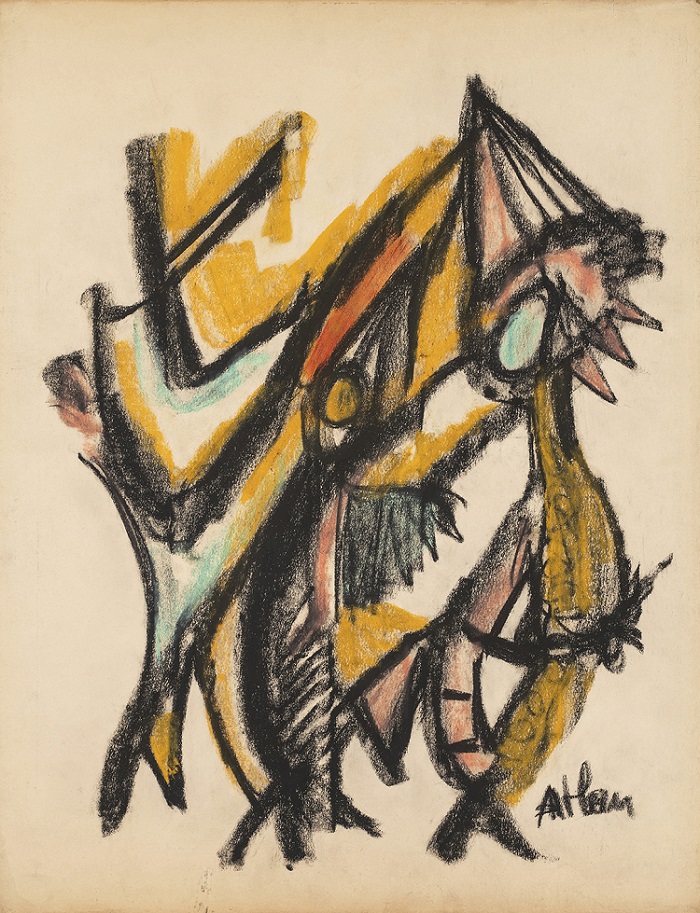
Jean-Michel Atlan, Sans Titre, 1949, pastel sur papier, 65 x 50,5 cm, smallOften lost among the quarrel between the Abstracts and the Figuratives of the 1950s (and the critical partisans of their schools) was the achievement of work which — sometimes depending on the eye of the viewer — traversed both terrains. Thus it is no surprise that for an exhibition which by its name alone, Animal Totem, promises a degree of concreteness, the Galerie Jeanne Bucher Jaeger has rolled out some of the Abstract movement’s most accomplished exponents, including Paul Reybeyrolle , André Masson, Maria Helena Vieira da Silva, and — in his Bucher Jaeger debut — Jean-Marie Atlan. To read more about Atlan from his leading critical advocate Michel Ragon, in exclusive English translation, click here. And about his epoch, see the latest episode of the Paris Tribune’s exclusive serialized English translation of Ragon’s 1956 novel “Trompe-l’oeil,” below. Animal Totem continues through March 14 at the Galerie Jeanne Bucher Jaeger’s Saint-Germain-des-Près space. Image courtesy Jeanne Bucher Jaeger, Paris. Translator Paul Ben-Itzak is looking to rent digs in Paris this Spring and for the Fall. Paul Ben-Itzak cherche un sous-loc à Paris pour le printemps. Got a tip? Tuyau? E-mail him at artsvoyager@gmail.com .

by and copyright Michel Ragon
Translation copyright Paul Ben-Itzak
From “Trompe-l’oeil,” published in 1956 by Éditions Albin Michel

Part five in the Paris Tribune’s exclusive English-language translation of Michel Ragon’s seminal 1956 novel taking on the world of abstract art, artists, art collectors, art dealers, and art critics in Paris, as well as post-War anti-Semitism in France. For the first four parts, click here.

The following Sunday, Fontenoy dropped in at Mustafa’s for an afternoon that began with stupor and concluded with a sickening feeling which owed less to the abundance of the patisseries than to the ambiance of this particular reception.

To start with, wandering around the various rooms of this estate surrounded by a sumptuous park in the well-to-do Paris suburb of Enghien, Fontenoy was very embarrassed to run into colleagues from the mainstream press whom he’d often described, in his articles for the avant-garde revues, as “trend-chasers.” Then there was the high-society crowd that he was so unfamiliar with. He knew everyone in the small world which gravitated around abstract painters, but here he was entering the world of those who had definitely arrived.

What also disconcerted him was that this villa bore no resemblance to Mustafa, who’d christened it “My Dear Beatrice.” It seemed, on the contrary, to have more to do with Beatrice Morose, the painter’s wife and a painter herself. The woman in question, a veritable queen for a day, promenaded five poodles yapping like canine chatterboxes among the guests. Voluminous and draped in velvet like an empress, Beatrice Morose showed off with a flippant gesture her own paintings, nudged in between admirable Mustafas.

She played the role of the guardian angel of this sorry drunkard who used to be Mustafa, and whom she’d now resurrected.

Everyone raved about the Master, his genius, the perennial legends of canvasses purchased for 300 francs which now sold for a million. But where was Mustafa? Fontenoy slunk from one room to another, hoping to run into him. Finally he ended up in a small deserted salon where he observed, from behind, an old man in a dinner-jacket trying to pry open a shuttered piano lid with a paper-cutter. At that very instant, a servant in full livery, built like an athlete, burst into the room, tore the instrument from the old man’s hands and dragged him away by force by gripping his fists.

The servant did not notice Fontenoy, who had scotched himself against a tapestry, but the old man looked at him as they strode by with an expression of such anguish, such desperation, that Fontenoy would remain shaken up for weeks. He’d recognized the man as Mustafa. The painter, for his part, appeared neither more nor less surprised to see a stranger hidden in his salon than if he’d just found the Count of Monte Cristo installed at his dining table.

Fontenoy trailed the servant, who dragged Mustafa along like a prisoner. They arrived in the main room, where the reception was being held. Only then did the servant let go of his master, respectfully guiding him among the guests, lightly hanging on to him by the arm.

“And now,” announced Beatrice Morose, “the Master will receive in his atelier.”

A satisfied murmur ran through the assembly. There was just one discordant rattling: Mustafa, begging for a drink. His bodyguard brought him a glass of water tinted with a splash of red wine. Amongst this crowd in the process of elegantly liquidating hundreds of bottles of champagne, Mustafa was the only one who did not have the right to drink.

The bodyguard-servant hauled the artist to the atelier, situated in the middle of the park. He placed a long, fine paint-brush in one hand, and a palette in the other. Then he gently nudged him towards the virgin canvas attached to an easel, crushed some colors on the palette, and retreated.

“Behold,” announced Beatrice Morose to her guests, “the Master is now going to paint. Let us leave him. And let us not intrude on this moment of inspired genius.”

Fontenoy had seen enough. He fled rather than left “My Dear Beatrice.”

****

Fontenoy might well tell himself that Mustafa’s case was a bad example, he nonetheless remained bitter contemplating the vanity of these “great successes.” Mustafa, lavished with honors and money, grown into a respectable and respected personage — and living in constant terror of his bodyguard. Forced to keep up the facade of naiveté, of health. Fontenoy shivered when he flashed back to that look of a hunted animal.

Granted, Mustafa was a sick man whom Beatrice Morose took care of, protecting as best she could, but Matisse…. Fontenoy recalled his first reportage at the great Fauve master’s studio. He still had trouble getting it into his head that an authentic artist could also be a bourgeoisie, and that a bourgeoisie could also be an artist. He still cleaved to a Montparnasian romanticism of which Manhès, along with Atlan and a rare handful of others, was among the last remaining examples. He loved this ambiance of the Montparnasse artist cafés, but the fact was that the true creators were rare among all the regulars of le Sélect or le Dôme. The vast majority of the habitués consisted of expatriates who were more or less painters, more or less poets, more or less failures or unknowns. If Modigliani had only eluded Death, Fontenoy thought, maybe he too would today be a bourgeoisie like Matisse, who numbered the most insignificant of his drawings and had his secretary classify them, who locked his paintings up in a bank vault after having them photographed. Or perhaps, to ensure that every day he produced his painting already paid for in advance, and that he stopped drinking, they might have made him into a decorated and glorious recluse, like they’d done to Mustafa. Soutine himself, during his final years, had turned into a fearful petite bourgeoisie, who, rumor had it, locked his mistress in every time he went to see his dealer out of fear that someone would steal her.

Would the same thing happen to Manhès? At the very thought of this, Fontenoy was ready to chuck it all and just write poems. But he couldn’t help himself. Painting was like a virus implanted in his blood.

Fontenoy saw no sign of Manhès at le Select. Isabelle and Moussia must have returned from the country. On the other hand, Blanche Favard was there, sitting alone at a table. He went to sit down next to her.

Fontenoy was happy to find someone to whom he could unburden himself about his visit to Mustafa’s. All it took was a little event like this to set off a moral crisis which would keep him from writing a single word for several days. Then he’d wander along the boulevard Montparnasse to the boulevard Saint-Germain, desperately seeking someone to talk to. Inevitably, it was at these very moments that his closest friends were nowhere to be found, not because they were trying to avoid him, but because a sort of curse made sure that the individual was left alone to confront his suffering. One of his poet friends, Ilarie Voronca, undergoing a similar crisis one evening, went knocking from door to door, hoping to find someone to save him from his somber ideas. No one was available and Ilarie Voronca was found several days later at home, where he’d turned the gas on and killed himself. He always thought about Ilarie Voronca whenever someone confided, “I’m really not doing well today. Can we spend the evening together? I just need a presence….” Sometimes he had an article to finish and wasn’t thrilled to play the role of confidant. But then he’d tell himself: “If Ilarie Voronca had been able to find one of us that night, he’d still be alive.”

Talking with Blanche Favard, an anguish which became stronger and stronger seized Fontenoy by the throat. He told himself: “I can’t go home alone tonight. It’s not possible. Too bad, if Blanche wants me, I’ll go home with her.” Then the leering face of Arlov loomed before him: “Why did Blanche have to ask me to organize an exhibition for her? People will say that I’m no better than Arlov.”

They left le Select in the wee hours, weaving along the boulevard Montparnasse. Blanche looped her elbow into the crook of Fontenoy’s arm. They headed towards the Cité Falguière*.

*Where Soutine himself once had an atelier. And where the translator once lived. (Translator’s Note.)

Le cas Albert Camus, l’étranger qui nous ressemble (The case of Albert Camus, the stranger who looks like all of us)

By Paul Ben-Itzak
Story (excluding citations from scenario for Camus exhibition) copyright 2012, 2019 Paul Ben-Itzak

First published on our magazine Art Investment News in 2012. Albert Camus died 60 years ago today… in a banal traffic accident on his way back to Paris from Loumarin, where he’d been sojourning with his wife and children. On December 30, 1959, in his last letter to long-time soul-mate Maria Casarès, Camus wrote, in part : “See you soon, my superb one. I am so happy at the idea of seeing you again that I laugh in writing you. I have closed all my folders and stopped working (too much family and too many friends of family!). I therefore have no reason to deprive myself of your laughter, of our soirées, nor of my homeland. I embrace you, I clutch you firmly against me until Tuesday, when I recommence. — A.” To read our review of the recent publication of Camus’s correspondence with Maria Casarès, click here. Benjamin Stora is president of France’s Cité nationale de l’histoire de l’immigration in Paris.

Dans les actualités: Expo Albert Camus, “Albert Camus, l’étranger qui nous ressemble,” mis en scene et dirigé par Benjamin Stora et programmé pour Marseille-Provence capitale européenne de la culture, abandoné, re-programmé, et encore abandoné. (In the news: Expo Albert Camus, “Albert Camus, the stranger who resembles us,” conceived and directed by Benjamin Stora and programmed for Marseille – Provence Cultural Capital of Europe, abandoned, re-programmed, and abandoned again.)

“To reduce Camus to just one of (his) dimensions would make no sense. Novelist, playwright, essayist, journalist — Camus is all of these things at the same time. Each facet of his work nourished and shed light on all the others. We must thus mount a full life, a prolific oeuvre, which adapted different forms while conserving a remarkable coherence in its ensemble. Visitors will (discover) what unifies such a universe: A certain tone, at the same time joyous and disturbing, somber and resplendent with slivers of the Mediterranean sun.”
— Benjamin Stora, original commissar for the exposition “Albert Camus, l’étranger qui nous ressemble.”

“I do not believe, in that which concerns me, in isolated books. With certain writers, it seems that their works form an ensemble where each work is illuminated by the others, and where each regards the other.”
— Albert Camus, Complete Works, Volume III, p. 402 (cited by Benjamin Stora).

“Non, les braves gens n’ame pas qu’on suivre un route autre qu’eux.”*
— Georges Brassens

The occasion was as opportune as the disappointing denouement was perhaps inevitable, given the tendency of the interested to alienate people on both sides of any given question with a point of view and approach that often defied any fixed ideology, bred from the melanged influences of ideas and experience, intellect and instinct, reflection and urgency. At the heart of the Mediterranean capital Marseille’s campaign to win the European Union’s coveted and potentially lucrative Cultural Capital of Europe designation for 2013 would be the man who not only embodies everything that is heroic about France, a champion of philosophy, letters, the theater, even — as editor of the underground newspaper Combat — the Resistance to the German Occupation, but who better than anybody embodies in one man the intricate, still conflicted mosaic that is France’s relations with its former colonies, its own Mediterranean first man, Albert Camus. After all, wasn’t 2013 also the centennial of his birth? To organize the exhibition the Marseille – Provence committee promised to engage Benjamin Stora, a historian specializing in Algeria, French Algeria, and Algerian immigration in France, born in Algeria like Camus, the ethnic Frenchman who always considered himself Algerian, weaned on its terrain and nurtured by its brilliant Sun. Catherine Camus, Albert’s daughter and the guardian of his legacy and personal archives, approved Stora’s selection in 2010, as well as scenographie Stora proposed. The exhibition would take place not in gritty Marseille, that most Maghrebian of French cities, but in Aix-en-Provence (where most of Camus’s archives repose), Marseille’s once quaint, now touristic neighbor, ruled by Maryse Joissains-Masini, an arch conservative mayor who considers the town her fife (and who, when Francois Hollande was elected president, declared him “illegitmate”).

The scenario for the exhibition that Stora submitted with Jean-Baptiste Péretié, to be called “Albert Camus, the stranger who resembles us,” draws a portrait of the philosopher of action revealed in both his acts and words, never too lost in theoretics to ignore gnawing imperative, taking visitors on a parcours of his life arrayed in six rooms and connecting walkways evoking stages or places important to his route — the printer’s table, the stage, his office, a child’s room — and whose contents focus on Camus’s multiple lives and causes, including anti-Stalinism, opposition to the death penalty, the Resistance, and of course the Algerian war, the — if you will — existential struggle between the colonized thirsting for true independence, and the colonizer still convinced he is a not a jailer but a liberator, importing not oppression but civilization. What Stora envisioned was not a mere superficial promenade through the biography of a life, but, au contraire, to shatter the edifice Camus has become in French culture — a sort of matinee idol philosopher, the Humphrey Bogart of existentialism with cigarette dangling precariously at the end of his lips — and reveal the complex man beneath the sheen. Each room, and the walkways that connected them, would serve as an access point to the development and execution of Camus’s many combats, even those over which he was conflicted up to the moment of his death in January 1960 (in what a popular magazine of the epoch, Sonorama, called ‘a banal traffic accident’), such as Algeria.

Of necessity, because it was not a conflict about which he could be objective but one whose tensions were reflected in his own makeup, the struggle between France and Algeria became the ultimate playing field for his ideas and ideals. Indeed Camus, who loved soccer, must have felt at times like he was trying to reconcile two sides who could only see their own goal lines. Born in Constantine, Algeria, but working for decades in France and abroad, author of 30 books including “Gangrene and forgetfullness, the memory of the Algerian War (La Découverte, 1991)” and “Algeria, the invisible war” (Presses de Sciences Po, 2000), consultant and / or author of numerous films, documentaries, and programs on French television (including the upcoming film version of Camus’s last, unfinished novel, “The First Man,” which returns him to his childhood in Oran), Benjamin Stora seemed the ideal referee of the manifold Camuses on the playing field. Unlike so many French politicians and so-called “philosophers” (as omnipresent on French talk shows as political pundits are on ours) Stora was not interested in instrumentalizing Camus to serve his own polemical ends. Rather — and this comes through more than anything after reading the scenario for the exhibition, which he provided to us — Stora wanted to accompany the visitor on an exploration of Camus that would be anything but anodyne, critical in today’s France, where Camus has often acquired the dusty, neglected state of required high school reading. Incredibly, Stora has succeeded in arranging his biographical and theoretical progression in a way that, by showing Camus’s thought not in permanent definition but in a struggle — a sort of marmite never finished — brings him to life and makes a quest to apprehend him as a living enterprise. This is not to say that Camus’s over-riding ethos lacks definition.

“Albert Camus was, finally,” Stora writes in the conclusion of the proposed scenario for the exhibition, “he who refused the spirit of the system and introduced in the political act the sentiment of humanity. To those who believed that only violence is the grand decider of history, he said that yesterday’s crime can neither authorize nor justify today’s. In his appeal for a civil truce (to the Algerian War), secretly prepared with the Algerian director of the FLN Abane Ramdane, he wrote in January 1956, ‘Whatever the ancient and profound origins of the Algerian tragedy, one fact remains: No cause can justify the death of the innocent.’ He believed that terror against civilians is not an ordinary political weapon, but destroys the real political field. In ‘Les Justes,’ he has one of his characters say: ‘I have accepted killing to overthrow despotism. But behind that which you say, I see the announcement of a despotism which, if it is ever installed, will make of me an assassin when I am trying to be a champion of justice.’

It might be hard to conceive of this today, when philosophers and politicians — particularly in France — are uniformly interested in advancing their own world views, but in his books as in his life, Camus was as likely to be in a quest for understanding as to be interested in imposing his own solution. “As a contra-courant to the hate which flowed during the Algerian War,” Stora writes, “Camus tried to understand why this couple, France and Algeria, apparently welded together, was breaking apart with such a big fracas.” In the flood of wounded spirits and souls, “always taking the side of the trouble-maker, Camus continues to intrigue. Relation to violence, refusal of terrorism, fear of losing those close to him and his land, belief in the necessity of equality and blindness before the nationalism of the Algerians — his oeuvre appears like a palace in the fog. The closer the reader gets, the more complicated the edifice becomes — without at all losing its splendor.”

Indeed, Algeria might be to Camus’s philosophy as the Sun was to Mersault, the hero of his breakthrough novel “The Stranger”; he is too close to it, so it temporarily blinds him, challenging the consistency of his otherwise pure philosophy and unwavering moral compass.

In his classic distillation of Camus’s thought, “Camus” (Fontana Modern Masters, 1970, p. 59), Conor Cruise O’Brien writes: “Eight years after the publication of ‘The Plague,’ the rats came up to die in the cities of Algeria. To apply another of Camus’s metaphors, the Algerian insurrection was ‘the eruption of the boils and pus which had before been working inwardly in the society.’ And this eruption came precisely from the quartier in which the narrator had refused to look: from the houses which Dr. Rieux never visited and from the conditions about which the reporter Rambert never carried out his inquiry. The realization of this adds a new dimension to the sermon. The source of the plague is what we pretend is not there, and the preacher himself is already, without knowing it, infected by the plague.”

This is the beauty of the imperfection of Camus: He may realize he cannot be completely morally consistent on the Algerian question, and yet he forges on. This is the courage of Benjamin Stora’s vision for the story of Camus he sought to tell: there would be no clear moral conclusion for him to present to those who undertook to enter the expedition / exhibition — the curator would even encounter some moral land-mines that might be treacherous for him to traverse because of his own experience with this central theme — and yet he forged on, not to prove a point but to reveal a life.

It’s clear, then — to return to the palace in the fog metaphor — that even if his own personal experience and political sentiments may differ from Camus’s (and I’m not saying they do; I am no expert on Stora and his thinking), Stora does not let this blind him to the grandeur of his subject and it’s that grandeur that comes through in his scenario for this exhibition.

Unfortunately, the France into which Stora dropped this is compositionally the same factional and fractured France in which Camus frequently managed — and isn’t this the true sign of an objective thinker? — to distance, even alienate people on both sides, the Right and the Left — in this specific case, those who wanted to hang on to Algeria and those who championed its Independence. And those so blinded by their own point of view they cannot see the big picture. So it was that the exhibition was torpedoed last Spring, quite possibly because the mayor of Aix-en-Provence (the city’s point person on the Marseille – Provence Cultural Capital of Europe 2013 committee was none other than the mayor’s daughter) apparently decided, with no factual grounds, that Stora’s exhibition would be too pro-FLN (the Algerian independence forces), and that this might offend the many ‘pieds-noir’ among her constituents, ethnic French who fled Algeria when it won its Independence in 1962. (This is just one of the conjectures raised by the French media to explain the exhibition’s annulation. I don’t present it as proven fact.) When Aix tried to resuscitate the exhibition in September — with an exhibition commissar whose more narrow focus on Camus as anarchist and free-thinker has made him the darling of a nascent (if harmless) movement of proto-“anarchists” nostalgic for their forebears of the turn of the (20th) century (“anarchists” are now to France as “hipsters” are to the U.S.) — the French government finally stepped into the fracas, with newly appointed Culture Minister Aurelie Filippetti defending Stora and withdrawing the government’s official imprimatur from the revived exhibition with Stora replaced. The new commissar, Michel Onfray, ultimately withdrew. (I am not delving more deeply into the reasons for the cancellation of Stora’s exhibition because, in fact, the more one delves into it the more it resembles the afore-mentioned castle in the fog — without the splendor — and, more important, where most of the coverage of the exhibition has focused on the controversy surrounding its cancellation, our purpose here is to illuminate the actual exhibition planned by Stora — and advocate for its being revived.)

What’s needed now is for Filippetti to take Camus-like action and provide a State rubric and facility for Stora’s exhibition, ideally the Bibliotheque Nationale, whose location in Paris’s student nucleus of the 13th arrondissement also makes it ideally located to attract the audience for whom this exhibition, which extracts Camus from the treatise and brings him to life again, is most essential. Doing so would conform to one of new French president Francois Hollande’s stated priorities: young people. Says Stora, in the preliminary scenario:

“Our intention in this exposition is not to ‘reconcile’ those who like Camus and those who reject him for all kinds of political, aesthetic, or literary reasons. What we want to say is not, despite its appearance, subjective: Camus was, and remains, a writer for the young. Not because he died at 46. At that age, or even younger, an abundance of writers, musicians, painters, and artists, from Schubert to Van Gogh, have created mature oeuvres. But Camus offers something singular to young people: He starts with acute discoveries, followed by a reaction almost always generous, and we think that generations of high school and college students continue to recognize themselves and to be shaken, awoken, revealed to themselves.”

Several years ago then-French president Nicolas Sarkozy floated the idea of moving Camus’s body from the cemetery of Loumarin in the southern department of Vaucluse to the Pantheon, where reside the ‘glorious ones’ of France. (Actually, the glorious men and Marie Curie.) Filippetti now has an opportunity to champion Camus’s place as perhaps the most glorious exponent of French thought since Descartes, that is to say French thought at its most glorious: As an inquisitive explorer of ideas. Technically, the moral rights (as they’re called in France) to the Camus artifacts which make up much of Stora’s planned exhibition may belong to Catherine Camus, his daughter; but don’t they really belong to all his sons and daughters, and thus does not this patrimoine or heritage ultimately appartient to the State acting on their behalf and in their interests?

.

*”No, the ‘good people’ don’t like it when you don’t follow the same path as them.”
JOURNALISTE/TRADUCTEUR AMÉRICAIN, DJ, GALERISTE, ANIMATEUR DES ATELIERS THÉÂTRALES POUR LES ENFANTS ET GARDE CHAT EXPÉRIMENTÉ, CHERCHE ÉCHANGE DE BONS PROCÉDÉS (LOGEMENT CONTRE TRAVAIL) OU STUDIO PETITE LOYER (OU MÉLANGE DES DEUX) EN RÉGION PARISIENNE

paul photo paris apartment

Photo: Julie Lemberger.

Journaliste/traducteur (New York Times, et caetera) américain, DJ, animateur des ateliers théâtrales pour les enfants et garde chat expérimenté, cherche échange de bons procédés (logement contre travail) ou studio petite loyer (ou combination) en région Parisienne, durée à discuter. (Je vivre en Dordogne donc ca peut être même pour une mois.) Je prefer un échange des bons procédés logement – travail (leçons anglais, Comm., gérance et organisation sites web et galeries d’art, traduction fr. – ang., rédaction, ecriture publique, consultation art/s, dramaturgie, DJ, garde chats, pub sur mes sites: Maison de TraductionDance Insider & Arts Voyager, et The Paris Tribune , etc.) Références si besoin. Voici quelques infos  me concernant. Merci de me contacter par mail a l’une des adresses suivant: paulbenitzak@gmail.com ou artsvoyager@gmail.com .

Lutèce Diary, 39: August 31, 1944 –Critique of the New Press / Critique de la nouvelle presse (French original follows English translation)

by Albert Camus
Translated by Paul Ben-Itzak

First published in the August 31, 1944 edition of Combat, the heretofore underground newspaper edited by Albert Camus. To read our English translation of Jean-Paul Sartre’s dispatch from the same issue of Combat, click here. To read our review with extracts of the recently published correspondence of Albert Camus’s correspondence with Maria Casarès, click here. After returning to Paris with false identity papers furnished by the Resistance, Albert Camus was the underground newspaper Combat’s final editor under the Occupation, on one occasion (as documented by Olivier Todd in his 1996 biography for Gallimard) being saved from being busted with proofs of the newspaper in his pocket at a Gestapo checkpoint when he was able to deftly pass the proofs to Casarès, correctly guessing that she would not be searched.

PARIS — Because between the insurrection and the war, a respite has today been granted us, I’d like to talk about a subject that I know well and which is dear to my heart: the Press. And because it’s a question of this new Press which has emerged from the battle of Paris, I’d like to speak with, at the same time, the fraternity and the clairvoyance one owes to comrades in combat. To read the entire article, in the original French and in its English translation, on our sister site the Maison de Traduction, click here.

JOURNALISTE / TRADUCTEUR AMÉRICAIN CHERCHE ÉCHANGE DE BONS PROCÉDÉS (LOGEMENT CONTRE TRAVAIL / GARDE DE CHAT / ET CAETERA) EN RÉGION PARISIENNE POUR LE RENTRÉE

Journaliste/traducteur (New York Times, et caetera) américain, metteur
en scène, DJ, animateur des ateliers théâtrales pour les enfants
expérimenté, garde chat expérimenté, cherche échange de bons procédés
(logement contre travail)  en région Parisienne pour le rentrée, durée
à discuter.  Échange des bons procédés logement – travail (Leçons
anglais, Comm., gérance et organisation sites web,  gérance et
organisation galeries d’art, Traduction fr. – ang.,  Rédaction,
Consultation art/s, Dramaturgie, DJ, garde chats, pub sur mes sites:
la Maison de Traduction, Paris Tribune, et the Dance Insider & Arts Voyager,... ) Références si besoin.  Voici quelques infos me concernant. Merci de me contacter
par mail a l’une des adresses suivant: paulbenitzak@gmail.com ou
artsvoyager@gmail.com .