The Chevalier de la barre, 19 octobre, 2021: l’Intolerance

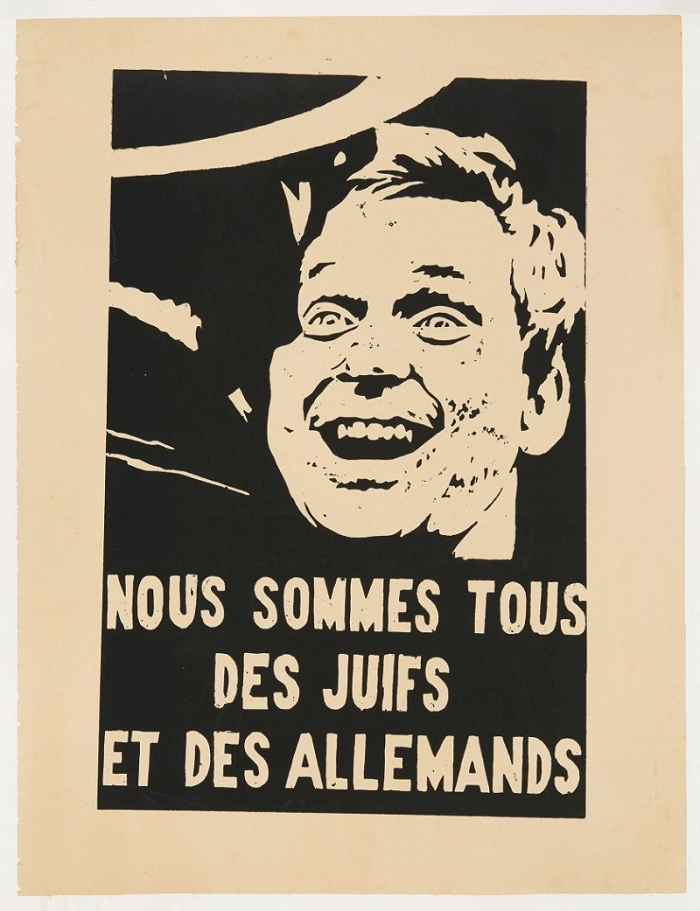
Affiche, mai ’68.

by Paul Ben-Itzak
Copyright 2021 Paul Ben-Itzak

On était vendredi. C’était l’heure du crépuscule. J’étais en train a causer avec mon voisin Ferdinand (pas son vrais nom), a qui je viens de demander de me raconter son expérience pendant la guerre à Algérie. Conscrit entre 1955 et 1958 — “C’est Mitterrand qui m’avais envoyé !” — il a vu des copains mourir à ses cotes et il a du tué. “Quand vous tombe dans un embuscade,” vous ne pouvez pas faire autrement.

— Macron n’avais pas du demandé pardon de l’Algérie !, Ferdinand a déclaré.

— Mais Ferdinand, le présidente n’a pas demandé pardon. (Du fait, à mon connaissance il a fait presque le contraire, en effet expliquant qu’en ce concerne l’histoire entre nos deux payes, on devrait aller au-delà des questions de pardon.)

— Macron, c’est un juif ! Comme Sarkozy.

Et voila, nous y sommes, j’avais pensé, frappé tout de la même. (Ca fait sept ans qu’on se connait, le Ferdinand et moi, et nos rapports ont toujours était des plus amicales.) Parce que bien évidement, c’est les juifs qui sont à blâmer pour et qui sont a l’origine de tout les maux du monde – car cette ‘pardon’ (pardon fictif !), s’était aux yeux de Ferdinand une mauvaise idée.

— Ferdinand, je suis juif.

— T’es juif? Juif américaine !

Comme si ce n’était pas pareil. (Ou, comme un ami m’avais dechiffré âpres — avec ironie — “Parce que bien sur les juifs américaines, ils sont forte dans les affaires.”)

En suite, bien sur que Ferdinand a essayé de revenir sur ses mots, de faire marche arriere, dans la façon d’usage, genre: Je n’ai rien contre les juifs, le monde est fait de tout, il y a même des policiers algériens a Marseille….

Mais ce rétréci ne m’a pas empêché de réfléchi: C’est de cette optique la, cette état d’esprit – cette ressentiment ‘latent’ envers les juifs, ce tendance de les blâmer pour tout les maux dans le société — qui était née la complaisance des certains françaises (et pas que des françaises, on a vu le même chose dans l’Italie, par exemple) face à la déportation, face a la collaboration de Vichy dans (comme Jacques Chirac a reconnu a le Vel d’Hiv en 1995) le nom de la France. C’est-à-dire que s’ils n’ont pas collaboré activement avec Vichy et les Occupants, ils n’ont rien dit ou fait pour les contre.

Et Ferdinand, a ton “Macron, c’est un juif !” j’ai envie de répondre:

Et Max Jacob, compagnon de route de Cocteau, Picasso, et Apollinaire, chrétienne converti depuis plus de 30  ans, morte à Drancy avant qu’on aurait pu le déporté, était (vu comme) juif.

Et Irène Nemirovsky, grande conteuse de l’exile de 1940, déjà romancier connu et edité par Albin Michel, arrête en ’42, deporté, et en suite morte dans les camps, était juif.

Et Robert Desnos, grand poète, arrêté et en suite morte dans les camps, était juif.

Et  Anne Frank était juif.

Et le Capitaine Dreyfus (dont la nièce Julie a était arrêté et qui était morte dans les camps), était juif.

Et Léon Blum, emprisonné malgré le fait que c’était un ancien président du conseil, était juif.

Et John Franklin, mon prof de civisme au lycée, survivant d’Auschwitz et qui nous a dit qu’il croit dans le statue des limitations (le proscription), même pour les allemands qui lui ont fait ca a lui et ses parents, et qui en suite est devenu prof d’Allemande, était juif.


Et Paul Cenac, qui a tant travaillé pour restorer la langue allemande du mal que les Nazis l’a fait dans sa poésie avant de se suicidé en 1970, était juif.


Et Romain Gary, vrais auteur de “La vie devant soi” et Compagnon de la Liberation, était juif.

Et Chantal Akerman, elle aussi suicidé (chez les enfants des survivants de la Shoah, c’est connu comme phénomène), était juif.

Et mon dentiste, qui a perdu sa cousine — donné par un bon français a Paris et dont la mère a essayé de se suicider en sautant de la fenêtre de sa chambre, depuis devenu le cabinet de mon dentiste, ou il a si bien soigné mes dents et, en passant, mon âme — est juif.

Et Ofra Haza, était juif.

Et Joe Mazo, un de mes mentors journalistique.

Et Sammy Davis Jr.

Et Serge Gainsbourg (qui a essayé de draguer la petite-amie de Sammy Davis Jr.).


Et mon grand oncle Sammy, qui a entre dans le légende familiaque âpres avoir fouetté un chauffeur a Miami qui l’a salué comme “sale Juif.”

Et Morris Hertzon, mon grand-père, si fière quand j’ai eu mon bar-mitzvah tardif a 16 ans a Miami Beach, grâce a lui.

Et Allan Sherman, l’auteur de “Hello Muddah, Hello Faddah,” chanson comique mythique des camps des loisirs juifs américains.


Et Edward G. Robinson.

Et Leonard Cohen.

Et Bob Dylan.

Et Camille Pissarro.

Et Edward Winer, mon père.

Et Eva Wise, ma mère.

Et Shirley Hertzon, sa mère a elle.

Et Max Winer et Shirley Winer (juif, il semble, d’origine Iranien ou Turque), mes grand-parentes cote père.

Et Donna Berman, ma rabbin mode Joni Mitchell a Princeton.

Et Art Spiegelman.

Et Rebecca Stenn.

Et Annette Clark, ma parraine.


Et sa cousine Gloria Lyon, qui m’a raconté, quand je lui a interviewé pour le New York Times, comment, en route pour un campe de la morte, elle s’était sauvé en sautant d’un chemin a fer tout nu, et qui a prise comme devoir de partage ses expériences avec les écoliers.

Et tout ces enfants poètes – artistes au Campe « modèle » de Terezin – auteurs du livre illustre post-hume « J’ai jamais vu une autre papillion. »

Et Humphrey Bogart.

Et Benjamin Stora, grand chercheur français – et enfant de Constantine, grande ville cosmopolite algerien —  qui a fait tant des travaux pour éclairir les rapports entre la France et l’Algerie depuis des années.

Et mon amie, grande artiste-militant a Belleville, KM. (Je don que ses initiales car, figurez-vous, Ferdinand, même si j’ignore si c’est son cas, les juifs et juives françaises ont tendance de se cache, même trois-quarts d’un siècle âpres le Shoah. Au cause des gens comme vous qui sont prête a les faire porter tout les maux du monde, de les juger envers leur identitie ethnique et pas leurs actes.)

Et il  y avait Kolya, lui aussi était juif, avant que on l’a lâchement assassiné.

Kolya, ado doué et douce, d’origine (comme mes ancêtres et comme La Nemirovsky) Ukrainien qui avais l’habitude de jouer avec ses camarades autour de la fontaine bleue mosaïque au milieu de le Square Albin Cachot en 13eme, ou j’ai eu ma première ‘crèche’ a Paname. Apres qu’on — j’ignore si c’était le Gestapo ou les gendarmes françaises – l’a arrêté, le Kolya, ses camarades l’a maintenu en vie dans leur façon dans leurs journaux a carnet. (Mode: “J’ai vu Kolya aujourd’hui blvd Arago.” “Kolya avais un drôle d’expression cette aprèm quand je l’ai rattrapé rue Glacière.”)

Et finalement, Ferdinand, il y avait le roi de Danemark, qui a manifesté son solidarité avec les citoyens juifs de son paye pendant l’occupation (et j’en suis certain qu’il y en a beaucoup qui ont fait pareil en France) en portant un étoile jaune sur son épaule.

Et il y a mezig, Paul Ivan Winer Ben-Itzak, ton voisin, qui suis juif (même si je préfère m’identifier comme citoyen du monde ou, si on insiste a me donner un etiquette, San Franciscan… et Périgourdin comme toi.)

Et pour Emmanuel Macron, j’ignore s’il est juif ou non, et je m’en fou. Mais je l’aime. Je l’aime car il a du courage.

Et toi, Ferdinand, qui êtes vous?

The Chevalier de la Barre: The bull who broke free (updated 9h37 EST Thursday)

Break on through to the other side: A certain drawbridge in Arles.

by Paul Ben-Itzak
Copyright 2021 Paul Ben-Itzak

In case you don’t have the pleasure of waking up to or dining with the French public radio news, here’s what it’s typically sounded like for the past year:

“Covid covid covid vaccine vaccine vaccine Macron covid covid vaccine vaccine Islamism covid covid covid confinement confinement confinement vaccine vaccine climate covid covid incest vaccine vaccine.”

So invested are they in this constrained universe, that when the government announced last week (in very frank terms with absolutely no attempt at dissimulation) what sounded a lot like a quarantine of 16 of the country’s 100 departments or counties where you-know-what cases have been rising alarmingly the past two months (we had more than 65,000 new cases in the 24 hours ending yesterday at 8 a.m. EST, with 10 percent of the public having received at least one shot), the public radio journalists still insisted on calling it a confinement (or lockdown). Never mind the number of times they’ve cited Albert Camus’s “La Peste” (The Plague) over the past year or the number of times they’ve referenced the novelist-journalist-philosopher’s warning about the danger of ‘mal-nomming’ things, these journalists still can’t recognize a quarantine when they see one. (If it walks like a quarantine, talks like a quarantine, and unlike a duck can’t fly beyond a 10K radius, it’s probably a quarantine.)

What a breath of fresh air it was last night, then, when a freedom-loving bull broke through the covid covid vaccine vaccine confinement confinement school of journalism that has constituted much of French public radio reporting for the past year with an adventure worthy of inspiring anyone in need of a break from the reigning and anxiety-fueling media ambiance. And not just any bull. A black bull from the magical, eccentric, quaintly quirky, and very southern city of Arles.

If you’re not familiar with Arles, this is the city where the brutal meridional Sun burnt a hole through Vincent Van Gogh’s scalp as he was hauling around and stationing his easel in the unshielded surrounding fields, frying his brain to the point where he succumbed to an urge to cut his ear off and was promptly hounded out of town by the locals, their progeny hurling stones at his heels all the way to the asylum.

It’s also the city to which that famous bull-fighting fanatic Pablo Picasso repaired whenever he felt the need to indulge his passion for and sketch scenes of “Tauromaquia,” many of them originating in or on the narrow alleys surrounding the same 2,000-year-old arena from whose periphery the bull in question and two cohorts escaped Tuesday from an ill-advised photo-op. It’s also a city that’s part of a region, the Camargue, where the animals, no doubt taking after the artists, the gitans, and even the rural guards (as described by Alphonse Daudet in “Letters from my Windmill”) tend to have their own ornery characters. (They — the animals — even have their own gallery.)

Town, Gallo-Roman remnants, and irrascible Arlesien.n.e characters were enough to inspire Henry James to make the city part of his itinerary for the 1883 travelogue “French voyages,” in which he described the arena as follows (I’m back-translating from Robert Laffont’s French edition of “Voyage en France”):

“For all its grandiose scale, the Arles Arena is less complete than its sister in Nimes; it’s suffered more from the assaults of time and its children, and has been less thoroughly restored. Practically all the seats are gone, but the outside walls, with the exception of the top floor of the arcades, form a rough and complete mass; as for the arched hallways, they seem as solid as the day they were built. As a whole its proportions are superbly ample and of a monumental character as far as a place of diversion (what we call today ‘entertainment’) goes, as only the Roman spirit was able to bestow on this type of establishment. The podium is much more elevated than that of Nimes and a good number of the large slabs facing it have been found and put back in place. The proconsular lodge has more or less been reconstructed, and the grandiose access points which lead to it are still clearly visible and produce a majestic effect; so much so that sitting there, in the magical immobility of the moon, my elbows leaning against the dilapidated parapet of the arena, I could practically hear the murmurs and shudders and the hardy voices of the circus of which the last echoes stretch back 1,500 years.”

That circus was apparently nothing compared to the diversion provided by the black bull which succeeded in breaking away from the outskirts of this very same arena on Tuesday, an escapade which no doubt produced its own shudders (and at least one casualty) among the onlookers privileged to witness the jailbreak.

To fully appreciate the taureau’s accomplishment — specifically, his bold escape from an ill-advised group photo and subsequent navigation of the narrow and labyrinthine cobblestone streets of the old city down to the Rhone river — here’s how James described his own painful attempts to negotiate the same terrain vers 1883:

“I recall with tenderness the torturous alleys… which evoked those of a village, paved with treacherous acierated little stones that transformed all exercise into a penitence. This reminded me of an excruciating promenade that I’d made the night I arrived, with the intention of retrieving a particular view of the Rhone. I’d already been to Arles years before, and I remembered discovering on the quays a sort of tableau. It seemed to me that, on the evening I’m thinking of, a drenched moon gave the impression of trying to illuminate the past as much as the present. But I found no painting and I almost didn’t find the Rhone at all. I got lost, without a creature in sight from whom to ask directions. Nothing could be more provincial than Arles at 10 at night. I ended up by arriving at a type of quay, where I saw the great muddy mass of water gliding in the dark silence. It started to rain, the moon had vanished to who knows where, and the spot was hardly gay. It wasn’t what I’d come looking for; I’d been searching for a past that was impossible to retrieve.”

Animals being more inclined towards living in the present than humans, the search of the black bull who escaped a selfie-op outside the Arles arena (along with the two co-conspirators who were quickly apprehended) Tuesday was a lot more basic, his goal perhaps to ‘retrieve’ his brethren in the marshes of the nearby Camargue, where they can often be seen gamboling among flamingos and white horses.

After making his way a lot more successfully than James down those same cobblestone streets (and without losing nary an ear) to the quays of the Rhone and finding himself surrounded by the gendarmes, the bull took the only course any freedom-loving bovine (or other of God’s creatures) could take and dived horns-long into the river, swimming across the glittering blue water to the other side, where he promptly accosted (or so the radio news alleges) an unfortunate 70-year-old woman out for her own promenade (since hospitalized, with no mortal wounds) before he was finally subdued.

Ferdinand, meanwhile, is no doubt still grazing somewhere in the neighboring wheat-fields so lyrically depicted by another free spirit.

Born free: Bulls in the Camargue department or county that includes Arles.

Est-ce que l’antisionisme = l’antisémitisme? Is anti-Zionism the same as anti-semitism? (in French / en française)

Sur l’emission Là-bas si j’y suis: “Antisionisme = antisémitisme ? Un amalgame hypocrite et dangereux.” Entretien de Daniel Mermet avec Dominique Vidal, journaliste et historien. Cliquez-ici /click here pour y ecouter / to listen. (Kicked off public radio in 2014, Là-bas si j’y suis is the French equivalent of Democracy Now.)

Protected: The Lutèce Diaries, 18: How I rescued 2000 years of Eastern & Western Philosophy from a toilet at the Luxembourg Gardens, learned that my shit doesn’t stink as bad as all that, and didn’t resolve the latest Jewish and Muslim questions dogging France

This content is password-protected. To view it, please enter the password below.

The Lutèce Diaries, 16: Love on the run, heart lies bleeding (unedited and uncensored version)

First sent out by e-mail, and posted today for the first time. After getting more than half-way through with a re-edit seven months later, I’ve decided to leave this piece in its initial, raw, somewhat over-detailed initial state for the sake of authenticity… and for the record. — PB-I, October 23, 2019

PARIS — So there  I was at dusk, heart broken and gums bleeding, teeth throbbing, staggering up the rue des Martyrs towards the Montmartre cemetery and the grave of the man I blamed it all on: Francois Truffaut.

In the late French director’s five-film, 20-year saga that began with the 1959 “The 400 Blows” and climaxed with “Love on the Run,” Antoine Doinel, played throughout the cycle by Truffaut’s alter-ego Jean-Pierre Leaud, is always on the run, often from the women in his life: His mother, his wife (the effervescent Claude Jade, whom Antoine, in the 1968 “Stolen Kisses,” rightly calls “Peggy Proper” for her prim manners), his girlfriend (Dorothee, who made her debut in “Love on the Run” and would go on to become the French equivalent of Romper Room’s Miss Nancy), his older married mistress (Delphine Seyrig at her glamorous apex), and various intermittent mistresses. The only one he seems to chase, apart from Dorthee’s “Sabine,” whom he loves but whose love seems to scare him (he found her after patching up and tracing a photo of the girl a supposed lover had torn up in a restaurant basement phone booth during an angry break-up call he overheard), is Marie-France Pisier’s “Colette,” who we first meet in Truffaut’s 30-minute contribution to the 1963 multi-director film “Love at 20.”  (They encounter each other at a classical music concert; Antoine is working at the time in a Phillips record factory, with Truffaut letting us see the hot wax being spun into discs. In “Love on the Run,” Antoine finally tracks Dorothee’s Sabine to her work-place. A record shop where couples make-out in listening rooms.) You may remember Pisier as the vengeful sexpot in the movie adaptation of Sidney Sheldon’s “The Other Side of Midnight,” in which she introduces an inventive way of hardening an older man’s penis which might have come in handy in my own recent saga if I’d only have remembered it before now.

The first hint that I was starring in a sort of Bizarro universe re-make of, specifically, “Love on the Run” came when the woman in question — you know her as “Vanessa,” whom I described picking up on (although I’ve since learned that she may have been picking up on me) at a vernissage a few blocks from the Pere Lachaise cemetery (cemeteries also figure in the Antoine Doinel cycle; the Montmartre one where Truffaut was eventually buried turns up in three of the five films, notably as the burial place of Antoine’s mother, revealed to him by her former lover as being next to the real tomb of the model for “Camille.”) and right after having three teeth extracted, e-mailed me from the Lyon train station before boarding a train to that city to visit her grandkids (like Antoine, I seem to have unresolved mother issues) to tell me that the night, our first together which had concluded the previous morning, and which we’d both exuded at the time was extraordinary and unique (she’d e-mailed me afterwards that she didn’t understand why we weren’t still together) felt “incomplete” (later she’d call it “inaccomplished”) because I couldn’t or wouldn’t get it up.  (My wording; she didn’t put it so vulgarly.) In the Truffaut film, after Colette calls him from a window on a Lyon-bound train at the Gare de Lyon, where Antoine has just dropped of his son for camp, Antoine jumps on the moving train without a ticket, surprises Colette in her sleeper car right after a fat middle-aged businessman, assuming she’s a prostitute, has rubbed up against her in the aisle (a lawyer, she’d spotted Antoine earlier in the day at the court-house, where with Jade he’d just completed France’s first no-fault divorce, an echo of my parents’ some years earlier). After they catch up, she upbraids him on the revisionist way he recounted their courtship as 20-year-olds in a fictionalized memoir he’s just published — “My family didn’t move in across the street from you, you followed us!” (At the time, Antoine is working as a proofreader at a – literally – underground publisher on a book detailing the 18 minutes when De Gaulle disappeared during the 1968 student-worker uprising. Letters requesting love assignations sent by underground pneumatics also figure in the 1968 “Stolen Kisses,” in this case from Antoine’s older, married lover – his employer’s wife — played by the glamorous Seyrig.) He tries to kiss her, she light-heartedly repels the attempt scolding him, “Antoine, you haven’t changed.” The conductor comes around for tickets, Antoine pulls the emergency chord and jumps off the still moving train. We see the now 34-year-old Antoine running across a field, an echo of the last, poignant, liberating moment in “The 400 Blows,” when a 14-year-old Antoine, having escaped from a youth home/prison, is frozen on screen and in our memories, a broad smile on his face as he runs on a beach, discovering the ocean (the antipathe of Chris Marker’s ocean in “La jete”)  for the first time.

In my own Bizarro universe re-make of the Antoine-Colette train scene, it was Colette who, after having joined me in a mutually agreed upon and extraordinary kiss was jumping from our train.

I was devastated, as I thought we’d also both agreed that what made our first night together magical is that the things other couples often view as preliminary — hand-holding, snuggling, French kissing, hand-kissing — had for us been electric. (I’m purposely avoiding citing the many words and motions we exchanged which confirm this because this piece is not intended as an indictment – “If you don’t love me, what was this?”) After writing her an e-mail to ask why she chose to bring this up in an e-mail as opposed to face to face, and explaining that if you want your partner to get it up, the worse thing you can possibly do is tell him it bothers you that he couldn’t get it up, and that a 57-year-old man can’t just get hard on command, I said she should ask herself, “If he was impotent, would I continue with him?” and if the answer was no, get out. She misinterpreted this in a more dire manner, we made up Friday, but only for her to send me another e-mail Saturday — 20 minutes before she knew I was receiving guests, my artist friends K. & R. for the famous Palestinian and Jamaican chicken twins, breaking up. And adding if I wouldn’t mind returning the scarlet scarf her Islamophobic friend  had left at my home after I asked her and her husband to leave a dinner part I’d hosted for them all when they started going at French Muslims. So it was with misty eyes that I opened the door to K. & R., and found myself confiding my troubles of the heart with friends with whom I’d not yet reached that level of intimacy. Thanks to their and particularly K.’s good humor — leading the conversation to other subjects but ready to go back to consoling me, even suggesting, “We need to find you a woman!” — I did pretty well, considering a germinating girlfriend had just broken up with me by e-mail. But I guess I must have sounded worse than I felt, because when I asked what I should do if she contacted me again, K. said “Drop it! Do you want to end up jumping out a window?!”

After more e-mail exchanges last week, the tenor of which from Vanessa remained mostly consistent — she was still running from the love express our train had become — I finally ceded, agreeing it was better to cut it off as I couldn’t return to the just-friends thing, she sent me an e-mail where she said that she too (as I’d expressed I was) was in tears, that her life had changed since “1/24” — the evening we met at the vernissage — that she’d never be the same again, that she knew she had a problem with loving, that she hoped I’d find someone but that it was probably too late for us.

This of course — the tears — brought me running, and I wrote her to say that I’d been blind, that she maybe thought she had a problem with love but that everything she’d done in my regard — particularly being ready to lose me — was done out of love.

On Friday we had another magical evening, organizing an impromptu, wintry pique-nique on the banks of the Ourcq canal. I assured her I wouldn’t go all out but just bring what was already in the house; as it happened this also included a vintage wooden unfoldable pique-nique table in a valise that came with the apartment. I’d promised her to go no further than a chaste kiss goodnight at the Metro station. “Vanessa and Paul, round two!” she’d blithely announced over the hummus, and the rest of the evening kept to this light tenor, with lots of laughter. At one point I stopped the converation to note: “This is important.  You see? When we’re face to face, we understand each other. E-mail communication is really sinister.” The night concluded with a chaste kiss at the Metro.

Ghosts in the machine

Wanting to diversify my world — I’d be making my famous Palestinian chicken for friends of Vanessa and bringing it to the house they were moving to that day, looking out over (I’m not making this up) the Pere Lachaise cemetery — on Saturday morning I decided to check out the vernissage for a group exhibition in my suburban Paris village of the pre Saint-Gervais. Life is more than women! Life is more than the women in my life over the past few years who seem to be Bizarro Universe interpreting the scripts for Truffaut’s Antoine Doinel films!

After sensing that in lieu of the usual joy of discovery I still feel around art I was feeling incredibly wary after entering the art space, in the same room below the covered market where I’d scored my old aborted professor Jerome Charyn’s “The Catfish Man” — I was increasingly regretting that I lacked the coping skills Charyn’s hero (himself) had been inculpated with by being forced to tangle with the urban catfish in the mudflats of the Bronx of his come-uppance — when someone I didn’t recognize at first, a woman in her ’50s with a boyish hair-cut, rose up like one of Charyn’s catfish and announced in wonder, “Paul.” It was another V, the last girlfriend and who, in contrast to the current V., who never stopped blaming herself for being unable to love, had taken the opposite tactic with me when we last tango’d/tangle’d nearly three years ago, blaming it all on me, even though in this case the opposite was true; this was one sick puppy. I know this sounds like the usual break-up sour grapes, but I’m short-handing because she doesn’t merit more time than this. I simply mention the encounter because it may have been an omen….

… And to introduce what I conveyed to “Vanessa” as we marched from the ill-advisedly chosen Pere Lachaise rdv to the dinner at the home overlooking the cemetery. I know it’s not advised to mention an ex to a current, but for me this was a means of delivering a series of compliments:

“Where she doesn’t assume any responsibility, you unfairly blame everything on yourself…. And even though she’s 14 years younger than you, on looks there’s no contest.” Vanessa smiled widely at this. “She’s skinny-ass where you have the body of a woman, uninteresting to look at where you are.”

I was annoyed when …. No, I find I can’t go into what annoyed me, nor any other details of the party related to my interactions with “Vanessa” because it sounds like evidence gathering, and this piece is not intended to be an indictment nor a reckoning, but a first step on the path out — out of heartbreak and out of “Vanessa” — for myself. I also believe that, like an American black-belt I once knew in Antwerp once explained to me in saying why the very fact that his hands are deadly weapons means he has a reponsibility *not* to fight, a writer doesn’t have the right to use his considerable gifts in romantic reckoning.

So suffice to say that the evening seemed to end sublimely, with Vanessa and I getting lost in perpetual circling of a Paris roundabout, this one the Place Gambetta. We held hands from the moment we left the hosue; there was some warm French kissing. When I said I wanted her to come home with me, she responded that she “wasn’t against” this, but reminded me that she had to get up early to go meet her grand-daughter at the train station.

We seemed to part in joy hands taking an extra clutch before separating…

…but..not before, unprompted, she asked out loud again why she was unable to jump into my arms, then answered her own question with “Is it because you couldn’t get it up?,” though not putting it that way, again sorting the demon.

Once home, in a letter I sent on getting home at 1:30 a.m., I felt compelled to repeat my earlier answers, both the defensive and proactive ones: If you want a man to get it up, the worse thing you can do is tell him it bothers you when he can’t; and then detailing, explicitly, all the other ways I’d like to please her, and ending with, “Let’s have fun with it!”

In the last e-mail I sent her Sunday before she let the hatchet fall again (and once again by e-mail), I wrote, rather poetically (she completed the beauty and humor before lowering the ax), regarding our lost midnight turnabout, “I’d rather be lost with you than found with anyone else.”

Oh and I left out one important detail: After one embrace, I finally said the words in person for the first time: “Je t’aime,” with a big smile on my face. “What am I supposed to say?” “You’re not supposed to say anything, just accept it.”

I mention this because since she broke with me after the late Saturday night letters, I’ve been torturing myself with: Did the letters, particularly the lasciciousness, scare her away? What if I’d backed off – after the happy Metro separating – and allowed her the space to come to me. So to counter this self-torturing (I even mentioned this possiblity in my last letter to her – if I’d backed off, I  might not have lost you) I’m trying to tell myself that it was more this first face-to-face declaration of love that did it.

Ultimately I think this is the problem, the reason that Sunday and Monday morning she pulled out, saying she was arresting the histoire d’amour with me because she wasn’t “at the hauteur” of my emotions and compliments to her, to a degree that it was making her sick: I don’t think she has a problem with loving (at one point she told me she’s never been able to love, that she ended her two marriages because of this); I saw this manifest from her towards me in copious ways over the past two plus weeks. I think she has a problem with accepting being loved.

Before starting this piece this overcast Tuesday morning, I’d determined not to read any new mails from V. because I knew if I read them I’d have to respond. (And that I shouldn’t have given her the power to confirm or deny that my letters, sentimental and lascivious, of late Satruday had scared her off.) The one I did receive from her this morning, sent last night, confirmed this urge but so far I’m resisting. Not so much because I’ve convinced myself that it’s unhealthy to continue on her  roller coaster (I’ve left out the numerous things she’s said or acts she’s done which indicate a profound love because this is not intended to be a requisatory, but a first step towards my own healing .. and advancement / continuation in the search for the vrais amour) but because I’ve told the part of myself unable yet to fall out of love with her, unable to let go even though my brain and a large part of my heart realizes that this is unhealthy, to let myself be swallowed up by a heart that is really broken, that this is my last hope, I’ve decided to follow two precious pieces of advice dispensed to me by my New Zealand-bred horse chief on a pony farm along the Texas – Oklahoma border more than six years ago:


  1. You can’t blame yourself for the things you can’t predict. All signs — all the signals she sent me — indicated that this woman was crazy about me from the moment she encountered me. I but responded to that with the joy in my heart this provoked.


  1. If you want a horse/filly to do what you want, the worse thing you can do is keep barking at him. You need to give him/her time to digest what you just said, so that he ultimately makes the decision him/herself.


I don’t know if she’ll write me again. I don’t know if I’ll be able to keep from opening any mails she might send, or from responding if I do. But this is what I’m going to attempt, at least for a week. What I do know in my heart of hearts is that she’s hurt me so much with the ups and downs that it will take more than an e-mail to convince me of any change of heart that she might have, or rather return to the previous obsession she announced with me.  I need her to do what she’d refer to as a “Woddy Allen,” running to me breathlessly along Fifth Avenue Woody at the end of “Manhattan,” arriving panting and breathless at my door before I move on.

But to get back to the French director towards whose whose grave I found myself staggering up the rue des Martyrs as the sun set over the Sacre Coeur church which slowly emerged above it, gums bleeding from the just-extracted tooth, heart still raw. Once at the grave, after filling my green plastic up from a nearby fountain with water and popping a dissolvable 1000 gram Paracetemol into the water, posing it on Truffaut’s grave (decorated with an unravelling 35 MM film spool and a worn photo of Truffaut, Leaud, and a woman who might have been Claude Jade on the set)and watching it fizz away like this love affair, I lifted the glass and, echoing the Charles Trenet song which provides the theme for the 1968  “Stolen Kisses” – in which Leaud’s Antoine and Jade’s Christine fall in love – toasted Francoise Truffaut with “A nos amours,” to our loves. I might have added “This is all your fault,” for setting a model of Antoines and his women I was continuingly trying to counter-act. I wanted to be the anti-Antoine, proposing a definite “OUI!” to all these French women I was encountering. Why did they keep behaving like Truffaut’s Antoine, falling in love only to deny it and jump off the train, fleeing into the great French wilderness, fleeing love – mine and theirs – on the run?

The Lutèce Diaries, 12: Child is the Father of the Man

By Paul Ben-Itzak
Copyright 2019 Paul Ben-Itzak

“You are the light of the world
But if that light’s under a bushel
It’s lost something kind of crucial.”

— “Godspell”

(Like what you’re reading? Please let us know by making a donation so that we can continue this work. Please designate your PayPal donation to paulenitzak@gmail.com , or write us at that address to learn how to donate by check. To read this article in French or any other language, just click the translation button at the right.)

PARIS — For personal reasons, I’ve resolved this week to get out more and circulate: to try to connect with people, with the esperance that the ame-soeur, the soul-mate, is waiting for me somewhere among them. (If you’re also looking, click here to find out more about me — and the us I’m looking for.) So after a moderately successful noon-time Russian Earl Grey thermos tea on the banks of the mighty Ourcq canal here in Pantin / le pre Saint-Gervais — there was the water but there was also the bruit of the garbage truck which seemed to be following me around, and the blight of the gray Centre National de la Danse behemoth which looks more like a prison than bunhead central — last night I was determined to have at least one coffee at Le Danube, a brightly-lit, recoup-furnished pastel colored bar on the place of the same name dominated by a buxom lime-stone babe that I’ve had my eyes on (the bar, not the babe) since attending a vide-grenier (community-wide garage sale; vide = empty, grenier = attic) and activities fair in the ‘hood nearly five years ago. Before that, I planned to watch the sunset and the people jogging and returning from work from a bench high atop the Buttes Chaumont park, my ears caressed by its water-falls and my chest warmed by more Russian tea, moderated with Algerian mint left over from Saturday’s Palestinian and Jamaican chicken twins feast with my Bellevilloise artiste friends K & R. I’d never liked this man-made park, designed by Colonel Hausmann and just as antiseptic as his apartment buildings, with the clumps of cypress trees divided by a concrete periphery path whose connecting trails never seem to lead to the lake at the bottom… until I started translating Michel Ragon’s “La Mémoire des vaincus” (The Book of the Vanquished), in which the young street urchin heroes, who’ve just been taken in by two almost as young publishers of an anarchist journal at the same time they’re hosting members of the violent Bonnot Gang, regal in cavorting amongst the caves and falls before running down to the La Villette Basin. Ragon and his wife Françoise have become my model couple since I met them Saturday afternoon, her nudging her older husband on observations they’ve shared and developed together for 51 years, since getting married in a building constructed by Le Corbusier, a Ragon chou-chou. (Ragon told me he switched to architecture after art magazines, pressured by advertisers, started trying to clamp down on what he could and couldn’t write. When the same thing started happening at the architecture magazines, he turned to books.)

Besides the thermos, the chick — er, soulmate — attracting tools I brought with me were the copy of Ragon’s “Dictionary of Anarchism” M/M gave me (they also gave me, as I was hoping for, a copy of his “Courbet, Painter of Liberty”) and my two vintage ping-pong paddles. (They’re not vintage because I bought them in a vintage store, they’re vintage because I’ve had them since 1973, when I came in second in the city-wide San Francisco championships for the 9-12 age group, having won my ‘hood and my region before getting slaughtered by a nine-year-old Chinese kid half my size whose spin-balls I couldn’t touch. I’ve had the paddles as long as I’ve had this adult carcass, and they’re in a lot better shape.)

paul photo paris apartment

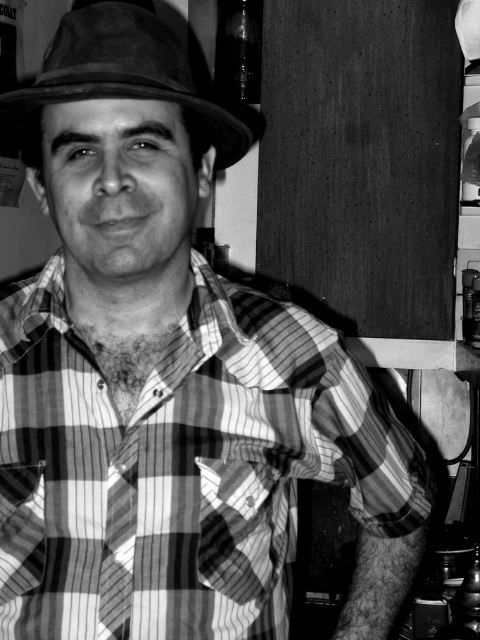
Would you play ping-pong with this man? (Photo: Julie Lemberger.)

I’d decided to pack the paddles for this Paris trip after seeing Forest Gump for the first time; stacked on top of the tiny valise he brings with him when he goes to retrieve his childhood sweetheart is a paddle. And after a twilight spotting from a bridge off the Ile St-Louis of a pair of kids playing in the Tino Rossi sculpture park on the Left Bank, I’ve got it into my head that maybe the first step to finding my soul-mate is finding a playmate. At first the idea was to sit on a bench near a table with the rackets until she showed up. But lately I’ve been thinking that instead of going where the ping-pong players are — which might just lead to another shellacking by a tiny Chinese kid — I might have better luck, soul/playmate-wise, taking my paddles to where the chicks hang out, brandishing my most innocent Tom Hanks smile (being careful not to open my mouth too widely, at least not until the denture arrives), and attracting the French nana with the innocent abroad thing, hoping I’ll do better than Lambert Strether in Henry James’s “The Ambassadors,” whose innocence is ultimately quashed by European cynicism and hundreds of years of European history. (I’ve been hearing the rebuff Strether’s French lass handed him since an Italian boy told me just after high school, “To understand my sister, you first need to understand our history,” an imposing wall for someone who keeps trying to act like he was born yesterday.)

The tea proved edifying, but — initially anyway — not in the way I’d hoped for.

The last time I took a twilight tea in this spot, I’d been moved by the sight of a young couple who paused at the bench next to me so the man could take the baby-pack from the woman. This time I was devastated by the arrival of a boy in a light blue cap tossing a squeaky ball to a beagle, accompanied by a big man in an olive jacket and darker blue cap who, instead of marveling at this precious moment which will never happen again, remained riveted to his cell-phone screen. I got the impression that if the beagle weren’t there, I could kidnap the kid — perhaps by using the ping-pong paddles as a lure — and the father would keep right on staring at his screen. “Go play with the other dog,” the kid said, as he finally wrenched the squeaky-toy from the beagle’s jaws while his father remained oblivious. “We’ll play with the ball more at home.” I followed them with my eyes another 100 yards until they passed through the iron gate, the distance between the father and son growing.

Things perked up for my own family prospects when a tall and lithesome young woman, perhaps in her thirties, her short curly hair ensconced in a dark brown cap, took a look at me surrounded by all this regalia, hot steaming chrome cup of tea at my lips, paddles by my side, anarchists in hand, and, albeit without slowing down much, spread out her arms and, looking at me in the eyes, smiled as if to proclaim, ‘On est bien la, n’est pas?!,’ to which implicit benediction I responded out loud, “Tranquille.” (Not a worry in the world.)

When it finally got too dark to tell the Christian anarchists from the anarcho-syndicalists from the Action Française anarchists (Ragon lays out five distinct categories in an introduction that’s the most concise sweeping history of anarchism I’ve ever come across), after beholding the layered cushions of the Sun setting over Northeastern Paris I left the park and headed down the street to the Danube, telling myself, “Your sole goal tonight is to buy one coffee. If you do that, the evening will be a success.” But when I looked in at the bar and saw there were just two guys with the requisite five-o’clock shadows seated on leather stools chatting with two crew-cut male bartenders, I decided that there wasn’t any point if there were no women in sight. On the off-chance that She might simply be running late, I decided to walk around the block, hoping that no one would wonder what a swarthy unshaven guy in a dark trenchcoat and “I Heart Golf” beret was doing loitering in the area with a pair of Chinese ping-pong paddles and an anarchist dictionary, and call the “I just saw something suspicious” hotline.

When I returned to the bar, the counter-composition hadn’t changed, and it looked like the chercher la femme playmate crusade would come up empty for the night. But all was not for naught, as I did find a good closer for this column: Looking through the glass at the bright interior of the restaurant to give it a final scoping out before leaving, I spotted, sitting alone at a table — whose neighbor table was free — a woman who resembled either Camille Puglia, Gloria Emerson (the Vietnam war correspondent who’d once chided me in an airport jitney from Princeton to JFK, after I’d bragged that I was already writing for the NY Times at 23, “When David Halberstam was 23 he already had his first Pulitzer”), or my high school advanced composition professor Anne-Lou Klein, looking up towards the heavens as if exasperated by the book in front of her:

“L’Homme Nu.” (The Naked Man.)

C’est moi — comme tu le savez bien, dear reader.

PS: As for my ping-pong paddle as chick magnet theorem: Usually when I smile at a woman on the street here in Paris she just ignores me or grimaces. But as I was crossing the street from the Danube to the avenue General Brunet, paddles clearly in evidence, a young woman who registered Amelie on the light in the eyes scale looked at me and coyly smiled with a glint in her eye, a smile inviting enough to make me want to live to love another day.

Protected: Lutèce Diaries, 10: Les sujets qui fâche: The Scarf thing, the Jewish thing, the It’s all about me thing

This content is password-protected. To view it, please enter the password below.

Albert Camus – Maria Casarès Correspondance: Gallimard outs its most important author’s private demons

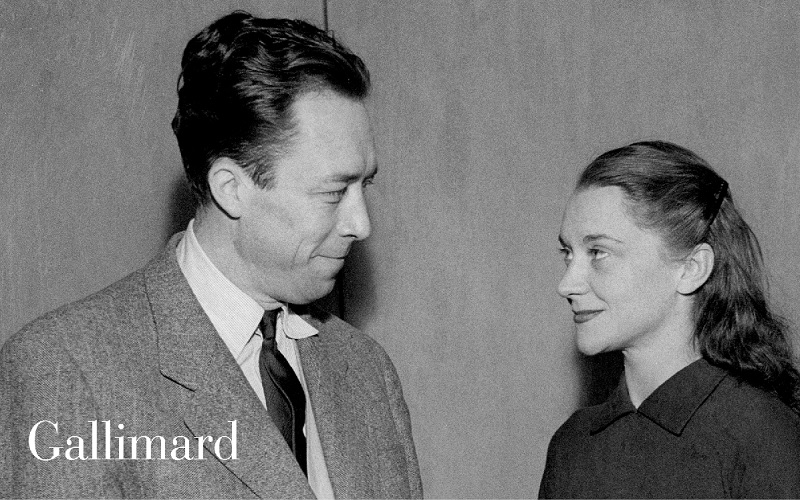
camus casaresAlbert Camus and Maria Casarès. Book cover photo courtesy Gallimard.

by Paul Ben-Itzak
Commentary copyright 2018 Paul Ben-Itzak

(Like what you’re reading? Please let us know by making a donation so that we can continue this work. Please designate your PayPal donation to paulbenitzak@gmail.com , or write us at that address to learn how to donate by check.)

Previously explored by Olivier Todd in his exhaustive 1996 Gallimard biography and insinuated in Simone de Beauvoir’s memoirs, Albert Camus’s inherent self-doubt — in all areas of his life – as he struggled to live up to the principles he extolled for others is now decisively confirmed by the novelist-journalist-philosopher-playwright’s 16 years and 1,275 pages of correspondence with his longtime mistress (for want of a word which would do better justice to their fidelity) Maria Casarès, recently published for the first time by Gallimard after being released by Camus’s daughter Catherine, who inherited the letters from the actress. Portions of the correspondence will be recited this month at the Avignon Festival by Lambert Wilson, whose father George worked with Casarés (including at Avignon), and Isabel Adjani.

A die-hard Camusian ever since being assigned to read “The Plague” in high school (thank you, Ralph Saske), of course I had to request a review copy from the publisher as soon as the correspondence came out, putatively for this article, but with the ulterior ambition of being the first to translate the letters into English and trying to find an American publisher.

Because of the period covered (the pair became lovers in Paris on D-Day 1944, split up the following fall when Camus’s wife Francine returned from Algeria, and reunited in 1948 after bumping into each other on the boulevard Saint-Germain-des-Pres, remaining together until Camus’s death in a traffic accident on January 4, 1960), I’d hoped to find new insight into Camus’s thought process in preparing “The Fall,” “The Rebel,” and the unfinished autobiographical novel “The First Man” — the hand-written manuscript of the first 261 pages were found among the wreckage and later published by Gallimard — as well as his inner reasoning as he struggled to come up with a resolution for the conflict and war in Algeria, where Camus’s efforts to square his principles with the well-being of his family in the French colony, his birthplace, tore him apart, and his public views pissed off everyone on both sides. (The author ultimately proposed an autonomous state federated with France, and where the ‘colonists’ would be allowed to remain.) From Casarès — the busiest stage and radio actress of the fertile post-War Parisian scene, a major film presence (she played Death in Jean Cocteau’s 1949 “Orpheus”), and the daughter of a former Republican president of Spain — I’d relished the potential accounts and impressions of the playwrights and directors she worked with, a real’s who-who of the French theater world during the Post-War epoch (as attested to by Béatrice Vaillant’s thoroughly documented footnotes), notably Jean Vilar, founder of the Theatre National Populaire and the Avignon Festival.

Unfortunately (if understandably; this is not a criticism of the correspondents, but of Gallimard’s ill-considered decision to make their private, often banal dialogue public), in fulfillment of their main purpose of maintaining the link during their often long separations, necessitated by his retreats for writing, author tours, visits to his family in Algeria, tuberculosis cures, and family vacations — he never divorced Francine — and on hers by performance tours, apart from the travelogues (except where they describe her vacations by the Brittany and Gironde seaside, more interesting on his part), their letters are often dominated by declarations of love and the sufferance of absence (even if your name is Albert Camus, there are only so many interesting ways to say I love you, I want you, I need you), and the often anodyne details of their daily lives apart. Camus tells her to leave nothing out, understandable for an often absent lover, but which ultimately reveals her frivolity and recurrent prejudices (particularly when it comes to male homosexuals, who according to Casarès are typically vengeful). Her manner of chronicling her quotidian activities is often so indiscriminate, investing theatrical rendez-vous with the same level of importance as shopping excursions for furniture to decorate her fifth-floor flat with balcony on the rue Vaugirard, that at one point he mildly rebukes her, “Don’t just write that you had a luncheon appointment, say who it was with.” The best she can come up with to describe the experience of making “Orpheus” with Cocteau is that she was annoyed by the autograph-seekers who showed up at the outdoor shoots, not the only instance where she disdains her public. And when it comes to the radio productions which seem to constitute her main employ, at least in Paris, she often refers to “having a radio today,” without even naming the play in question. (When Camus refers to “a radio,” he means an x-ray to analyze the progress or regression of the chronic tuberculosis which dogged him all his life.) Never mind that the radios in question were plays by the leading European writers of the day, as well as classics. But the part I found myself resenting a bit – as someone who would have loved to have had a tenth of the dramatic opportunities Casarès did – is that at times she seems to treat her theater work, particularly the radio recordings, as almost onerous. (This morning on French public radio, in a live interview from the same Avignon festival, the director Irene Brook, Peter’s daughter, recognized that “we’re very privileged to be able to pass our days rehearsing theater.”)

When it comes to discussing his work, at most Camus refers to his progress on the literary task at hand or writers’ blocks impeding it, rarely going into the philosophical or political issues he’s grappling with – some of the headiest of the Post-War period, French intellectuals’ inclination towards which Camus was instrumental in formingAs for the letters from Algeria, typically occasioned by visits to his mother, uncle, and brother’s family, if Camus’s native’s appreciation for and adoration of the landscape is apparent, even lyrical (particularly in recounting excursions to Tipassa), he dwells mostly on his ageing mother’s maladies, and rarely comments on the sometimes violently contested political encounters he was having at the time. If anything, their relationship was their havre, a refuge and sanctuary from the demands of his calling and the rigors of what she seems to have considered more obligations than labors of love. (From his letters to his wife cited by Todd – at one point he tells her he regards her more as a sister than a spouse – Camus was much more likely to discuss his thinking process with Francine than with Casarès, at least in his letters.)

This is not to say there are no newsworthy stories here. For Camus, the story, albeit one already explored by Todd in his biography (for which Todd apparently had access to the letters), is the author-philosopher’s continually frustrated efforts to live his private life in accordance with his public principles. Moral responsibility (and fidelity) to one’s community, and the need to be exemplary even in the most trying of circumstances and times — two of the principal themes of “The Plague” — dictate that he remain in a conjugally loveless marriage, which means he can never shack up for good with the woman he loves, to her great frustration. (Never mind that he’s an atheist — which he hedges here at times by asking Casarès to pray to her god, sometimes on his behalf — Francine is a practicing Catholic.) The right, voir obligation, to be happy — another pillar central not only to “The Plague” but Camus’s over-riding philosophy of positive Existentialism, where one must still find meaning even in the most trying of circumstances — would insist that he fully commit himself to Casarès and the complete realization of their love. Because he ultimately can’t square the two principles, everyone — Francine, Maria, and himself — is often miserable.

A fourth, and perhaps the author’s most personally invested, theme of “The Plague” — absence and separation — is indeed one of the two principal unifying themes that emerge from the letters, but given that the book was published in 1948, when their relationship began in earnest, at best the letters furnish an after-the-fact illustration and elaboration of this theme, their particular separations having played no role in its actual development. (The absence and separation which inspired “The Plague” being the one the war imposed between the author and his wife Francine, who remained in Algeria.)

If there is a bonafide, universally resonant story here (besides the humanizing of a super-human philosopher), it is that of the ultimate unconditional love. After some initial resistance (expressed in face to face, and animated, arguments referred to and regurgitated in her letters), Casarès never demands that Camus leave his wife, even though it means she can’t have a true domicile conjugal, with a companion and children to come home to (at least as manifest in the letters, she remained loyal to him, even though he had at least two other mistresses during the time they were together, according to Todd). For his part, if he doesn’t hear from her for more than a week when they’re apart, he worries that she might be drifting away and sinks into a morose depression, unable even to work. If I know these things — here’s where the unconditionality comes in — it’s because they’ve made a pact, referred to in the letters, to share everything without holding back, no matter how ridiculous or petty the sentiment might seem. And they stick to this agreement faithfully.

The other element that links the author and the actress — how they fulfill and complete each other — is a shared, desperate need for nature, primarily the sea (although he’s also able to appreciate the pictorial value of the mountainous terrains he often finds himself confined to, for writing and health retreats; but we didn’t need the publication of these letters to know that Camus was an adroit paysagist). Maria’s most brilliant and moving passages describe her merging with the sea on an island in Bretagne or off a beach in the Gironde, her two vacation retreats. (If I use the first name, it’s because on these occasions, watching her galloping into the waves to meet the surf head on, I feel like I’m discovering the child inside the woman.) Camus’s descriptions of a return to Rome — which he values as a living monument to art and archeology — are also inspiring (they made me want to go there, or at least watch “Roman Holiday” again), and a personal review of a London production of “Caligula” that he finds lacking is scathingly funny.

The most poignant moment comes not so much at the juncture we expect — Camus’s final letter, of December 30, 1959, alerting Casarès he’ll arrive back in Paris by the following Tuesday “in principal, barring hazards encountered en route,” and where he looks forward to embracing her and “recommencing” — but earlier in the same year. Casarès has just decided to leave the TNP (over Vilar’s latest caprices, this time insisting on his right to call the actors during a well-earned vacation), after five years, which followed a shorter stay at the stodgy Comedie Française. I dream of living in a roulotte — or covered gypsy wagon — and hitting the road, she tells him. (He’s welcome to join her, but her plans don’t depend on that eventuality.) He encourages this dream, but notes, in the manner of a supportive but prudent parent, that she should realize that just because she’ll be living in a roulotte doesn’t mean she’ll be free and independent; it just means she’ll be living in a community surrounded by other roulottes. “Even in roulottes, there are rules.” This could be an analogy for their 16-year relationship, an emotional vagabondage inevitably — and fatally — tethered by the rigors, responsibilities, and rules of living in good society.

If the example of unconditional love revealed in the letters is compelling and inspiring, the moral problem I have with Gallimard’s publishing them is that there’s no indication that the professional writer involved intended for them to be made public. The problem is not just one of intrusion and indiscretion (Todd cites a note to Camus from Roger Martin du Garde to the effect that a writer owes the public his work, not his private life, inferring from this that Camus subscribed to the same belief), but that *with works he knew were destined for publication*, Camus was a scrupulous and meticulous perfectionist. Counting the war, “The Plague” took eight years to write, from gestation to publication. “The First Man” started germinating in 1952, and by the author’s death eight years later was only one third finished, according to his outline. Both Todd’s biography and the letters themselves confirm that Camus worked, re-worked, and re-wrote his books and articles, and even after they were published continued to be besieged by  doubts. (Notably over “The Rebel,” virulently attacked by Sartre and his Modern Times lackey Francis Jeansen, the former not confining himself to taking on the treatise’s arguments but attacking Camus personally, like a Sorbonne senior with a superiority complex upbraiding an underclassman who has the moxey to challenge him.)

If an argument can be made for making them available to researchers for biographical purposes — in the archives of the Bibliotheque Nationale, for example, or of the university in Aix-en-Provence, a region where many of Camus’s papers are located — my feeling, as a Camus loyalist, is that these letters should not have been published. If Catherine Camus’s motivations in releasing them should not be questioned — she’s been an assiduous guardian of her father’s legacy, and who can interject themselves into the complex considerations, even after death, created by the relationship between a daughter and the father she lost prematurely at age 14? – I’m flummoxed by Gallimard’s decision, given the meager literary and biographical value of the result.  (A caveat and reservation: Camus does tell Casarès at one point that everything in him which connects him to humanity, he owes to her; at another, on July 21, 1958: “As the years have gone buy, I’ve lost my roots, in lieu of creating them, except for one, you, my living source, the  only thing which today attaches me to the real world.”)

After finishing them, I was still, nonetheless, on the bubble about the letters’ inherent worth, and worthiness as a translation project. What red-blooded Camusian doesn’t want to be the first to translate freshly released words by his idol into English?! Less self-interestedly, I considered that perhaps the lessons of this extraordinarily unconditional love justified the value to potential English-language readers of a translation. And then there was the lingering vision of Maria running joyously, fearlessly into the waves in the Gironde, or holed up in a cave on the obscure side of a Brittany island as the tide rises and the waves begin to crash against the uneven rocks under her naked feet, imperiling her own life and engendering Camus’s chagrin when she describes the episode to him. And above all the penultimate image of Casarès, liberated by a relationship whose restrictions might have fettered anybody else, terminating her contract with the TNP and setting off to see the world in a roulotte, after Camus’s parting advice to be careful.  When it informed me that the book was still in the “reading” stage at several Anglophone publishers, with no firm commitment for a translated edition, I even asked the foreign rights department at Gallimard if it would be open to a partial, selective translation of the letters.

But then, after dawdling over the 1,275 pages of correspondence between Maria Casarès and Albert Camus for three months, I read Gallmeister’s 2014 translation of Kurt Vonnegut’s “Breakfast of Champions” and was reminded of what literature is. (This despite the rudimentary translation; it reads like one.) And isn’t. Albert Camus, like Kurt Vonnegut, set a high bar for what constituted literature, working it, re-working it, and re-working it again before he felt it was ready for his public. (And even then, continued to be wracked by doubts.) These letters were not meant for that public. When Vonnegut, for “Breakfast of Champions,” decided to share his penis size, he knew he was exposing himself on the public Commons. When Camus shared his innermost thoughts, doubts, and fears with the most important person in his life, he did not.

Post-Script: Because you got this far and deserve a reward; because they do reveal a rare lighter side to Camus which, their correspondence suggests, Casarès was at times able to elicit from an author whose work rarely reveals a sense of humor; because I can’t resist the urge to translate, for the first time in English, at least a smidgeon of previously unreleased Camus; and above all because these morsels were at least theoretically intended for a public larger than their couple, voila my renderings of several “search apartment with view on ocean” letters written by Camus on Casarès’s behalf in 1951 and 1952 appended to the correspondence (and which serendipitously mirror my own current search):

Dear Sir,

At times I dream — living in the midst of flames as I do, because the dramatic art is a pyre  to which the actor lights the match himself, only to be consumed every night, and you can imagine what it’s like in a Paris already burning up in the midst of July, when the soul itself is covered in ashes and half-burned logs, until the moment when the winds of poetry surge forth and whip up the high clear flame which possesses us — at times I dream, therefore, and as I was saying, and in this case the dream becomes the father of action, taking on an avid and irreal air, I dream, at the end of the day, of a place sans rules or limits and where the fire which pushes me on finally smolders out, I’ve been thinking that your coast with its nice clear name would not refuse to welcome the humble priestess of [Th…  ], and her brother in art, to envelope their solitude in the tireless spraying of the eternal sea. Two rooms and two hearts, some planks, the sea whistling at our feet, and the best possible bargain, this is what I’m looking for. Can you answer my prayers?

Maria Casarès

Dear Madame,

Two words. I’m hot and I’m dirty, but I’m not alone. The beach, therefore, and water, two rooms, wood for free or next to nothing. Looking forward to hearing back from you.

Maria Casarès

PS: I forgot: August.

Dear Sir or Madame,

Voila first of all what I want forgive me I’m forced to request this from you but everything’s happening so fast and everyone’s talking and talking and nothing comes from all the talking it’s too late so here’s what I need I am going in a bit with my comrade to take the train to Bordeaux it gets better it’s on the beach and even better it doesn’t cost anything question that is to say I don’t have any money but I’m confident. So, goodbye, monsieur, and thanks for the response which I  hope comes soon it’s starting to get hot here.

Maria Casarès

To a housing cooperative

Two rooms please open on the night
I’ll cluster my people and hide my suffering
As far as money goes it’s a bit tight
I’ll be on the coast but no ker-ching, ker-ching.

— Albert Camus, for Maria Casarès, translated (liberally) by Paul Ben-Itzak
Protected: Lutèce Diaries, 9: Shadow boxing with Zola or Je brave, j’ose — As tear gas falls on the yellow vests at the Place de la Republique, I cry over the girl in the red dress

This content is password-protected. To view it, please enter the password below.